
Moisture Sensitive API Excipients: A Practical Guide to Protecting Unstable Actives
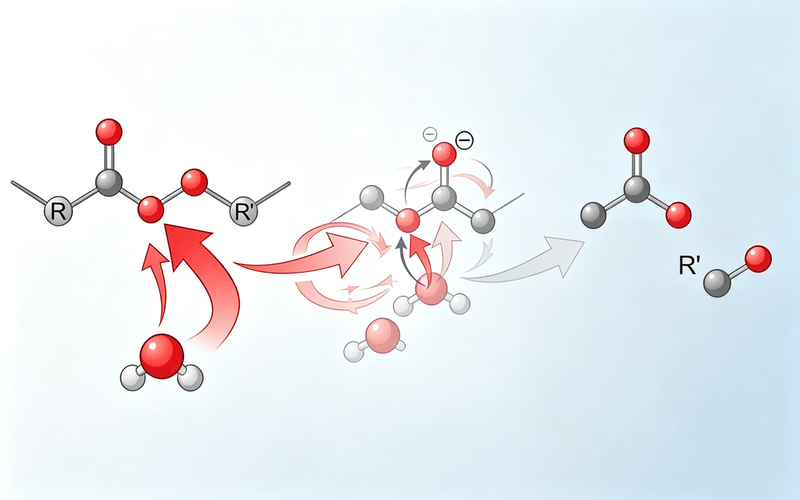
Some active ingredients degrade primarily through hydrolysis — ester- and acetal-containing molecules being the clearest examples. For these compounds, moisture sensitive API excipients aren’t a passive filler choice; they either protect the active from ambient moisture or actively contribute to its degradation pathway. This guide walks through the three main strategies formulators use to choose between them.
Why compendial compliance alone isn’t enough
USP-NF, ChP, and EP monographs confirm identity and purity. They generally don’t specify a water activity value. Two excipients that both pass compendial testing can behave very differently under real storage conditions if their Aw or CRH diverge. This is why formulation teams increasingly request Aw and CRH data as a supplementary spec on top of standard compendial compliance — USP General Chapter <1112> provides useful background on how water activity is framed in pharmaceutical contexts specifically.
Strategy 1: Intrinsically low-Aw fillers
Materials like mannitol and erythritol simply don’t introduce meaningful free water into the system. Their crystal structure doesn’t hold water in a form that’s chemically available to interact with the API. This is usually the first option formulators reach for, because it requires the least process change — these materials behave similarly to standard fillers in terms of compressibility and flow, with the added benefit of low water activity.
Strategy 2: Moisture-scavenging excipients
Pregelatinized starch and certain microcrystalline cellulose grades actively bind free water away from the API rather than simply avoiding introducing new water. This strategy is particularly useful in formulations that already contain some higher-moisture component — a moisture-scavenging excipient can help offset that rather than requiring every ingredient in the formula to independently meet a low-Aw threshold.
Strategy 3: Anhydrous excipients
Anhydrous dibasic calcium phosphate and anhydrous lactose eliminate water of crystallization at the source, rather than simply keeping existing water in a bound or low-Aw state. This matters most for APIs where even trace bound water is a meaningful risk over a long shelf life — a more conservative approach than low-Aw or moisture-scavenging alternatives, generally reserved for the most hydrolysis-prone actives. We cover this category in more depth in Anhydrous Excipients Explained: Solving Moisture Migration at the Source.
Choosing between the three
In practice, the choice often comes down to how hydrolysis-prone the API is and how much process change the formulation can absorb. Intrinsically low-Aw fillers are the lowest-friction starting point. Moisture-scavenging excipients make sense when the formulation already includes higher-moisture ingredients that can’t easily be swapped out. Anhydrous excipients are typically reserved for the most sensitive actives, where the cost of any residual bound water outweighs the process adjustments needed to use them.
A sourcing note for moisture sensitive API excipients
Chinese excipient manufacturers vary significantly in whether they maintain separate food-grade and pharma-grade production lines, and in CDE registration status and US DMF filing. For moisture-sensitive API work specifically, both of these should be verified directly rather than assumed from a product name or general marketing material — a manufacturer’s food-grade sugar alcohol and its pharma-grade equivalent are not always produced on the same line or tested to the same standard, even when they share a product name.
Esubio verifies CDE registration status, DMF numbers, and compendial compliance for every pharma-grade excipient we source, alongside Aw, LOD, and CRH data. Browse our Low Water Activity Excipients range, or get in touch with the specifics of your API’s degradation profile — our sourcing team can help match the right protective strategy to your formulation.
References
- USP General Chapter <1112>, Application of Water Activity Determination to Nonsterile Pharmaceutical Products — https://doi.usp.org/USPNF/USPNF_M402_01_01.html
- S. FDA, “Drug Master Files (DMFs)” — https://www.fda.gov/drugs/forms-submission-requirements/drug-master-files-dmfs
- S. FDA, “Water Activity (aw) in Foods” — https://www.fda.gov/inspections-compliance-enforcement-and-criminal-investigations/inspection-technical-guides/water-activity-aw-foods