
Ashwagandha Extract Sourcing Guide: What Supplement Brands Need To Know
Ashwagandha (Withania somnifera) has moved from a niche Ayurvedic herb to one of the most commercially significant botanical ingredients in the global supplement market. For supplement brands and contract manufacturers, sourcing the right ashwagandha extract — with the right specification, documentation, and supplier — is a sourcing decision that directly affects product performance, regulatory compliance, and market positioning.
This guide covers everything you need to evaluate before placing an ashwagandha extract order.
Understanding Withanolide Standardization
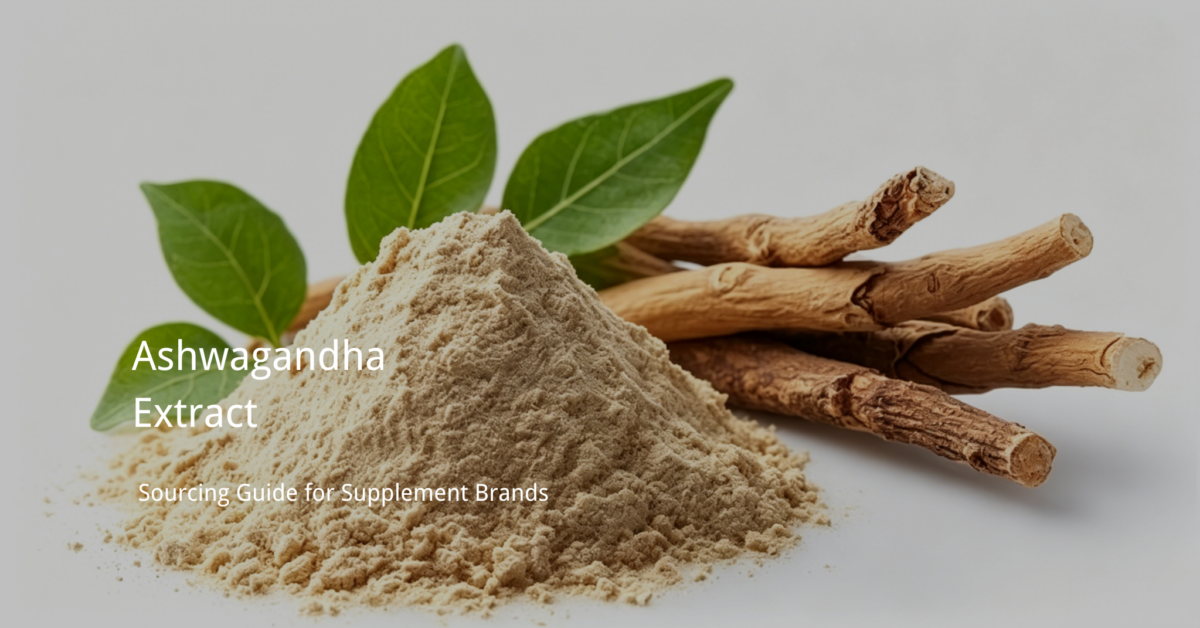
The bioactive compounds responsible for ashwagandha’s adaptogenic effects are withanolides — a group of steroidal lactones found primarily in the root. When sourcing ashwagandha extract, standardization level is the most critical specification to clarify upfront.
Common standardization grades and their applications:
| Specification | Withanolide Content | Typical Application |
|---|---|---|
| Full-spectrum root extract | 2.5% withanolides | General wellness, stress support |
| Standard extract | 5% withanolides | Supplements, capsules, tablets |
| High-potency extract | 10% withanolides | Sports nutrition, premium formulations |
| KSM-66 / Sensoril (branded) | 5% / 10% | Clinically positioned products |
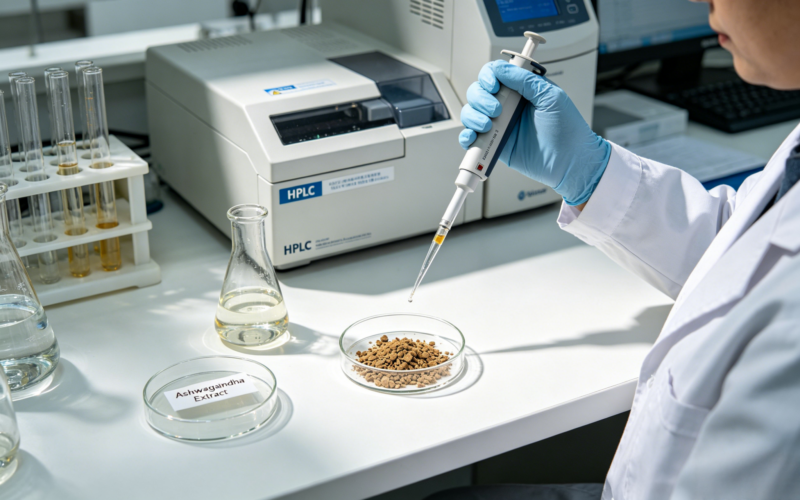
Ask your supplier for HPLC-verified withanolide content on every batch COA. UV-Vis spectrophotometry is less accurate and can overstate actual withanolide levels — it should not be your sole acceptance criterion.
Extraction Method: What It Means for Your Product
Two primary extraction methods are used commercially:
- Water-based extraction: Closer to traditional use, preserves the full-spectrum phytochemical profile. Generally preferred for general wellness positioning
- Hydroalcoholic (ethanol/water) extraction: Achieves higher withanolide concentrations and more consistent batch-to-batch standardization. Standard for most supplement applications
The extraction method affects not only potency but also taste profile and solubility. If your formulation is a powder sachet, beverage, or gummy, water-dispersible ashwagandha extract is preferable over a standard root powder, which carries an earthy, bitter flavour that requires masking.
Root vs. Leaf: Know What You Are Buying
This distinction is commonly overlooked. Root extract is the traditional and most researched source — withanolides from root have the most clinical evidence and are universally preferred in reputable supplement formulations.
Leaf extract can achieve higher withanolide concentrations (including withaferin A), but the phytochemical profile and safety data differ from root. Some markets, including certain EU jurisdictions, require specific documentation distinguishing root from leaf. Always confirm the plant part with your supplier and ensure the COA specifies it.
Heavy Metals and Pesticide Residue Testing
Ashwagandha is predominantly sourced from India, where agricultural practices vary significantly by growing region. Before approving a supplier, request:
- Heavy metals panel: lead, mercury, arsenic, cadmium — tested to USP or EU limits
- Pesticide residue report — especially if targeting EU or Australia/NZ markets
- Microbiological testing: total plate count, yeast, mold, E. coli, Salmonella
These are not optional. Regulatory action against contaminated botanical ingredients has increased significantly across APAC and EU markets in recent years.
Documentation Checklist for Ashwagandha Extract
Before approving a supplier or placing an order, confirm you have received:
- COA with withanolide content (HPLC method specified), heavy metals, microbiological results
- Specification sheet confirming plant part (root), extraction solvent, and standardization method
- Allergen declaration
- Non-GMO certificate
- Country of origin documentation
- Halal / Kosher certificates if required for your market
- Stability data (12-month minimum at recommended storage conditions)
Branded vs. Generic Ashwagandha: How to Choose
Branded extracts like KSM-66 (root-only, 5% withanolides) carry significant clinical research and consumer recognition, which supports premium positioning. They typically come at a 3–5x price premium over generic extracts.
Generic standardized extracts from verified manufacturers can deliver equivalent specifications at lower cost — provided your supplier can demonstrate HPLC-verified withanolide content and full documentation. For brands that do not rely on branded ingredient marketing, a well-documented generic extract with strong stability data is a commercially sound choice.
The decision depends on your product positioning: if you are targeting a practitioner or clinical channel, branded extracts offer differentiation. For a private-label supplement or OEM product where the brand story lies elsewhere, a quality generic extract with strong COA data is the pragmatic choice.
esubio supplies standardized ashwagandha root extract in 2.5%, 5%, and 10% withanolide grades. HPLC-verified COA, heavy metals testing, and full documentation included with every order. MOQ from 1 kg. Contact us at www.esubio.com/contact
References
- Priyanka Chopra Singh et al. (2021). An Overview on Ashwagandha: A Rasayana (Rejuvenator) of Ayurveda. African Journal of Traditional, Complementary and Alternative Medicines. — Withanolide phytochemistry and root vs. leaf distinction.
- United States Pharmacopeia (USP). Dietary Supplements Compendium — Withania somnifera Root Extract Monograph. usp.org — Specification standards for withanolide content and heavy metals limits.
- European Food Safety Authority (EFSA). Compendium of botanicals reported to contain naturally occurring substances of possible concern for human health when used in food and food supplements. efsa.europa.eu — Regulatory context for ashwagandha in EU markets.
- ICH Harmonised Guideline Q1A(R2). Stability Testing of New Drug Substances and Products. ich.org — Framework for stability testing conditions (25°C/60% RH standard; 40°C/75% RH accelerated).
- Shukla, K.K. et al. (2010). Withania somnifera improves semen quality by combating oxidative stress. Fertility and Sterility, 94(3), 989–996. — Representative clinical reference for root extract efficacy.
- Food Standards Australia New Zealand (FSANZ). Supplementary Foods and Novel Foods. foodstandards.gov.au — Documentation and compliance requirements for APAC market entry.