
Curcumin COA Checklist: 7 Questions to Ask Before You Buy
A curcumin COA checklist is the fastest way to catch an inflated purity claim before it costs you a shipment. If your supplier just sent over a COA showing “Curcumin 95%,” this checklist tells you exactly which numbers on that page are the ones suppliers round up most often — and which ones you should never accept without backup.
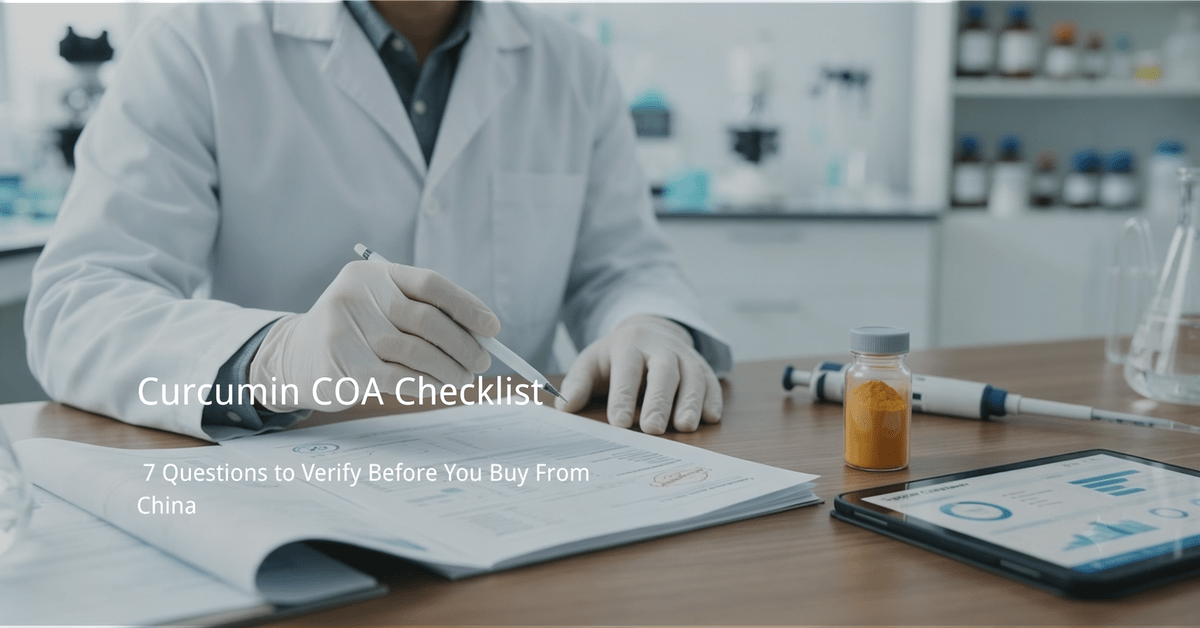
This is a follow-up to our NMN sourcing checklist. Botanical extracts are a different animal: the raw material is agricultural, so batch variation is real and not automatically a red flag — but that also makes it easier for a weak COA to hide behind natural variability. Here’s the curcumin COA checklist procurement teams use to separate a tier-one Chinese supplier from the rest.
Why You Need a Curcumin COA Checklist
Turmeric-derived curcumin is one of the most commonly reformulated botanical extracts on the market, and “95%” purity can be measured four different ways depending on the lab. Without a curcumin COA checklist, procurement teams end up comparing numbers that were never measured the same way to begin with.
Key Benchmarks
95%+ — total curcuminoid purity tier-one suppliers hold consistently, lot to lot 3 lots — minimum batch history needed before calling a supplier’s process “consistent” rather than “lucky” ~40% — of botanical COAs auditors flag with at least one unverifiable claim
The Curcumin COA Checklist: 7 Questions to Ask Your Supplier
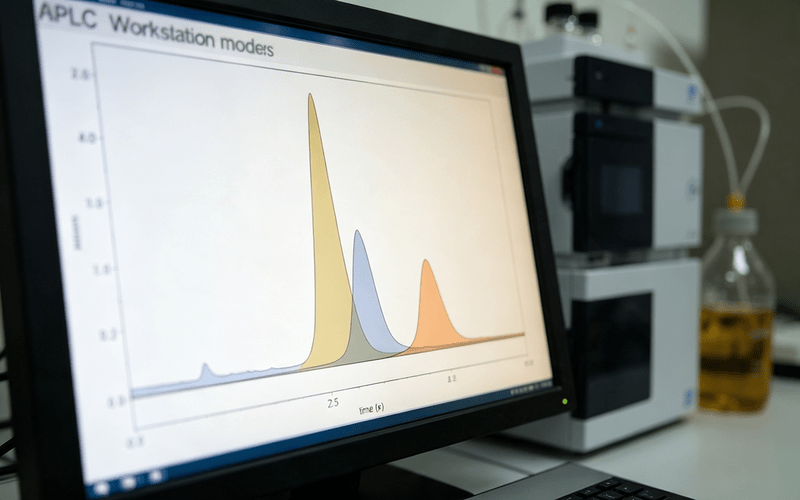
- Is the assay method HPLC — and does it separate the three curcuminoids individually? “Curcumin 95%” should mean total curcuminoids (curcumin, demethoxycurcumin, bisdemethoxycurcumin) at 95% by HPLC — not a single-point colorimetric reading. A COA with one combined number and no method listed is a purity claim with no test behind it.
- Are heavy metals tested against the standard your target market requires? Turmeric is commonly cited in food-safety testing for elevated lead levels. Confirm the panel tests lead specifically, against USP <232>/<233> or EU limits depending on your market — not a generic “heavy metals: pass.”
- Is the third-party lab named, with a report number you can verify? A SGS, Eurofins, or Intertek report is verifiable by report ID. An internal lab result, or a third-party logo with no report number, isn’t verification — it’s a claim.
- Does the batch number on the COA match the label on the physical drum you received? Curcumin moves through more processing steps — farm, primary extraction, standardization — than a fermentation-derived ingredient. More hand-offs mean more chances for a COA to get separated from its actual batch. Cross-check every shipment, not just the first.
- Is there a solvent residue panel matching the extraction method claimed? Curcumin extraction typically uses ethanol or other solvents. A supplier claiming a specific extraction process should have residue data to back it up, not a generic “meets USP” line with no numbers.
- Does the COA reference an EU Novel Food or equivalent dossier, if that’s your target market? For EU-bound shipments, check whether the ingredient is covered under an EFSA Novel Food authorization or falls outside it entirely. This changes your regulatory paperwork, not just your purity requirement.
- What is the color, appearance, and particle size spec — and does it match previous shipments? Botanicals carry natural variation from crop to crop. Appearance, particle size, and moisture content are early warning signs of a formulation problem before it ever reaches assay.
Curcumin COA Checklist: Instant Disqualifiers
If a curcumin supplier reports one purity number with no HPLC breakdown by curcuminoid, or can’t produce a verifiable third-party report number on request — stop the conversation. These are foundational line items, not negotiable ones.
Bonus: Applying the Same Checklist to Astaxanthin
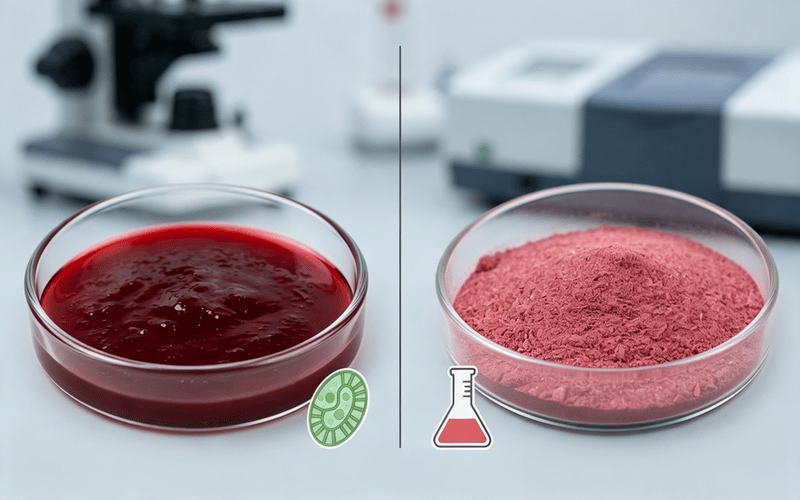
The same curcumin COA checklist logic applies to astaxanthin, with one extra question: does the COA distinguish natural (Haematococcus pluvialis) astaxanthin from synthetic? This is the most common substitution in the category — synthetic astaxanthin is a different isomer ratio and isn’t accepted in most supplement or premium pet-food formulations. Insist the COA and factory spec sheet name the source strain explicitly.
Curcumin COA Checklist: The Bottom Line
Botanical extracts reward suppliers who’ve invested in real standardization — and punish procurement teams who treat a 95% number on a PDF as the whole story. Browse our full range of standardized botanical extracts to see COA samples for yourself, or send over a COA you’ve already received and we’ll walk through this curcumin COA checklist with you line by line.
Next in this series: heavy metals testing standards compared — USP vs. EU pharmacopoeia vs. China’s GB standards, and why the standard your supplier tests against matters as much as the number itself.
References
- U.S. Pharmacopeia (USP). Elemental Impurities <232> and <233>. https://www.usp.org/
- SGS. Testing, Inspection and Certification Services. https://www.sgs.com/
- European Food Safety Authority (EFSA). Novel Food. https://www.efsa.europa.eu/en