
NMN Supplement Ingredient Sourcing: What Brands Need to Know Before Buying
NMN Supplement Ingredient Sourcing: What Brands Need to Know Before Buying
Nicotinamide mononucleotide (NMN) has emerged as one of the most commercially significant longevity ingredients in the global supplement market. Driven by research into NAD+ biology and growing consumer interest in healthy aging, NMN has moved from a research compound to a mainstream supplement ingredient — with global market demand growing rapidly across North America, Europe, Australia, and East Asia.
For supplement brands and contract manufacturers, NMN ingredient sourcing requires careful evaluation. The ingredient is expensive, technically complex, and subject to evolving regulatory scrutiny in certain markets. This guide covers what to look for, what to ask, and what to avoid when sourcing NMN for commercial supplement applications.
What NMN Ingredient Sourcing Buyers Need to Understand
NMN is a nucleotide derived from ribose and nicotinamide. In the body, it is a direct precursor to NAD+ (nicotinamide adenine dinucleotide), a coenzyme involved in cellular energy metabolism, DNA repair, and mitochondrial function. NAD+ levels naturally decline with age, and NMN supplementation has been studied as a strategy to support NAD+ replenishment.
Preclinical research in animal models has demonstrated effects on energy metabolism, cardiovascular function, and longevity-related pathways. Human clinical trials are ongoing, with early data suggesting NMN is well-tolerated and bioavailable in humans.
Purity Specification: The Most Critical Parameter
NMN purity is the primary quality specification. The market contains products ranging from 95% to 99%+ purity, and the difference matters for both efficacy and regulatory compliance.
| Purity Grade | Specification | Typical Application |
|---|---|---|
| Research grade | ≥95% | R&D and formulation testing only |
| Supplement grade | ≥98% | Commercial supplement products |
| High purity | ≥99% | Premium positioning, clinical applications |

Always request HPLC-verified purity — not UV-Vis, which is less discriminating and can overstate actual NMN content. Ask for the HPLC method used (typically reverse-phase HPLC with UV detection at 260 nm) and confirm the method is validated.
Synthesis Method: Enzymatic vs Chemical
NMN is produced commercially via two primary routes:
Enzymatic synthesis uses biocatalytic processes to produce NMN with high selectivity and minimal by-products. This method generally produces higher purity material and is preferred for premium supplement applications. It is also more aligned with natural and clean-label positioning.
Chemical synthesis is lower cost but may generate more impurities, including related nucleotide compounds. Request an impurity profile — a reputable supplier will provide data on known impurities including NMN analogues and degradation products.
Stability and Storage Requirements
NMN is hygroscopic and sensitive to heat, moisture, and light. Without proper handling, degradation begins rapidly. Key stability parameters to verify:
- Moisture content: ≤1% on dry basis
- Storage conditions: cool (2–8°C for long-term), dry, dark
- Shelf life: 24 months at recommended storage conditions with appropriate packaging
- Packaging: foil-lined bags with desiccant or nitrogen flush for commercial quantities
Request a 12-month stability study at 25°C/60% RH and accelerated data at 40°C/75% RH. If a supplier cannot provide this, their product may not maintain label potency through the supply chain.
NMN Ingredient Sourcing Regulatory Risks by Market
NMN’s regulatory classification varies significantly by market — a critical consideration for brands selling internationally.
In the United States, NMN was sold as a dietary supplement for years, but in 2022 the FDA issued a warning letter stating that NMN is excluded from the dietary supplement definition because it was studied as a drug before being marketed as a supplement. The regulatory situation continues to evolve and brands selling into the US market should monitor FDA guidance closely.
In Australia, NMN is regulated as a complementary medicine ingredient. TGA listing requirements apply and brands must comply with Australian Register of Therapeutic Goods requirements.
In New Zealand and the EU, NMN is generally treated as a food supplement ingredient, though Novel Food assessments may apply in certain EU jurisdictions.
Brands sourcing NMN must confirm the regulatory pathway in each target market before product launch.
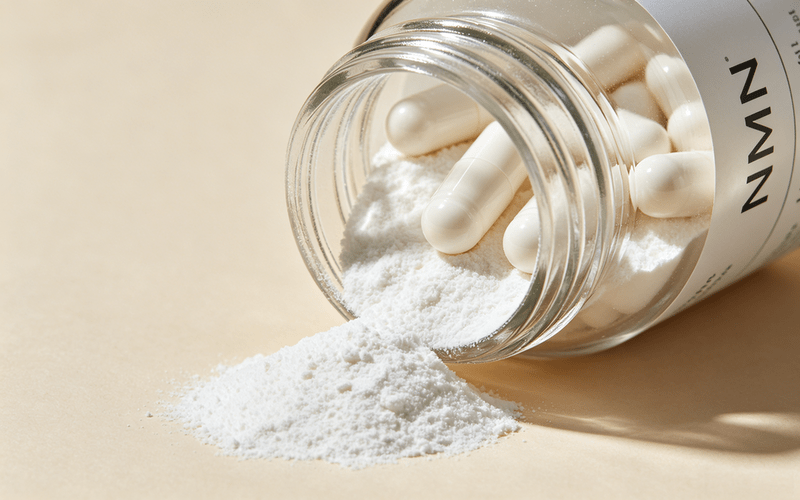
Brands sourcing NMN must confirm the regulatory pathway in each target market before product launch.
NMN Ingredient Sourcing Documentation Checklist
Before approving an NMN supplier, confirm receipt of:
- COA with HPLC-verified purity (≥98% for supplement grade), moisture content, and heavy metals
- Impurity profile showing NMN-related compounds below specification thresholds
- Synthesis route declaration (enzymatic or chemical)
- Stability data (12-month minimum at 25°C/60% RH)
- Non-GMO declaration
- Allergen declaration
- Country of origin documentation
- Regulatory compliance letter for target markets (US, AU, NZ, EU as applicable)
What to Ask Your Supplier
Beyond documentation, these questions distinguish reliable NMN suppliers from those who will cause problems:
Can you provide reference samples from three consecutive production batches with COA for each? Batch-to-batch consistency is a real challenge with NMN — tight results across multiple batches indicate manufacturing control.
What is your minimum order quantity for sampling versus commercial supply? A supplier who requires large MOQs before sampling is asking you to take on significant financial risk before quality validation.
What is your cold-chain capability for export? NMN requires temperature-controlled shipping for international orders, particularly in summer months.
esubio supplies HPLC-verified NMN at ≥98% purity, enzymatic synthesis, with full stability data, impurity profile, and export documentation for AU, NZ, US and EU markets. MOQ from 1 kg. Contact us at www.esubio.com/contact
References
- Yoshino, J., Baur, J.A., & Imai, S. (2018). NAD+ Intermediates: The Biology and Therapeutic Potential of NMN and NR. Cell Metabolism, 27(3), 513–528. https://doi.org/10.1016/j.cmet.2017.11.002
- Yoshino, M., Yoshino, J., Kayser, B.D., et al. (2021). Nicotinamide mononucleotide increases muscle insulin sensitivity in prediabetic women. Science, 372(6547), 1224–1229. https://doi.org/10.1126/science.abe9985
- Mills, K.F., Yoshida, S., Stein, L.R., et al. (2016). Long-term administration of nicotinamide mononucleotide mitigates age-associated physiological decline in mice. Cell Metabolism, 24(6), 795–806. https://doi.org/10.1016/j.cmet.2016.09.013
- U.S. Food and Drug Administration (2022). Warning Letter to Tru Niagen / ChromaDex regarding NMN as excluded from dietary supplement definition. fda.gov
- Therapeutic Goods Administration (TGA), Australian Government. Complementary Medicines — Ingredient Requirements. tga.gov.au
- ICH Harmonised Guideline Q1A(R2). Stability Testing of New Drug Substances and Products. ich.org
- European Food Safety Authority (EFSA). Novel Food Regulation (EU) 2015/2283 — Guidance on applications. efsa.europa.eu
- Shade, C. (2020). The Science Behind NMN — A Stable, Reliable NAD+ Activator and Anti-Aging Molecule. Integrative Medicine: A Clinician’s Journal, 19(1), 12–14.
- United States Pharmacopeia (USP). Dietary Supplements Compendium — Analytical methods for nucleotide-based ingredients. usp.org
- Airhart, S.E., Shireman, L.M., Risler, L.J., et al. (2017). An open-label, non-randomized study of the pharmacokinetics of the nutritional supplement nicotinamide riboside (NR) and its effects on blood NAD+ levels in healthy volunteers. PLOS ONE, 12(12). https://doi.org/10.1371/journal.pone.0186459