
Pharmacopoeial Grade Ingredient Supplier: 6 Critical Testing Gaps to Avoid
Most procurement conversations stop at the Certificate of Analysis. Fewer stop at the question that actually matters: which pharmacopoeial standard was that CoA tested against — and does it match your finished product’s target market? USP, Ph. Eur., and BP are not interchangeable labels. They carry different heavy metal limits, different microbial thresholds, and different identity testing frameworks. Working with a pharmacopoeial grade ingredient supplier that understands this distinction — rather than one that treats “compliant” as a single, universal claim — is what protects your formulation across multiple export markets.

Why Standard Mismatch Is a Real Risk for OEM Formulations
If your R&D team specifies to one pharmacopoeial standard while your ingredient supplier tests to another, the finished product may not actually meet the compliance requirement you assumed it did. This gap tends to surface at the worst possible time — during a client’s regulatory review, not during initial sourcing.
Where a Pharmacopoeial Grade Ingredient Supplier Should Show Dual-Standard Testing
1. Heavy Metal Limits
This is where the divergence matters most. USP and Ph. Eur. apply meaningfully different limits and testing methodologies for several heavy metals, including arsenic, cadmium, and mercury — in some cases involving total elemental analysis versus inorganic speciation. A botanical extract tested only against USP heavy metal chapters is not automatically compliant for EU-market formulations. Confirm with your supplier which standard was used for each specific metal, not just the overall pass/fail result.
Parameter | USP <232> | Ph. Eur. 2.4.20 | BP | Key Difference |
Lead (Pb) | ≤ 5 ppm (oral) | ≤ 5 ppm | ≤ 5 ppm | Aligned across standards |
Arsenic (As) | ≤ 15 ppm (total) | ≤ 1 ppm (inorganic) | ≤ 1 ppm (inorganic) | 15x limit gap — ICP-MS speciation required for EU/AU/CA |
Cadmium (Cd) | ≤ 5 ppm | ≤ 1 ppm | ≤ 1 ppm | 5x difference |
Mercury (Hg) | ≤ 15 ppm | ≤ 1 ppm | ≤ 1 ppm | 15x difference |
2. Residual Solvents
Ph. Eur. 5.4 and USP <467> are largely harmonized under ICH Q3C guidance, but interpretation of Class 2 solvent limits for botanical extraction residuals can still differ. If you’re selling into both US and EU markets simultaneously, confirm your supplier is running — and can document — dual-standard solvent panels, not a single test run against one framework.
3. Microbial Testing: TAMC/TYMC Interpretation
USP and Ph. Eur. both use Total Aerobic Microbial Count (TAMC) and Total Yeast and Mold Count (TYMC) terminology, but acceptance criteria for specified microorganisms can diverge at the product category level. For gut health formulations containing postbiotic or heat-killed culture ingredients, confirm which specific pharmacopoeial chapter your supplier is citing — the frameworks for non-sterile oral preparations are not automatically interchangeable with general dietary supplement guidance.
Categories Where Standard Gaps Are Most Active Right Now
Category | Standard Gap | Risk | Required Action |
Gut Health / Postbiotics | Ph. Eur. 5.1.8 evolving | Chapter citation ambiguity | Request specific chapter cited |
NMN / NR | No USP/Ph. Eur. monograph exists | ‘USP grade’ is marketing language | Require ICH Q7 + validated HPLC |
Botanical Extracts | Residual solvent interpretation diff. | Dual-market compliance gap | Request Ph. Eur. 5.4 + USP <467> dual annotation |
Sports Nutrition AAs | USP monograph exists; Ph. Eur. partial | EU client expectation mismatch | Confirm BP/Ph. Eur. test panel |
Three ingredient categories carry particular attention heading into 2026. Gut health and postbiotic ingredients sit in an area where pharmacopoeial guidance for non-viable culture strains is still evolving, so suppliers should be asked to specify exactly which chapter and edition they’re citing. Emerging longevity-category actives, including next-generation NAD+ precursor ingredients, often lack an established USP or Ph. Eur. monograph entirely — which means any “USP grade” claim on an ingredient without a published monograph should be treated as marketing language rather than a verified pharmacopoeial status, and the supplier should be asked to produce the actual reference document. Sports nutrition amino acids such as L-Citrulline and Beta-Alanine generally have established USP monographs, but Ph. Eur. coverage is often partial, so EU-focused brands should confirm the specific test panel used rather than assume USP-only testing is sufficient.
What to Expect From a Reliable Pharmacopoeial Grade Ingredient Supplier
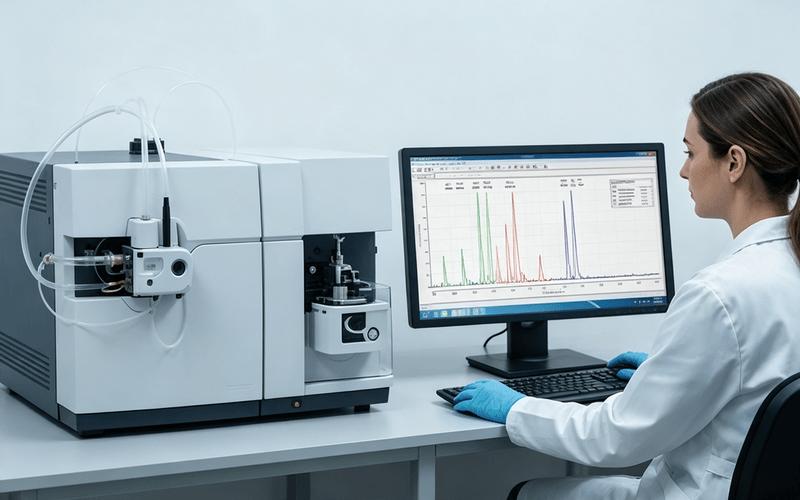
Suppliers serious about multi-market compliance typically run dual-panel or triple-panel testing rather than testing to a single standard, since their clients span multiple export markets simultaneously. In practice, this looks like ICP-MS speciation covering both total and inorganic elemental limits, residual solvent panels referencing both ICH Q3C and Ph. Eur. 5.4, microbial panels reported with specified microorganism confirmation, and reference standards traceable to either USP or EDQM (the European Directorate for the Quality of Medicines). This level of documentation is not yet universal across the market, but it is a reasonable baseline to expect before qualifying a supplier for formulations sold into regulated markets.

A Practical Checklist Before Your Next Ingredient Qualification
Start by mapping your finished product’s target markets to identify the controlling pharmacopoeial standard for each. Confirm your supplier’s CoA specifies which standard each individual test was run against, not just an overall compliant result. For heavy metals, confirm whether ICP-MS speciation for inorganic arsenic is available if you’re selling into the EU, Australia, or Canada. For botanicals, request both USP and Ph. Eur. residual solvent annotations if you’re formulating for dual markets. For novel actives without an established monograph, request the supplier’s internal reference standard and validated HPLC method documentation. And for any postbiotic or live/heat-killed culture ingredient, request the specific pharmacopoeial chapter cited for microbial specification.
Sourcing From a Pharmacopoeial Grade Ingredient Supplier With Esubio
We supply botanical extracts, probiotics, amino acids, and functional ingredient blends with full CoA and MSDS documentation, ISO and HACCP certification, and MOQ starting from 1kg. Visit our product catalog or request a quote to discuss your specification requirements.
Choosing a pharmacopoeial grade ingredient supplier that can document — not just claim — dual-standard testing is what protects your formulation across every market you sell into, not just the one your supplier happened to test against.
This content is provided for general sourcing and educational information purposes and does not constitute regulatory or legal advice. Pharmacopoeial standards are periodically revised; always verify current limits, chapters, and monograph status directly against the latest official USP, Ph. Eur., or BP publication and with your supplier before finalizing a specification.
References
U.S. Pharmacopeia (USP)
https://www.usp.orgEDQM — European Directorate for the Quality of Medicines (Ph. Eur.)
https://www.edqm.euICH — International Council for Harmonisation
https://www.ich.org