
Viscous Fiber Satiety Ingredients: Sustaining Fullness Through the One-Hour Window
By the one-hour mark, a meal has moved into the jejunum, and this is generally where gut hormone signaling reaches its highest point for a typical meal. Viscous fiber satiety ingredients are formulated specifically to extend this window — not by triggering a new signal, but by slowing down the process that would otherwise let it fade.
Why viscosity matters at this stage
A viscous fiber thickens the fluid contents of the small intestine, which physically slows the rate at which nutrients come into contact with the absorptive gut wall. This delayed nutrient exposure has a knock-on effect on hormone secretion: rather than a sharp spike followed by a rapid decline, nutrient delivery — and the associated signaling — gets spread out over a longer period. Research on fiber-enriched meals has shown measurable effects on gastric emptying rate and postprandial hormone response compared to matched low-fiber meals.
Beta-glucan’s role in this window
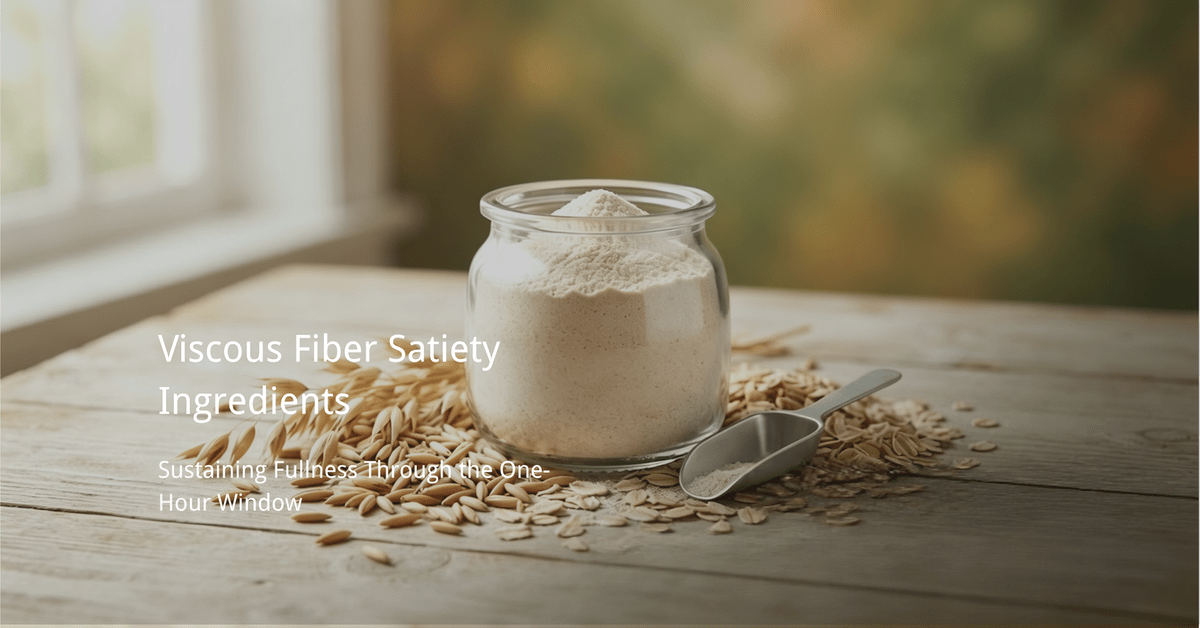
Oat and barley beta-glucan are among the most studied viscous fiber satiety ingredients for this mechanism, largely because their viscosity is well characterized and dose-dependent — higher molecular weight and higher concentration both increase the viscosity effect, up to a point where further increases start to compromise texture and processability in most formats.

Resistant starch and slow-digesting carbohydrates
Resistant starch is digested more slowly than standard starch, which extends glucose delivery over a longer period and reduces the sharp glycemic response associated with faster-digesting carbohydrate sources. This slower, steadier delivery pattern complements the mechanical slowing effect of viscous fiber, and the two are frequently formulated together.
Where whey hydrolysate and MCT fit back in
This phase overlaps somewhat with the early protein-triggered window covered in Early Satiety Protein Ingredients: Protein, MCT & Fiber at the 30-Minute Mark — fast-digesting whey hydrolysate and MCT oil can still be contributing to signaling at this point if formulated for a sustained-release profile, rather than a single fast pulse. The distinction between the two phases is less about a hard cutoff and more about which mechanism is dominant at a given point in digestion.
Formulation considerations
Viscosity behavior in the finished product needs to be tested under conditions that match the actual use case — a beta-glucan grade that performs well in a still beverage may behave very differently in a carbonated one, or in a dry powder that gets rehydrated by the consumer. Batch-to-batch viscosity consistency is a common quality issue in this category, since even small variations in molecular weight distribution can produce noticeably different mouthfeel and functional performance.
Sourcing considerations
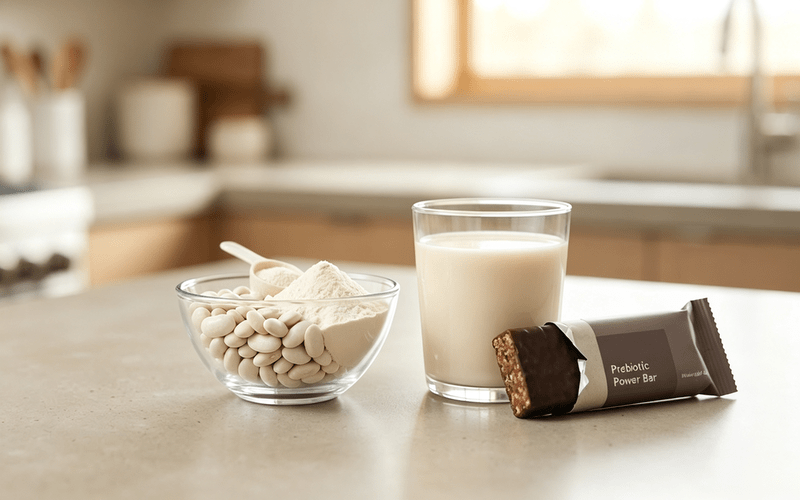
Request viscosity data (typically reported in mPa·s at a specified concentration) alongside standard purity specs, and confirm whether that data is tested per batch or only at initial product qualification — this matters more for viscous fiber satiety ingredients than for most other categories, given how sensitive the functional performance is to small compositional shifts.
We source oat and barley beta-glucan, resistant starch, and related viscous fiber ingredients with batch-level viscosity data available on request. Reach out with your target format and viscosity range for current specs.
References
- Incretin hormones and the satiation signal — International Journal of Obesity — https://www.nature.com/articles/ijo2012208
- Stimulation of incretin secreting cells — PMC — https://pmc.ncbi.nlm.nih.gov/articles/PMC4740941/