
Resistant Starch Satiety Ingredients: Extending Fullness to the Two-Hour Mark
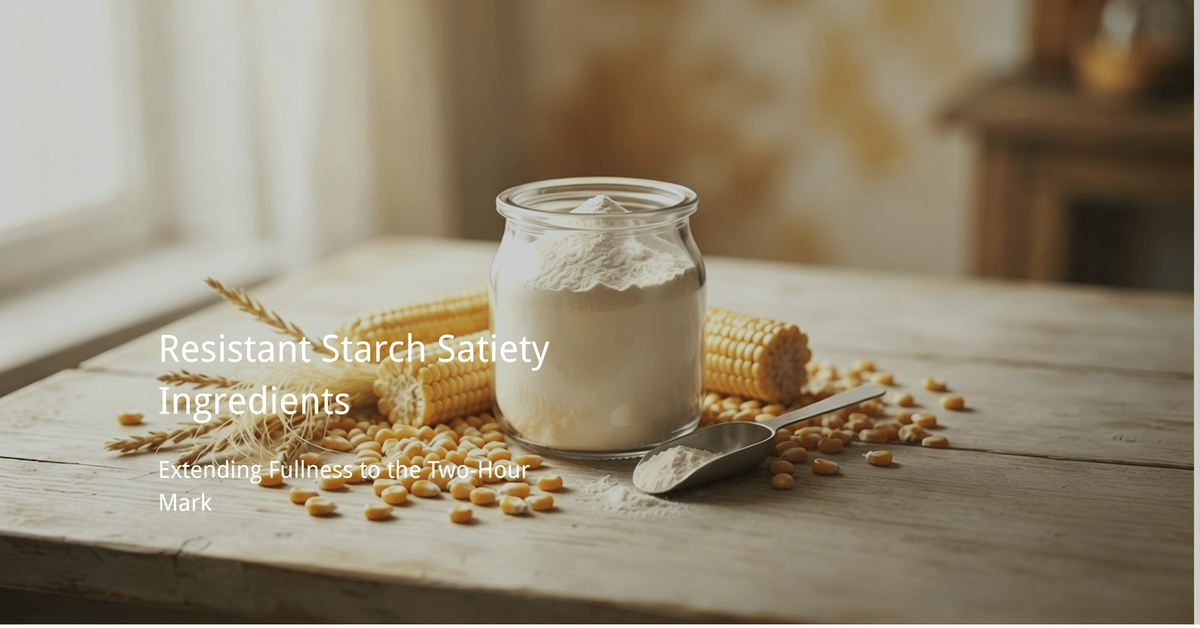
Two hours after a meal, most of what’s going to be digested and absorbed in the small intestine already has been. What’s left is moving toward the ileum — and resistant starch satiety ingredients are specifically formulated to still be delivering material at this point, well after faster-digesting carbohydrates have already been absorbed.
Why this phase needs a different ingredient class
The viscous fibers and fast-digesting proteins covered in earlier phases of this series have largely finished their primary job by the two-hour mark. Resistant starch satiety ingredients are chosen specifically because they resist digestion in the small intestine — hence the name — meaning they’re still present and delivering slow-release material well past the point where standard starch would already be absorbed.
High-amylose starch and its role here
High-amylose corn or other high-amylose starch sources are among the most common resistant starch satiety ingredients used for this window, because their higher amylose content directly correlates with slower digestion and greater resistance to small-intestinal enzymes. This gives formulators a reasonably tunable lever — different amylose content grades produce measurably different digestion rate profiles.
FOS and other short-chain prebiotics
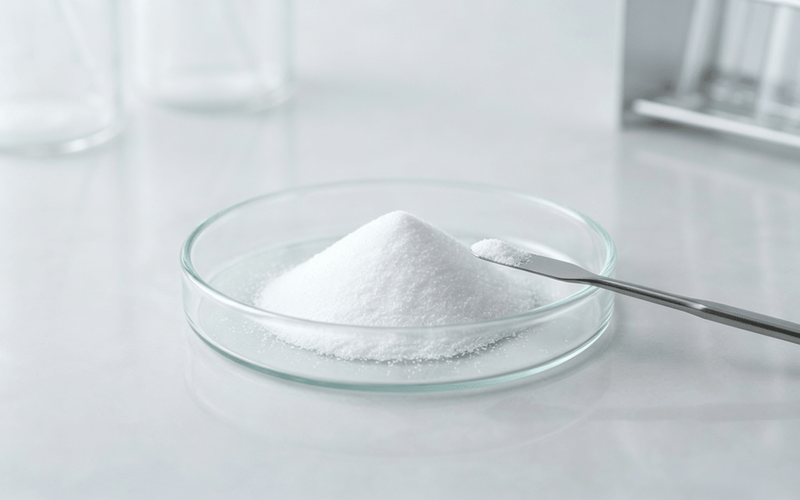
Fructooligosaccharides (FOS) function somewhat differently — rather than being a slow-digesting starch, they largely bypass small-intestinal digestion entirely and reach the distal gut intact, where they become a substrate for fermentation. This connects the two-hour window to the colonic fermentation phase covered in Fermentable Fiber Satiety Ingredients: The Colon’s Role in Long-Duration Fullness — FOS is something of a bridge ingredient between the two phases.
Where polyphenols come in
Green tea catechins and olive-derived polyphenols are frequently formulated alongside resistant starch and FOS in this window, though their mechanism is distinct — polyphenol research in this area more often focuses on interactions with digestive enzymes and metabolic pathways rather than direct hormone-triggered satiety. They’re generally included as a complementary functional layer rather than a primary satiety driver in this specific phase.
Formulation considerations
Resistant starch content is sensitive to processing — heat, moisture, and mechanical shear during manufacturing can convert resistant starch back into more readily digestible forms, which matters if the finished product undergoes baking, extrusion, or other heat-intensive processing. Confirming resistant starch retention after the specific process your product will undergo, not just the raw ingredient’s starting spec, is worth doing before finalizing a formulation.

Sourcing considerations
Resistant starch content should be requested as a tested value (commonly reported per AOAC method) rather than assumed from amylose content alone, since the relationship between the two isn’t perfectly linear and varies by starch source and processing history. For FOS, confirm degree of polymerization and purity, since both affect fermentation rate and, by extension, where in the gut the material is actually utilized.
We source high-amylose resistant starch, FOS, and polyphenol ingredients suited to this formulation window, with resistant starch content and polyphenol purity confirmed per batch. Get in touch with your process conditions and target format for current specs.
References
- Nutrient detection by incretin hormone secreting cells — PMC — https://www.ncbi.nlm.nih.gov/pmc/articles/PMC3361765/
- Incretin hormones and the satiation signal — International Journal of Obesity — https://www.nature.com/articles/ijo2012208