
Low Water Activity Probiotic Ingredients: 9 Essential Sourcing Checks
Low water activity probiotic ingredients require careful evaluation when supplement brands, contract manufacturers, and R&D teams develop dry powders, capsules, sachets, or multi-ingredient formulations. A supplier’s initial Aw value is useful, but it does not tell the whole story about ingredient suitability, batch consistency, processing performance, or finished-product stability.
Procurement teams also need to understand how the probiotic ingredient will be combined with excipients, whether the required specifications can be maintained across batches, and what documentation is available for quality review.
For projects involving both probiotic raw materials and low water activity excipients, evaluating these materials together can help identify technical gaps before commercial production begins.
The following nine checks provide a practical framework for ingredient sourcing.
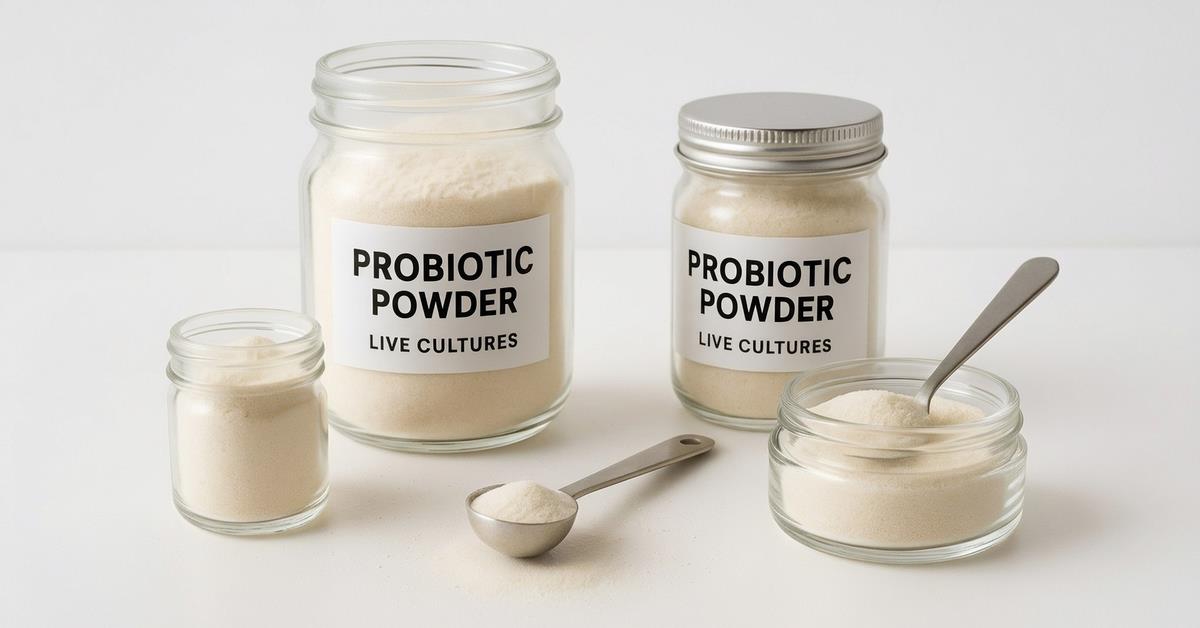
1. Define the Water Activity Requirement Clearly
Before requesting a quotation, establish what “low water activity” means for your project.
Does the Aw requirement apply to the probiotic ingredient, the excipient, a pre-blended ingredient system, or the finished formulation? Is the requirement a target value, a maximum acceptance limit, or a preferred range?
These distinctions matter. A request such as “Aw below 0.20” is incomplete unless the tested material and acceptance criteria are clear.
For example, a buyer may require an individual excipient to meet a defined Aw limit, while the finished probiotic blend has a separate acceptance criterion. Another project may require a low Aw pre-blend for use in a formulation that will undergo additional processing.
The specification should identify the material being tested, the acceptance limit, the test method, and any relevant measurement conditions.
ISO 18787:2017 provides a recognized framework for determining water activity in food products.
Reference: https://www.iso.org/standard/63379.html
Clear requirements allow suppliers to assess feasibility more accurately and help prevent misunderstandings during qualification.
2. Request Aw and Moisture Data for the Actual Grade
Low water activity and low moisture content are not interchangeable claims.
Water activity measures the availability of water under defined conditions, while moisture content measures the amount of water in the material. Both may be important for dry probiotic formulations, but the relevant acceptance limits depend on the ingredient and application.
When reviewing low water activity probiotic ingredients, request the applicable specification and a representative batch Certificate of Analysis (COA). If the project requires a specific Aw limit, confirm whether the supplier routinely tests it and whether the result is reported on the COA or in a separate test report.
Useful questions include:
Is Aw a routine release test or a special-request test?
What is the specified acceptance limit?
What test method and measurement conditions are used?
Does the available result apply to the quoted grade and production batch?
Can the supplier provide batch-specific data before shipment, if required?
A historical test result can help establish feasibility, but it does not guarantee that every future batch will produce the same result. The purchasing specification and agreed quality requirements should govern acceptance.
3. Evaluate the Probiotic Strain and Potency Requirements
The term “probiotic ingredient” covers a wide range of strains and preparations. Sourcing should begin with the actual biological requirements rather than the general product category.
Confirm the strain identity, potency specification, unit of measurement, and required quantity per serving. If the product requires a particular end-of-shelf-life count, determine how much overage, if any, is supported by the formulation and stability data.
The initial potency and the required potency at the end of shelf life are different specifications. A raw material that meets its release potency may still need further evaluation to determine whether the finished product can maintain the intended count throughout storage.
Also clarify the intended dosage form, storage temperature, and any requirements related to oxygen exposure or moisture sensitivity.
The review The Production and Delivery of Probiotics: A Review of a Practical Approach discusses the challenges of maintaining probiotic viability through manufacturing, formulation, and storage.
Reference: https://pmc.ncbi.nlm.nih.gov/articles/PMC6463069/
For buyers, this means a suitable sourcing decision should connect the strain and potency specification to the intended product, rather than treating the highest initial potency as the only selection criterion.
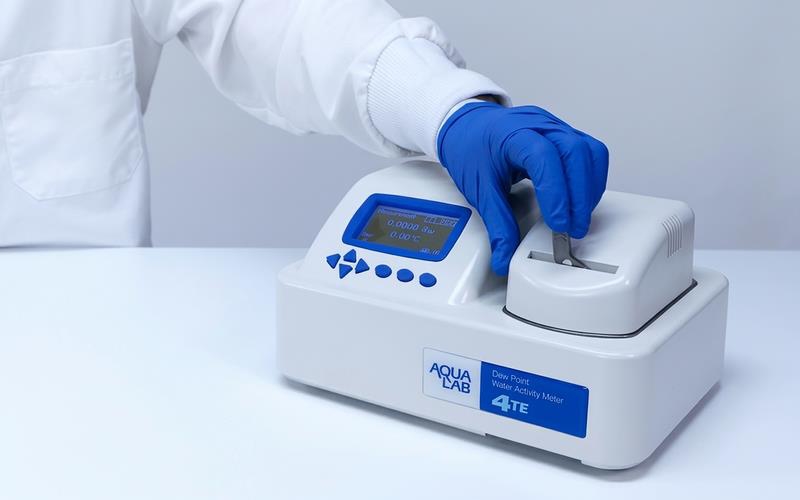
4. Evaluate the Excipient System Alongside the Probiotic
If the project requires both low water activity probiotic ingredients and low water activity excipients, evaluate them as a coordinated sourcing requirement.
A probiotic ingredient may meet its own Aw specification while a carrier, sweetener, prebiotic, botanical powder, or other active ingredient changes the properties of the finished blend.
This is particularly relevant when multiple powdered ingredients will be mixed before filling. The final blend may have different moisture behavior, flowability, and stability characteristics from those of the individual materials.
Ask the supplier to clarify whether the proposed solution involves separate raw materials or a pre-blended ingredient system.
For separate ingredients, review the specifications and compatibility requirements of each critical component. For a pre-blend, confirm the applicable composition information, potency, Aw and moisture limits, batch controls, and available supporting data.
The review Probiotic Triangle of Success: Strain Production, Clinical Studies and Product Development highlights the importance of dry excipients, hygroscopicity, and moisture-barrier packaging in probiotic formulations.
Reference: https://pmc.ncbi.nlm.nih.gov/articles/PMC7578568/
The objective is not simply to purchase several materials that individually meet their specifications. It is to establish whether the selected ingredients are appropriate for the complete formulation.
5. Review Batch Consistency and the Limits of Aw Guarantees
Batch consistency is one of the most important considerations when sourcing ingredients with a narrow Aw requirement.
Water activity can be affected by raw-material characteristics, processing, drying, handling, storage, and exposure to ambient humidity. Results may also differ if the test method, sample preparation, or measurement conditions are not consistent.
For this reason, a supplier should not make a universal Aw guarantee based only on one historical result.
Before placing a commercial order, establish how the specification will be controlled and verified. If the project requires a maximum Aw value, confirm that the supplier can support that requirement for the specific grade and production process.
Where appropriate, request representative batch results, agree on the acceptance criterion, and determine how nonconforming results will be handled.
It is also important to distinguish between a product specification and a preferred development target. A target of Aw below 0.15, for example, should not be treated as a confirmed capability unless the relevant grade and batch data support it.
The purchasing process should prioritize verifiable specifications over broad marketing statements.
6. Check Documentation Before Commercial Qualification
Documentation is part of ingredient qualification, not an administrative step to complete after purchasing.
Depending on the ingredient and application, the review package may include:
Certificate of Analysis (COA).
Product specification.
Safety Data Sheet (SDS), where applicable.
Strain identity and potency information for probiotic materials.
Relevant microbiological and contaminant test results.
Allergen and origin information, where required.
Storage, packaging, and handling recommendations.
Applicable manufacturing and quality-system documentation.
Not every document applies to every ingredient. Buyers should identify which documents are required by their internal quality system, customer requirements, and intended market.
For a low water activity project, it is particularly important to confirm whether Aw is included in the agreed specification and whether batch-level results can be supplied when required.
Do not assume that a general product brochure or an example COA proves that a specific shipment meets the required limits. The documentation should correspond to the actual grade and, where relevant, the supplied batch.
7. Evaluate Packaging, Transport, and Storage
A suitable low Aw result at the time of manufacture does not guarantee that the material will retain the same condition after transport and storage.
Moisture can enter through inadequate packaging barriers, damaged seals, or extended exposure during handling. Environmental conditions in the warehouse and manufacturing facility can also influence the material.
When qualifying low water activity probiotic ingredients, review the packaging format, inner liner, closure or seal integrity, recommended storage conditions, and expected transport duration.
If the material is particularly moisture-sensitive, ask whether additional protective packaging or specific handling precautions are recommended.
The final formulation also needs consideration. Even when the raw material is appropriately packaged, the finished blend may be exposed to humidity during weighing, mixing, filling, and packaging.
The literature on probiotic production and delivery identifies moisture control and packaging performance as important factors in maintaining probiotic stability.
Reference: https://pmc.ncbi.nlm.nih.gov/articles/PMC6463069/
A sourcing decision should therefore account for the full supply chain rather than focus exclusively on the supplier’s release result.
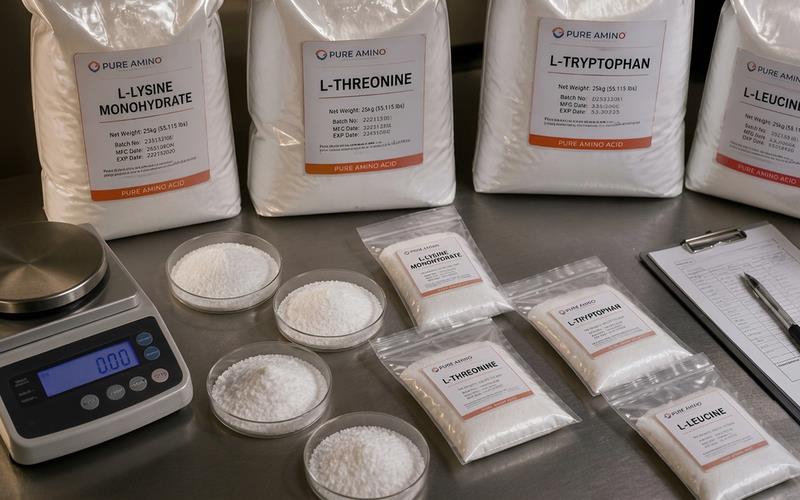
8. Compare Separate Ingredients With Pre-Blended Solutions
Procurement teams may choose to purchase probiotic ingredients and excipients separately or evaluate a pre-blended solution.
Separate sourcing may be preferable when the formulation team needs to control individual ingredient ratios, test alternative excipients, or retain flexibility during development.
A pre-blended solution may be useful when the required ingredient combination has been defined and the customer wants to simplify ingredient handling or initial formulation work.
However, a pre-blend should not be assumed to reduce risk automatically. Its suitability depends on the composition, blending controls, specification, batch consistency, and compatibility with the customer’s process.
When comparing options, consider the total project cost rather than the unit price alone. Relevant factors include minimum order quantity, sampling costs, testing requirements, blending operations, documentation, lead time, packaging, and the work required to qualify the material.
The best option is the one that meets the technical requirements while fitting the customer’s manufacturing and procurement process.
9. Qualify the Supplier Against Your Project Requirements
A supplier should be evaluated on its ability to support the actual specification, not simply its ability to offer a product with a similar name.
Before confirming an order, establish whether the supplier understands the required Aw limit, the intended dosage form, the probiotic potency target, and the role of any supporting excipients.
For projects involving a narrow Aw specification, ask how the requirement is verified, which documents are available, and whether the requested limits can be agreed in writing before commercial production.
Also confirm the practical purchasing requirements: sample availability, minimum order quantity, commercial lead time, packaging options, and the documentation needed for customer approval.
A useful supplier discussion should result in a clear set of technical and commercial requirements. If a specification cannot be confirmed, identify that limitation before committing to a commercial quantity.
This approach helps buyers distinguish between a supplier that can provide a general ingredient and one that can support the requirements of a specific formulation project.
A More Practical Approach to Low Water Activity Ingredient Sourcing
For supplement brands, OEM/ODM manufacturers, and R&D teams, low water activity sourcing is most effective when probiotic ingredients and supporting excipients are considered together.
Esubio supports sourcing for functional nutrition and supplement applications, including probiotic ingredients, low water activity excipients, and probiotic–excipient combinations for project evaluation.
The appropriate material and specification depend on the intended application. Aw targets, potency, composition, documentation, and batch-level requirements should be confirmed for each project rather than assumed from a general product description.
If you are sourcing ingredients for a probiotic powder, capsule, sachet, or multi-ingredient formula, share your target Aw, strain or potency requirements, excipient needs, estimated quantity, and required documents. These details can help establish a clear basis for technical and commercial evaluation.
References
The Production and Delivery of Probiotics: A Review of a Practical Approach. https://pmc.ncbi.nlm.nih.gov/articles/PMC6463069/
Probiotic Triangle of Success: Strain Production, Clinical Studies and Product Development. https://pmc.ncbi.nlm.nih.gov/articles/PMC7578568/
ISO 18787:2017 — Foodstuffs: Determination of Water Activity. https://www.iso.org/standard/63379.html
Characteristics of Probiotic Preparations and Their Applications. https://pmc.ncbi.nlm.nih.gov/articles/PMC9407510/