
Low Water Activity Probiotics: 7 Critical Stability Facts for Ingredient Buyers
Low water activity probiotics are an important consideration for supplement brands and manufacturers developing stable probiotic powders, capsules, sachets, and blended formulations. However, low water activity alone does not guarantee high viable cell counts or a long shelf life. To evaluate a probiotic ingredient properly, buyers need to understand the relationship between water activity, strain characteristics, processing, excipients, packaging, and storage conditions.
For product developers, the objective is not simply to purchase a powder with a low water activity value. It is to select an ingredient that can retain its declared viable count and meet the finished product’s quality requirements throughout its intended shelf life.

1. What Does Low Water Activity Mean in Probiotic Ingredients?
Water activity, expressed as aw, describes how available water is in a material for physical, chemical, and biological processes. It is different from moisture content, which measures the total amount of water present in a sample.
Two probiotic powders can have similar moisture contents but different water activity values because water may interact differently with the materials in each formulation. Conversely, a powder with relatively low moisture content may still have a water activity level that requires further investigation.
This distinction matters when comparing probiotic ingredients. Moisture content helps characterize the material’s total water content, while water activity provides additional information about the availability of that water.
For dry probiotic ingredients, lower water activity is often desirable because it can help limit moisture-related deterioration. Nevertheless, the appropriate target should be established for the specific strain, carrier system, manufacturing process, and storage conditions rather than assumed to be identical for every probiotic.
2. Why Water Activity Matters for Probiotic Stability
Probiotics are living microorganisms. After drying, they may remain vulnerable to environmental stress, including moisture exposure, elevated temperature, oxygen, and processing conditions.
Water activity is one of the variables that can influence stability during storage. Moisture uptake may alter the physical properties of a powder and affect the local environment surrounding microbial cells. Depending on the formulation, these changes can contribute to a decline in viable counts.
Research on dried probiotic systems shows that drying technology, protective materials, and storage conditions all influence the viability of the final preparation. Freeze-drying can help preserve probiotic cells, but the outcome depends on the microorganism and the process used.
For ingredient buyers, the practical question is therefore broader than whether a supplier can provide a low aw result. Buyers should ask whether the value is supported by a defined test method, whether the result is representative of routine production, and whether stability data are available for the intended storage conditions.
3. Low Water Activity Does Not Mean High Viability by Itself
A low water activity result is useful, but it is not a substitute for viable count testing.
The initial viable count, strain identity, drying process, protective matrix, and subsequent handling can all affect the quality of a probiotic ingredient. Two materials with similar aw values may perform differently during storage because their microbial and physical characteristics are not the same.
Buyers should distinguish between three measurements:
Water activity, which characterizes the availability of water.
Moisture content, which measures the amount of water in the material.
Viable count, typically expressed as colony-forming units per gram (CFU/g), which estimates the number of viable microorganisms using a specified method.
These measurements answer different questions and should not be used interchangeably.
When evaluating a supplier, request the declared strain or strain combination, the CFU/g specification, the test method, and the point in the product lifecycle to which the claim applies. Confirm whether the stated count represents the release specification or a guaranteed count through the end of shelf life.
4. Evaluate the Full Ingredient Specification, Not One Number
A useful probiotic specification should provide enough information to determine whether the material is suitable for a particular application.
Depending on the product and market, relevant information may include strain identity, viable count, water activity, moisture content, appearance, carrier composition, microbiological limits, contaminant requirements, storage conditions, and shelf life.
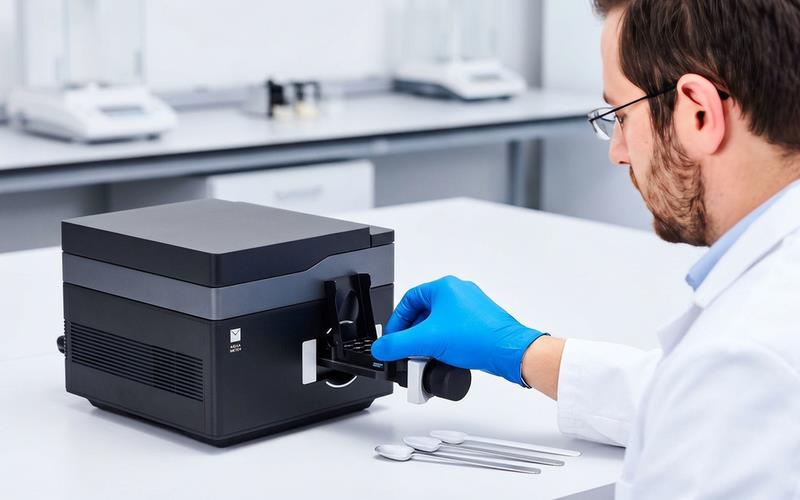
The certificate of analysis (COA) should be reviewed alongside the technical data sheet and the supplier’s handling instructions. A COA reports the results for a particular batch against defined criteria; it does not automatically demonstrate that the ingredient will remain stable in every finished formulation.
Ask the supplier to clarify the test method and acceptance criteria for each important parameter. If the product is intended for a moisture-sensitive capsule blend, for example, a water activity result from the raw material is only one part of the assessment. The final blend should also be evaluated under conditions representative of manufacturing and storage.
5. Consider Excipients and Moisture Migration
A probiotic ingredient rarely exists in isolation throughout the product lifecycle. It may be combined with carriers, prebiotic fibers, sweeteners, flow agents, flavor ingredients, or other active components.
These materials can influence the finished blend’s moisture behavior. Some ingredients are hygroscopic, meaning they readily absorb moisture from their surroundings. A highly hygroscopic component may increase the moisture burden of a blend or make it more difficult to maintain the intended water activity.
This is particularly relevant to synbiotic formulations that combine probiotics with prebiotic ingredients. The compatibility of the individual materials should be assessed rather than assumed from their separate specifications.
A practical development approach is to measure the water activity of the individual ingredients, prepare a representative blend, and evaluate the blend after equilibration and during stability testing. Where relevant, monitor flow, caking, appearance, and viable count as well.
6. Packaging and Storage Are Part of the Stability Strategy
A low water activity value at release does not guarantee that the value will remain unchanged during storage. Probiotic powders can absorb moisture if exposed to humid air or stored in packaging with insufficient moisture-barrier performance.
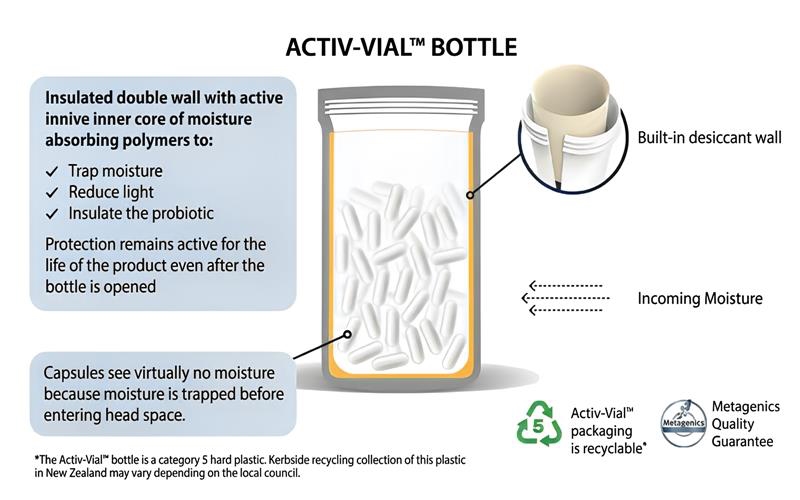
Packaging should be selected according to the product’s sensitivity, expected distribution conditions, shelf-life target, and intended use. Moisture-barrier properties, seal integrity, headspace, desiccant compatibility, and container-opening frequency may all be relevant.
Storage recommendations should be based on product-specific stability evidence. Some probiotic ingredients require refrigerated storage, while others may be designed for storage under specified ambient conditions. Buyers should not assume that every freeze-dried probiotic is shelf-stable at room temperature.
For a finished supplement, stability evaluation should consider the actual package rather than only the bulk ingredient. A material that performs well in a sealed laboratory container may behave differently after repeated opening or when packed into a different bottle, sachet, or blister format.
7. Build a Clear Probiotic Ingredient Qualification Checklist
Before approving a probiotic supplier, confirm the following points:
The strain identity and declared viable count are clearly specified.
The COA includes relevant batch results and identifiable test methods.
Water activity and moisture content are treated as separate parameters.
Storage requirements and shelf-life conditions are documented.
The carrier and excipient system is disclosed sufficiently for formulation assessment.
Packaging and handling recommendations are available.
Stability data are relevant to the intended use and storage conditions.
Batch traceability and change-control procedures are appropriate for the project.
These checks help procurement and technical teams compare suppliers using consistent criteria. They also help identify missing information before a material is introduced into a commercial formulation.
Choosing Low Water Activity Probiotics for Your Next Project
The best probiotic ingredient is not necessarily the one with the lowest reported water activity. It is the one that meets the required strain, potency, quality, handling, and stability specifications for the intended application.
If you are developing probiotic capsules, sachets, dry blends, or synbiotic products, review the ingredient specification together with the formulation and packaging requirements. This approach can help identify potential stability risks earlier in development.
To discuss probiotic ingredient options for your project, review our probiotic ingredient range, request a technical data sheet and batch COA, or contact our team with your target strain, CFU/g requirement, dosage form, expected order quantity, and storage conditions.
References
Wang, A., & Zhong, Q. (2024). Drying of probiotics to enhance the viability during preparation, storage, food application, and digestion: A review. Comprehensive Reviews in Food Science and Food Safety. https://doi.org/10.1111/1541-4337.13287
Silva, C. C. G., et al. (2022). Current Trends in the Production of Probiotic Formulations. Foods. https://pmc.ncbi.nlm.nih.gov/articles/PMC9368262/
The Production and Delivery of Probiotics: A Review of a Practical Approach. https://pmc.ncbi.nlm.nih.gov/articles/PMC6463069/
Emerging Technologies and Coating Materials for Improved Probiotication in Food Products: A Review. https://pmc.ncbi.nlm.nih.gov/articles/PMC8800850/