
A COA Is Only the Starting Point: How to Approve Ingredients with Confidence
A COA for ingredient approval is an essential part of raw material evaluation, but it should not be the only document used to make a purchasing decision. A Certificate of Analysis reports selected test results for a material or batch. Whether those results are sufficient depends on the ingredient, the agreed specification, the intended application, and the quality requirements of the manufacturer.
For dietary supplement brands, contract manufacturers, purchasing teams, and quality assurance professionals, a structured review can help identify gaps before an ingredient enters production.
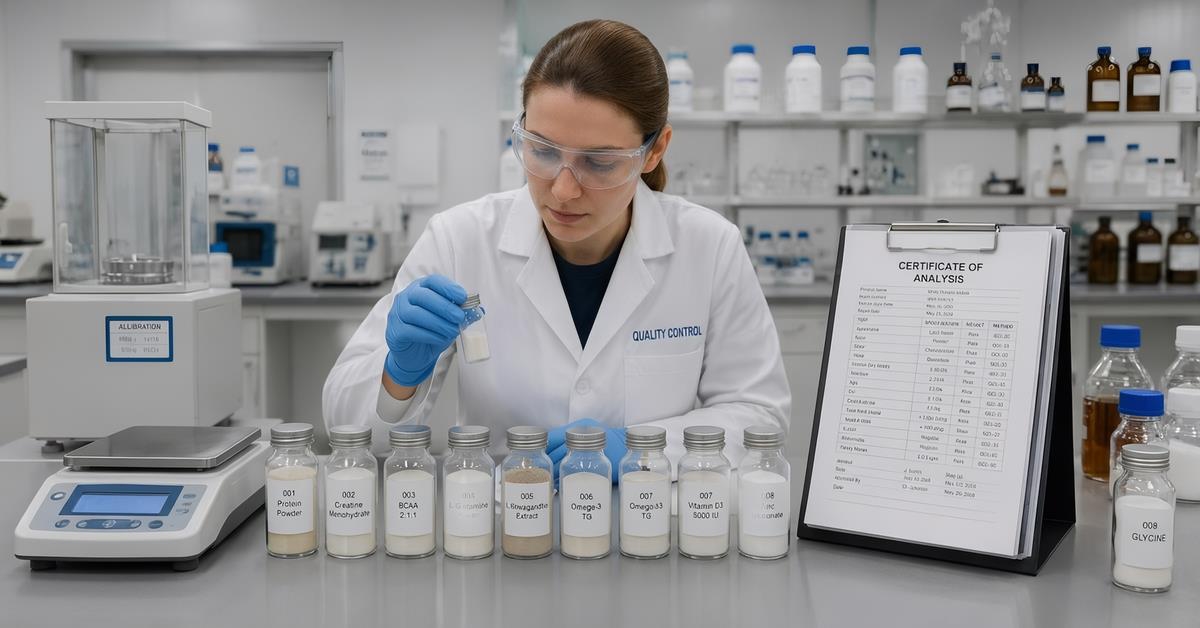
COA for Ingredient Approval: What Does It Actually Tell You?
A Certificate of Analysis typically identifies the material and batch and reports selected analytical results against specified criteria. Depending on the ingredient, it may include identity, assay or potency, moisture, microbiological results, contaminant limits, or physical properties.
However, a COA does not necessarily contain every parameter relevant to a formulation. It may also be a batch-specific report rather than a complete product specification. A specification defines the required attributes and acceptance criteria; a COA reports results for a particular lot against some or all of those criteria.
This distinction matters. A result marked “Pass” is meaningful only when the test, acceptance limit, and material identity are appropriate for the intended use. A passing result for one attribute does not establish that the ingredient meets every requirement of a finished product or manufacturing process.
For U.S. dietary supplement manufacturers, FDA guidance discusses the establishment of component specifications, supplier qualification, and appropriate verification activities. The precise obligations depend on the role of the business and the applicable regulatory requirements. See the FDA’s dietary supplement CGMP guidance.
Start with Identity and the Required Specification
The first question is simple: does the document refer to the exact ingredient you intend to purchase?
Check the ingredient name, grade, form, relevant identification details, batch or lot number, and the specification revision where applicable. Similar names do not always mean that materials are interchangeable. Different chemical forms, botanical sources, concentrations, processing methods, or grades may affect their suitability.
Next, compare the reported results with the specification agreed for your project. Do not rely only on a general product description or a supplier’s standard sales sheet. If your formulation requires a specific assay range, source, physical form, or other attribute, confirm that the requirement is explicitly documented.
It is also useful to distinguish between a mandatory acceptance criterion and a preferred target. For example, a team may have a required assay range and a separate preference for particle size or flowability. Defining these separately helps avoid unnecessary rejection of suitable materials while maintaining control over critical quality attributes.

Review Assay, Purity, and Relevant Contaminants
Assay and purity are important, but they are not identical concepts. Assay usually measures the amount of a specified substance using a defined method. Purity may refer to the proportion of the intended substance or the limits placed on particular impurities, depending on the ingredient and specification.
The appropriate interpretation depends on the method and reporting basis. Before comparing two COAs, check whether the results use comparable units, methods, and calculation bases. For example, results expressed on an as-is basis may not be directly comparable with results reported on a dry basis without additional information.
Contaminant testing should also be risk-based. Depending on the ingredient and intended market, relevant parameters may include heavy metals, residual solvents, pesticides, microbiological limits, or other ingredient-specific contaminants. Not every category applies to every raw material, and a standard panel should not be assumed to cover all possible risks.
If a test is absent from the COA, ask whether it is included in the product specification, tested under a separate report, or controlled through another documented process. The goal is not to demand every possible test; it is to confirm that the relevant risks are addressed with suitable evidence.
Check Moisture, Water Activity, and Physical Properties
For powders and moisture-sensitive ingredients, review moisture content and water activity separately when both are relevant. Moisture content indicates the amount of water in the material, while water activity describes how available that water is under defined conditions. One value should not be used as a substitute for the other.
Physical properties can be equally important during manufacturing. Particle size distribution, bulk density, flowability, hygroscopicity, dispersibility, and solubility may influence blending, filling, handling, and the performance of the final dosage form.
Consider a hypothetical powder that meets its assay specification but flows poorly on a production line. The material may still be chemically acceptable, yet it could create handling or process challenges. Likewise, an ingredient that dissolves adequately in one test system may behave differently in a formula with a different pH, temperature, or combination of ingredients.
For this reason, QA and R&D should agree which physical properties need to be specified and which should be evaluated through application testing. A COA is most useful when its data relate to the real requirements of the process.
Verify the Test Method and the Meaning of “Pass”
A reported result should be interpreted in the context of the method used. Check whether the analytical method is identified, whether the units are clear, and whether the acceptance limit is stated or referenced in the applicable specification.
Where two suppliers report different results, do not assume that the material with the more favorable number is automatically better. Differences may reflect test methods, sample preparation, reporting bases, or actual differences in the material. If the parameter is critical, ask the supplier to clarify the method and confirm comparability before drawing a conclusion.
For parameters that are especially important to product performance, your quality system may require additional verification, an independent test, or a review of supplier qualification records. The appropriate approach depends on the material and the documented risk assessment.
Packaging, Storage, and Shelf-Life Information Matter
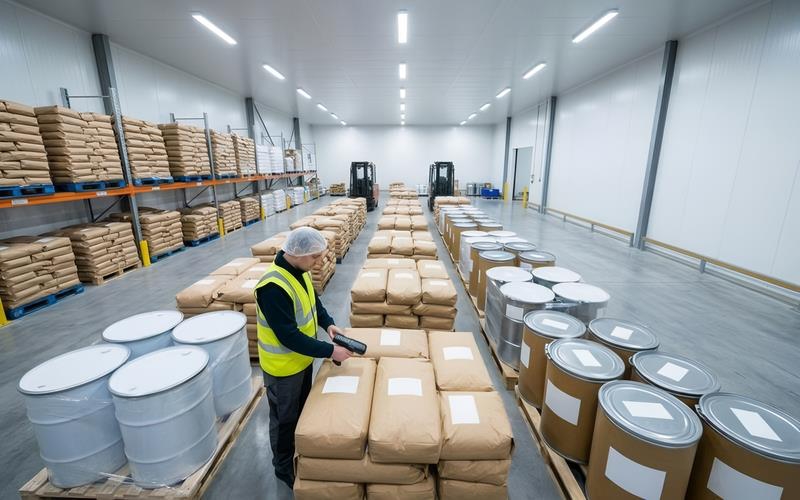
The quality of an ingredient can change if it is stored or handled under unsuitable conditions. Review the recommended storage temperature, humidity restrictions where relevant, protection from light, packaging type, and instructions for handling opened containers.
For moisture-sensitive powders, the packaging system and exposure during production may influence the material’s condition after opening. For sensitive actives or biological ingredients, the supplier’s available stability data may also be relevant.
Do not assume that the date on a COA establishes the shelf life of every batch under every condition. Ask which shelf-life or retest period applies, how it is supported, and what storage conditions are required. If a material is used in a premix or finished product, evaluate that formulation separately rather than automatically transferring raw-material stability claims to the final product.
Batch Consistency and Supplier Qualification
A single compliant COA is useful, but it cannot by itself demonstrate long-term consistency. Where a parameter is critical, teams should consider historical results, batch-to-batch variation, the supplier’s control process, and the availability of supporting documentation.
Supplier qualification is not just a document-collection exercise. It is a process for determining whether the supplier can consistently provide material that meets the agreed requirements. Depending on the risk and applicable procedures, the review may include specifications, COAs, relevant quality certifications, manufacturing or quality-system information, change notification practices, and handling of deviations.
Ask how changes in source, manufacturing process, specification, or testing method are communicated. A material that meets today’s requirements may need reevaluation if a relevant attribute changes.
Use a Practical Ingredient Approval Checklist
Before approving a raw material, confirm that your team has addressed the following:
Identity and exact material description.
Agreed specification and acceptance limits.
Assay, purity, and relevant contaminant controls.
Moisture, water activity, or physical properties where applicable.
Appropriate analytical methods and clear reporting units.
Packaging, storage, shelf-life, or retest information.
Batch traceability and supporting documentation.
Suitability for the intended formulation and manufacturing process.
Supplier qualification and change-control expectations.
This checklist should be adapted to the material and application. It is not necessary to request every possible document for every ingredient, but critical requirements should be clear before the purchase order is placed.
Request Ingredient Specifications and Supporting Documents from Esubio
Esubio supports ingredient sourcing for nutraceutical and dietary supplement applications. If you are assessing a new raw material, the most efficient starting point is to share the ingredient name, intended application, target specification, estimated quantity, and any critical quality requirements.
Our team can help discuss available ingredient options and request relevant documentation, such as a product specification, batch COA, or other supporting technical information where available. Document availability varies by product and supplier, so requirements should be confirmed for the specific material.
Visit Esubio to explore ingredient solutions or contact our team to discuss your sourcing requirements.
A well-reviewed COA is valuable. A well-defined specification, suitable verification, and an application-focused approval process make it more valuable.
References
U.S. Food and Drug Administration. Small Entity Compliance Guide: Current Good Manufacturing Practice in Manufacturing, Packaging, Labeling, or Holding Operations for Dietary Supplements. https://www.fda.gov/regulatory-information/search-fda-guidance-documents/small-entity-compliance-guide-current-good-manufacturing-practice-manufacturing-packaging-labeling
2. U.S. Food and Drug Administration. Questions and Answers on Dietary Supplements. https://www.fda.gov/food/information-consumers-using-dietary-supplements/questions-and-answers-dietary-supplements
3. U.S. Food and Drug Administration. Dietary Supplements Guidance Documents & Regulatory Information. https://www.fda.gov/food/guidance-documents-regulatory-information-topic-food-and-dietary-supplements