
Water Activity vs. Moisture Content: Why Both Matter in Ingredient Selection
Water activity vs moisture content is an important distinction when evaluating powdered ingredients for dietary supplements, probiotics, functional blends, and other moisture-sensitive formulations. Although the two measurements are related, they describe different properties. Treating them as interchangeable can lead to incomplete ingredient assessments, unsuitable storage decisions, and unexpected formulation challenges.
For R&D teams, formulation engineers, and quality assurance professionals, understanding both parameters can help build a more complete picture of ingredient quality and stability.

Water Activity vs Moisture Content: Understanding the Difference
Moisture content measures the amount of water present in a material. Depending on the method used, it may be reported as a percentage by weight or another defined unit. It helps characterize the material’s overall water content and can be useful for monitoring drying processes, production consistency, and product specifications.
Water activity (Aw), by contrast, describes the availability of water for microbial growth and certain chemical or physical changes. It is expressed on a scale from 0 to 1 under defined measurement conditions. In general, a lower Aw means less water is available to participate in these processes, although the specific implications depend on the material and the conditions involved.
The difference matters because not all water in a powder behaves in the same way. Some water may interact strongly with proteins, carbohydrates, salts, or other constituents. As a result, two ingredients with similar moisture content may have different water activity values.
The reverse is also important: a low moisture-content result does not automatically establish a particular Aw value. Each parameter should be measured using an appropriate method rather than inferred from the other.
Why Water Activity Matters in Powdered Ingredients
Water activity can help teams assess the conditions that influence ingredient stability. In food systems, microbial growth depends on multiple factors, including available water, temperature, pH, and the characteristics of the microorganism. Water activity is therefore a useful part of a risk assessment, but it is not a substitute for microbiological testing or a complete safety evaluation.
For powdered nutraceutical ingredients, Aw may also be relevant to physical and chemical stability. Depending on the ingredient, moisture conditions can influence caking, flowability, agglomeration, chemical degradation, and interactions between components.
These effects are not identical across all powders. A botanical extract, amino acid, probiotic preparation, and carbohydrate-based excipient may respond differently to the same storage environment. Ingredient composition, processing history, packaging, and temperature can all affect the result.
For this reason, a low-Aw specification should be linked to a defined product requirement rather than treated as a universal quality benchmark.
Why Both Measurements Matter for Probiotic Ingredients
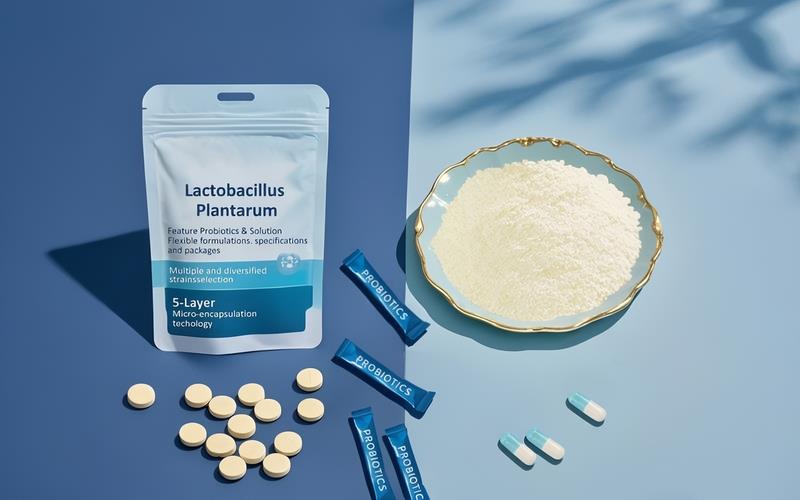
Probiotic ingredients require particular care because product performance depends on the characteristics of the specific microorganisms and formulation. Water activity and moisture content can be relevant to the stability of certain dried probiotic preparations, but neither measurement alone predicts how well a strain will retain viability throughout storage.
When evaluating probiotic ingredients or probiotic-excipient blends, R&D and QA teams should consider:
Water activity measured under defined conditions.
Moisture content and the analytical method used.
Strain identity and relevant viability data.
Storage temperature and humidity conditions.
Packaging performance and moisture-barrier properties.
Compatibility with other ingredients in the intended formulation.
Stability data collected over a relevant period.
A result obtained immediately after production may not describe the ingredient’s behavior after transport, repeated exposure to ambient humidity, or extended storage. Where stability is critical, time-based data under defined conditions are more informative than a single measurement.
Teams should also distinguish between a raw material’s stability and the stability of the finished blend. Adding a second ingredient can change the way moisture is distributed within the system. The final formulation may therefore require its own evaluation.
Low Water Activity Ingredients: What Should Buyers Ask?
When sourcing low water activity ingredients, buyers should avoid relying on a general statement such as “low moisture” or “high stability.” Instead, they should establish the actual requirement with their R&D and QA teams.
Start by asking what the specification needs to achieve. Is the purpose to support probiotic stability, reduce the risk of moisture-related caking, maintain powder handling properties, or meet a defined manufacturing requirement? Different objectives may require different testing and acceptance criteria.
Next, clarify the measurement conditions. The test method, temperature, sample handling, equilibration, and reporting units should be sufficiently defined for the results to be interpreted consistently. Water activity measurements can be affected by temperature and measurement conditions, so comparisons between suppliers are most useful when the methods are comparable.
Request the applicable product specification and a representative Certificate of Analysis (COA). Review whether Aw and moisture content are listed separately, whether acceptance limits are clear, and whether the documents refer to a specific batch or a general specification.
If a supplier offers a low-Aw excipient or a premix designed for a particular application, ask for the technical basis of the claim. Relevant information may include the composition, recommended storage conditions, packaging details, and available stability data. Do not assume that the same specification or performance applies to every ingredient in a product category.
Packaging and Storage Can Change the Picture
Ingredient stability does not depend on the initial test result alone. Powder can exchange moisture with its environment, and the extent of that exchange depends on the material, packaging, seal integrity, relative humidity, and storage conditions.
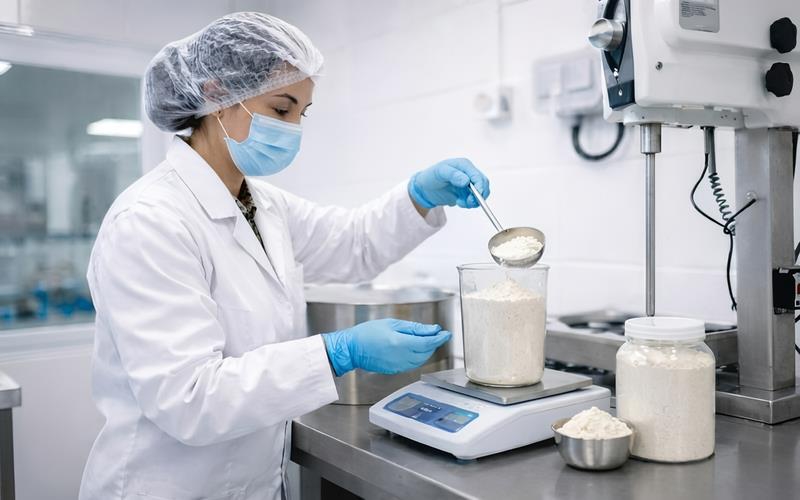
For moisture-sensitive ingredients, the packaging system should be considered part of the overall control strategy. A material that meets its Aw specification when tested may behave differently if the package allows moisture ingress or is repeatedly opened in a humid production area.
For manufacturing teams, practical controls may include maintaining suitable warehouse conditions, minimizing unnecessary exposure during dispensing, resealing opened packages promptly, and following the supplier’s stated storage instructions. These controls should be validated against the specific ingredient and manufacturing environment.
Where shelf life is important, request available stability information and clarify whether the data apply to the raw material, a premix, or the finished product. These are different systems and should not be treated as interchangeable.
Build an Ingredient Specification Around the Application
A useful ingredient specification should identify the attributes that matter for the intended use. Depending on the material, this may include identity, assay or potency, moisture content, water activity, microbiological limits, relevant contaminants, physical properties, packaging, and storage conditions.
Not every ingredient requires every test. The right set of parameters should be determined by the ingredient’s characteristics, the intended application, applicable requirements, and the manufacturer’s quality system.
For supplier comparisons, use the same target specification and test expectations wherever possible. This makes it easier to distinguish a genuinely suitable material from one that simply has an attractive price or a broad marketing claim.
Discuss Your Low-Aw Ingredient Requirements with Esubio
Esubio supports ingredient sourcing for nutraceutical and dietary supplement applications, including selected low-water-activity ingredients and excipients. For projects involving probiotic ingredients, powder blends, or moisture-sensitive materials, the starting point is a clear application brief and a defined set of technical requirements.
If you are evaluating a low-Aw ingredient, a probiotic-excipient combination, or a powdered premix, contact Esubio to discuss product options and request the relevant specification, COA, and available supporting documentation.
Visit Esubio to explore ingredient solutions, or contact our team with your target Aw, moisture-content requirement, application, and expected order quantity.
A better sourcing decision begins by measuring the right parameters for the right application.
References
U.S. Food and Drug Administration. Water Activity (aw) in Foods. https://www.fda.gov/inspections-compliance-enforcement-and-criminal-investigations/inspection-technical-guides/water-activity-aw-foods
2. U.S. Food and Drug Administration. Small Entity Compliance Guide: Current Good Manufacturing Practice in Manufacturing, Packaging, Labeling, or Holding Operations for Dietary Supplements. https://www.fda.gov/inspections-compliance-enforcement-and-criminal-investigations/inspection-technical-guides/water-activity-aw-foods
Editorial note: Reference 2 above should be replaced with the correct FDA dietary-supplement CGMP page below when publishing: https://www.fda.gov/regulatory-information/search-fda-guidance-documents/small-entity-compliance-guide-current-good-manufacturing-practice-manufacturing-packaging-labeling