
Botanical Extract Standardization: Why a Higher Ratio Is Not Always Better
When comparing botanical extracts, buyers often encounter specifications such as 10:1, 20:1, 50:1, or even higher extraction ratios.
At first glance, a higher ratio may appear to indicate a stronger or more concentrated ingredient. It can be tempting to use this number as the main basis for comparing suppliers.
But is a 50:1 extract always better than a 10:1 extract?
Not necessarily.
An extraction ratio provides information about the relationship between the starting botanical material and the resulting extract. It does not, by itself, tell you the concentration of a specific active or marker compound, the complete chemical profile, or how the ingredient will perform in a finished formulation.
For procurement and R&D teams, understanding the difference between extraction ratio and standardization is essential when selecting botanical ingredients.
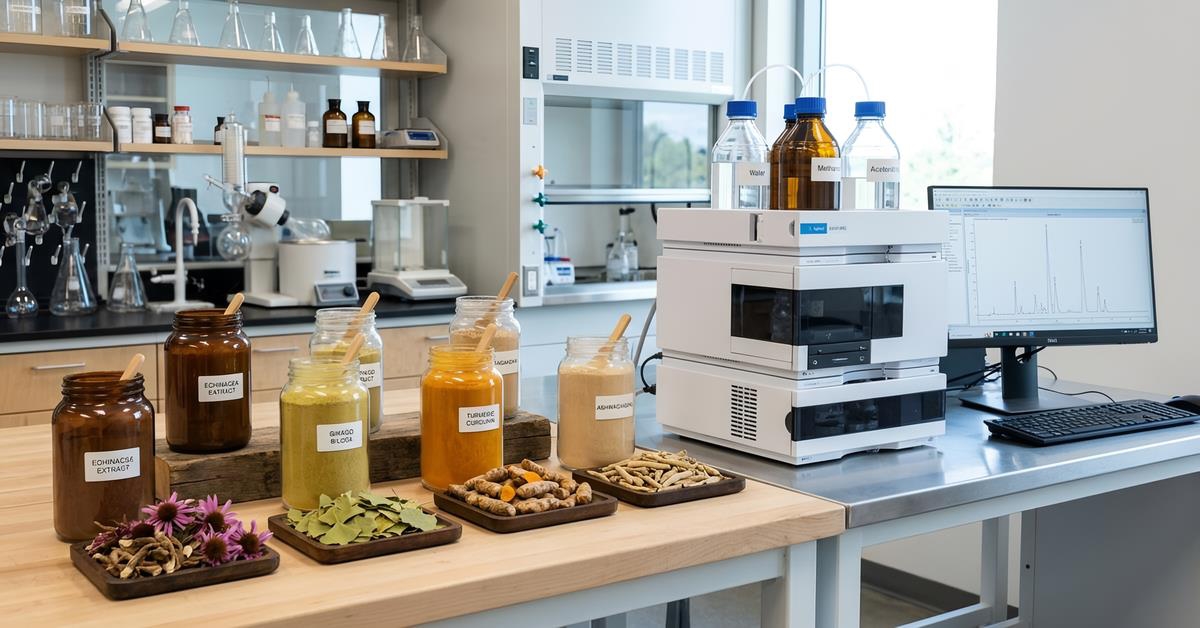
What Does an Extraction Ratio Actually Tell You?
An extraction ratio is generally used to describe the relationship between the quantity of starting plant material and the quantity of extract obtained.
For example, a 10:1 ratio may indicate that ten parts of starting botanical material were used to produce one part of extract, according to the supplier’s defined calculation.
However, the precise meaning depends on how the ratio is calculated and reported.
Questions arise when suppliers do not clearly explain whether the ratio refers to the native extract, the finished commercial powder, or a preparation that includes carriers or other excipients.
A ratio should therefore be treated as process-related information, not as a direct measurement of active compound content.
When comparing two extracts, ask for the calculation basis and clarify whether the stated ratio includes carriers.
Extraction Ratio and Marker Compound Content Are Different
Standardization usually refers to controlling one or more selected constituents or analytical markers within a defined range.
For example, a botanical extract may be specified by a certain percentage of a marker compound. This provides a different type of information from the extraction ratio.
A 10:1 extract standardized to a defined marker level may provide more useful quantitative information for formulation than a 50:1 extract with no marker specification.
This does not mean that marker standardization alone describes every relevant aspect of botanical quality. It means that the buyer should understand what each specification actually measures.
A useful comparison should distinguish between:
Extraction ratio.
Marker compound identity.
Marker compound percentage or range.
Analytical method used for testing.
Whether the result refers to the native extract or finished powder.
Carrier or excipient content, where applicable.
These details help R&D teams assess whether the material matches the intended formulation requirements.
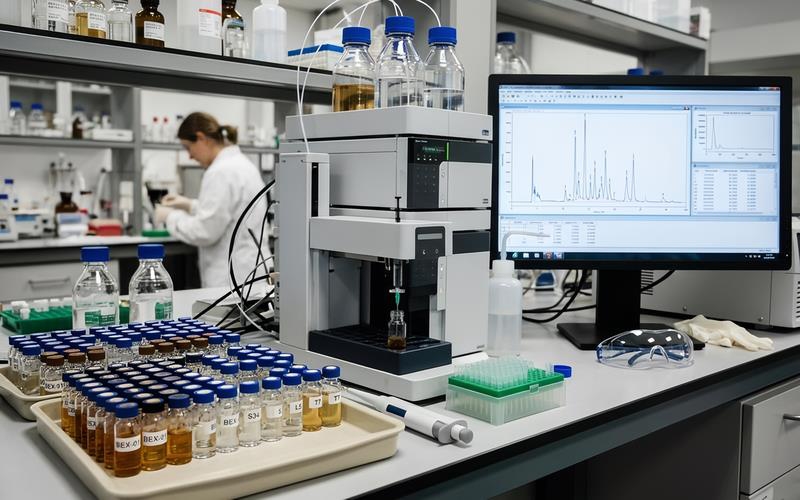
Why the Analytical Method Matters
A percentage on a specification sheet is only meaningful when the measured substance and analytical method are clear.
Different analytical techniques may be used depending on the botanical species and target compounds. HPLC, for example, may be suitable for certain marker compounds, while other materials may require different methods.
The method should be appropriate for the analyte and the material being tested.
When reviewing a COA, check whether it identifies the tested marker and the method used. If two suppliers report different results, do not assume that the higher number automatically represents a better extract.
The results may be based on different analytical methods, sample preparation procedures, or reporting conventions.
For critical ingredients, R&D or quality teams may need to confirm method suitability and comparability before using the data to approve a new source.
The Botanical Species and Plant Part Must Be Clear
A botanical name alone may not provide enough information for sourcing and quality review.
Confirm the botanical identity, including the accepted scientific name and relevant plant part. Leaves, roots, bark, seeds, flowers, and fruits can have different chemical profiles.
The country or region of origin may also be relevant, depending on the species, supply chain, and customer requirements.
For some botanicals, the harvest season, growing conditions, post-harvest handling, and processing method may influence the composition of the raw material.
These factors do not mean that one origin is automatically superior to another. They indicate why botanical identity and source information should be clearly documented.
Procurement should avoid comparing extracts solely by their common names or commercial descriptions.
Carriers and Excipients Can Change the Finished Extract Composition
Commercial botanical powders may contain carriers or other processing-related ingredients. These can influence handling, solubility, powder properties, and the actual proportion of native extract in the finished material.
For example, a supplier may offer a spray-dried extract powder with a carrier to support drying or improve powder handling.
The presence of a carrier is not automatically a quality problem. Its suitability depends on the formulation, intended use, labeling requirements, and customer specification.
However, it should be disclosed and understood.
When requesting a quotation, ask whether the product contains maltodextrin or another carrier, whether the carrier percentage is specified, and whether the stated extraction ratio refers to the native extract or the finished powder.
This information is particularly important when comparing products from different suppliers or calculating the amount of botanical extract delivered per serving.
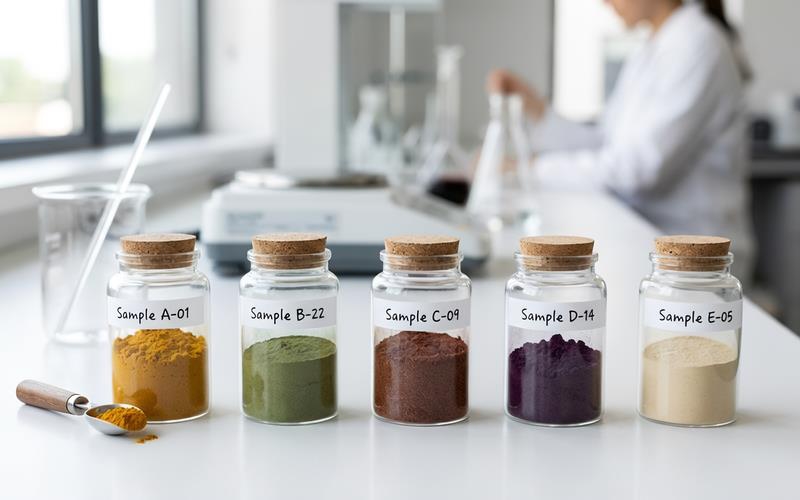
What Should Procurement Compare Beyond the Price?
A lower price per kilogram does not necessarily mean a lower cost per effective formulation unit.
If two extracts have different marker compound levels, carrier content, or specifications, the required inclusion level may differ.
A more meaningful comparison considers the actual formulation requirement.
Procurement teams should review:
Botanical identity and plant part.
Extraction ratio and calculation basis.
Marker compound and standardized content.
Analytical method and acceptance range.
Carrier and excipient composition.
Relevant contaminants and microbiological requirements.
Moisture content and other physical properties where relevant.
Packaging, storage, MOQ, and lead time.
The aim is to compare materials that are technically suitable for the same application, not simply products with similar names.
What Should R&D Evaluate Before Approving an Extract?
R&D teams should assess the extract in the context of the finished formulation.
A botanical extract with a suitable marker level may still present practical formulation challenges. Color, taste, odor, solubility, dispersion, hygroscopicity, and compatibility with other ingredients can all be relevant.
The importance of each attribute depends on the dosage form.
For a capsule, powder flow and fill performance may be important. For a drink mix, solubility, dispersion, taste, and sedimentation may require more attention. For a multi-ingredient blend, the extract’s carrier composition and physical properties may affect the overall blend.
A sample should therefore be evaluated under conditions that reflect the intended product and process.
R&D should also define which characteristics are critical acceptance criteria and which are preferences. This makes supplier comparison more objective and helps prevent unnecessary changes during scale-up.
A Better Botanical Extract Inquiry Starts with the Right Questions
When contacting a supplier, provide the botanical name, plant part, target marker compound, required content, intended application, and estimated order quantity where available.
Then ask for the product specification and relevant COA. Clarify the extraction ratio, analytical method, carrier composition, and available source information.
If you are still exploring options, explain which properties are essential and which can be discussed. A clear technical brief makes it easier to identify suitable alternatives.
Avoid using a single number as a shortcut for botanical quality. A high extraction ratio, a high marker percentage, and a suitable finished-formulation performance are not interchangeable claims.
Source Botanical Extracts Based on Your Formulation Requirements
Botanical extract selection requires a balance between identity, composition, documentation, and application performance.
Esubio supports sourcing for botanical extracts and other functional ingredients used by supplement brands, manufacturers, and R&D teams. We help clarify product requirements and review available technical information for specific materials.
If you are comparing botanical extracts, share the plant species, plant part, target marker, extraction ratio, application, and estimated quantity with our team.
Visit Esubio to explore ingredient solutions or discuss your botanical sourcing requirements.
The best botanical extract is not necessarily the one with the biggest ratio. It is the one whose identity, composition, and performance match the needs of your formulation.
References
European Medicines Agency — Guideline on Quality of Herbal Medicinal Products / Traditional Herbal Medicinal Products
https://www.ema.europa.eu/en/quality-herbal-medicinal-products-traditional-herbal-medicinal-products-scientific-guidelineUSP — Herbal Medicines Compendium
https://hmc.usp.org/FDA — Botanical Drug Development: Guidance for Industry
https://www.fda.gov/regulatory-information/search-fda-guidance-documents/botanical-drug-development-guidance-industry