
Comparing Botanical Extract Quotes? What Buyers Should Check First
Botanical extract sourcing can become complicated when two suppliers offer the same product name at noticeably different prices. One quotation may list Green Tea Extract, Turmeric Extract, or Ashwagandha Extract, while another supplier uses exactly the same product name but provides a different specification and price.
For procurement managers and supplement brands, the immediate question is often: Why is one supplier more expensive?
The answer may be that the two quotations do not describe equivalent ingredients.
A botanical extract is influenced by the plant species, plant part, starting material quality, extraction process, solvent, standardization, carrier content, and testing requirements. These factors can affect the extract’s composition, physical properties, intended application, and commercial value.
Before comparing prices, buyers should establish whether the quoted products actually meet the same technical requirements.
Botanical Extract Sourcing: Why the Same Plant Name Can Mean Different Ingredients
A common mistake in ingredient purchasing is assuming that the product name provides enough information to compare two botanical extracts.
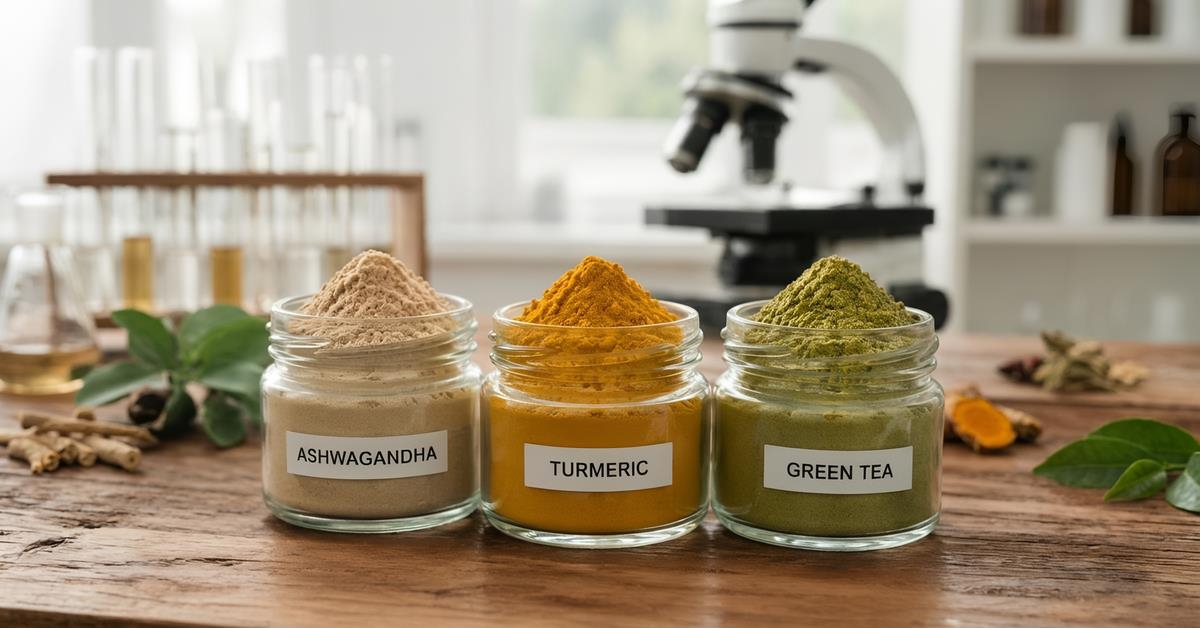
Consider Green Tea Extract. The product name alone does not establish the botanical identity, plant part, extraction solvent, catechin profile, EGCG content, carrier composition, or analytical method.
The same issue applies to Turmeric Extract. A conventional turmeric extract and a curcuminoids-standardized extract may have different compositions and applications. Their specifications should not be treated as interchangeable simply because both are described as turmeric extracts.
Ashwagandha Extract provides another example. The plant part, extract characteristics, marker compounds, and standardization target can differ between products. A specification referring to root material should not automatically be compared with one based on a different plant part.
Botanical raw materials also have natural variation. Growing conditions, harvesting, storage, and processing can influence the starting material. Extraction conditions can further affect the final composition.
A product name is therefore a starting point for an inquiry, not a complete technical specification.
Seven Specifications to Review Before Comparing Quotes
A fair supplier comparison begins with a consistent specification checklist. The following information helps procurement and R&D teams identify differences that may explain price variation.
| Specification | What buyers should confirm | Why it matters |
|---|---|---|
| Botanical identity | Common name, Latin binomial, and relevant taxonomic details | Helps establish exactly which plant is supplied. |
| Plant part | Root, leaf, fruit, seed, flower, bark, or other specified part | Different plant parts can have different chemical profiles. |
| Extract ratio | Definition and basis of the stated ratio | Helps describe the relationship between starting plant material and extract. |
| Standardization | Target marker or active constituent and its specified content | Defines a measurable composition requirement. |
| Extraction solvent | Solvent or solvent system used, where relevant | Can influence which constituents are extracted. |
| Carrier and excipients | Whether carriers are present and their proportion or basis | Affects native extract content and finished ingredient composition. |
| Testing and documentation | Test methods, COA, specification, and relevant contaminant controls | Supports quality review and supplier qualification. |
These details should be reviewed together. A supplier may provide a high extract ratio, for example, but that figure does not by itself establish the concentration of a specific active constituent.
Likewise, a standardized extract may meet a defined marker-content requirement, but buyers should still confirm plant identity, plant part, carrier content, and the method used to measure the marker.
The right specification depends on the intended application and the quality requirements of the target market.

Extract Ratio vs. Standardized Active Content
Extract ratio and standardized active content are often confused during botanical ingredient purchasing.
An extract ratio describes a relationship between the quantity of starting botanical material and the quantity of extract produced. However, the exact definition and calculation basis must be confirmed. In particular, buyers should establish whether the ratio refers to the native extract or the finished commercial extract after carriers or other excipients have been added.
Standardized active content describes the specified level of a particular constituent or marker compound in the extract. For example, a specification may define a minimum percentage of a selected marker, measured using a stated analytical method.
These two parameters answer different questions.
An extract ratio provides information about the relationship between starting plant material and extract output. Standardization provides information about the specified content of a particular constituent.
A higher extract ratio does not automatically mean a higher concentration of the desired active constituent. The final composition also depends on raw material quality, extraction solvent, extraction conditions, concentration steps, and the addition of carriers.
For this reason, buyers should not use extract ratio as the only measure of extract strength. If the application requires a specific marker content, that requirement should be stated directly in the RFQ and verified through an appropriate analytical method.
The scientific literature on plant-to-extract ratios highlights the limitations of using ratio values alone to establish equivalence between botanical extracts.
Why Carrier Content and Physical Properties Matter
Some botanical extracts are supplied with carriers or other excipients. These materials may be included to improve powder handling, support drying, reduce clumping, or achieve a specified composition.
However, carrier content should be understood before comparing products.
Imagine two suppliers offering a powdered botanical extract with the same stated marker percentage. One product may contain a different proportion of native extract and carrier from the other. The products may therefore have different composition bases even if their headline descriptions look similar.
Buyers should ask whether the stated standardization applies to the native extract or to the finished commercial powder. They should also request clarification on the carrier identity and content where relevant.
Physical properties matter as well. Depending on the dosage form, R&D teams may need to evaluate:
Particle size and distribution, which can affect blending and uniformity.
Bulk density, which can influence formulation volume and filling.
Flowability, which can affect powder handling and production efficiency.
Solubility or dispersibility, which may be important for beverages and instant powders.
Moisture behavior and hygroscopicity, which may affect storage and powder handling.
Color and odor, which may influence the finished product’s appearance and sensory profile.
Not every property needs to be a formal specification for every extract. The relevant parameters should be selected according to the product’s intended application.
For example, an extract intended for a capsule blend may have different physical requirements from one intended for a ready-to-mix beverage.
How to Compare Botanical Extract Quotes Fairly
Consider a buyer requesting a quotation for Green Tea Extract from two suppliers.
Supplier A offers one price per kilogram. Supplier B offers a higher price. If the buyer compares only the product name and price, Supplier B may appear less competitive.
However, the comparison is incomplete until the specifications are aligned.
The buyer should confirm whether both quotations refer to the same botanical identity and plant part. Next, compare the standardization target and analytical method. Then clarify whether the extract ratio is defined on the same basis and whether either product contains a carrier.
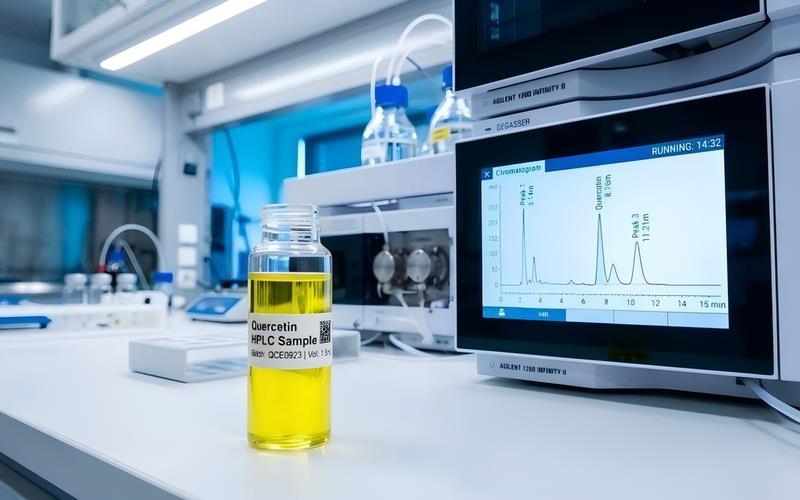
The testing requirements should also be compared. A quotation supported by a more detailed specification or additional agreed quality testing may not be directly comparable with one that provides only a basic description.
Finally, compare the commercial terms: MOQ, sample availability, packaging, lead time, quotation validity, delivery terms, and destination requirements.
Only after these points are aligned can the buyer make a meaningful price comparison.
The objective is not necessarily to choose the product with the highest marker content or the highest extract ratio. It is to identify the specification that fits the formulation and quality requirements without paying for characteristics that the project does not need.
Questions to Include in Your Botanical Extract RFQ
A clear request for quotation helps suppliers identify the correct product and reduces repeated clarification.
For a botanical extract project, include the following information:
What is the exact botanical identity and plant part?
What standardization level or marker content is required?
Is a particular extract ratio required, and how should it be defined?
Are any carriers or excipients acceptable or restricted?
Which analytical methods and quality documents are required?
Are there specific limits for heavy metals, pesticides, residual solvents, or microbiological parameters?
What quantity, packaging, sample size, and delivery destination are required?
If the project is still in the R&D stage, explain which requirements are fixed and which can be discussed. This allows suppliers to identify potential alternatives without assuming that every specification is negotiable.
Conclusion: Compare Specifications Before Comparing Prices
Botanical extract sourcing should begin with technical comparability, not a price-per-kilogram comparison.
The same plant name can describe products with different plant parts, extraction processes, standardization targets, carrier contents, and physical properties. These differences can affect both formulation suitability and commercial value.
For procurement teams, the most effective approach is to define the required botanical identity, plant part, marker content, extract ratio basis, carrier requirements, testing, and commercial terms before evaluating supplier quotations.
Looking for a botanical extract for your next formulation? Share the botanical name, plant part, standardization target, and required specifications with Esubio. Explore our botanical extract range, request available product specifications and COAs, or contact our team to discuss suitable ingredient options for your project.
References
Monagas, M., et al. (2022). Understanding plant to extract ratios in botanical extracts. Frontiers in Pharmacology, 13, 981978. https://pmc.ncbi.nlm.nih.gov/articles/PMC9561911/
National Institutes of Health, Office of Dietary Supplements. Botanical Dietary Supplements: Background Information. https://ods.od.nih.gov/factsheets/BotanicalBackgrounder/
Health Canada. Quality of Natural Health Products Guide. https://www.canada.ca/en/health-canada/services/drugs-health-products/natural-non-prescription/legislation-guidelines/guidance-documents/quality-guide.html
National Center for Complementary and Integrative Health. NCCIH Policy: Natural Product Integrity. https://www.nccih.nih.gov/research/nccih-policy-natural-product-integrity
American Herbal Products Association. AHPA Guidance Policies. https://www.ahpa.org/ahpa_guidance_policies