
Capsule Shell Selection: Gelatin, HPMC, and Enteric Options Explained
Capsule shell selection is an important part of supplement product development. The shell is not simply an outer container: its material, moisture characteristics, mechanical properties, and functional design can influence filling, storage, product compatibility, and the intended release behavior.
For procurement teams, the challenge is to compare capsule options with different materials, sizes, colors, and specifications.
For R&D teams, the more important question is whether the shell is compatible with the formulation and the intended product performance.
Gelatin, HPMC, and enteric capsule options each have different characteristics. The right choice depends on the formulation, manufacturing process, target market, and product requirements.
Start With the Intended Dosage Format
Before comparing capsule materials, define the product requirements.
Ask:
Is the product a hard capsule or softgel?
Will it contain powder, granules, pellets, or liquid?
Does the formulation contain moisture-sensitive ingredients?
Is a vegetarian or specific material requirement necessary?
Is delayed or enteric release required?
Are there specific filling equipment or production constraints?
What capsule size and fill weight are needed?
These questions help narrow the options before requesting quotations.
A shell suitable for a dry powder blend may not be suitable for a liquid-filled formulation. Similarly, a standard capsule should not be assumed to provide enteric protection.
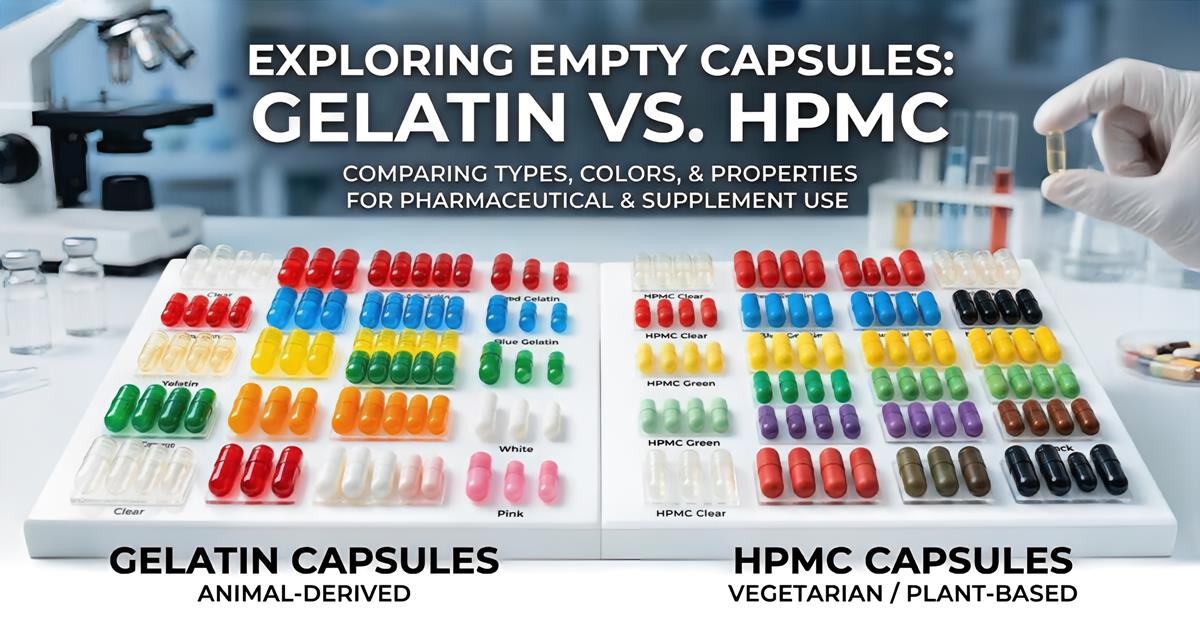
Gelatin Capsules: A Common Option for Conventional Formulations
Gelatin capsules are widely used in supplement and pharmaceutical applications.
Potential advantages include:
Established manufacturing processes
Broad availability in standard sizes
Familiar handling and filling characteristics
Availability in different colors and configurations
Suitability for many conventional powder and pellet formulations
However, gelatin capsules contain moisture, and their physical properties can be influenced by environmental conditions and interactions with the fill material.
Formulators should consider:
Moisture sensitivity of the fill
Storage humidity and temperature
Compatibility with hygroscopic ingredients
Potential interactions between fill components and shell
Mechanical integrity during filling and storage
Gelatin should not be selected solely because it is familiar or commercially available. The actual formulation and storage conditions still need to be assessed.

HPMC Capsules: An Alternative for Specific Formulation Requirements
Hydroxypropyl methylcellulose (HPMC) capsules are commonly used as an alternative to gelatin shells.
They may be considered when a product requires a non-gelatin capsule material or when specific formulation and processing requirements make HPMC worth evaluating.
Potential considerations include:
Material preference and target-market requirements
Shell moisture characteristics
Compatibility with the fill formulation
Filling equipment and process conditions
Storage and packaging requirements
HPMC capsules are not automatically superior to gelatin in every application. Compatibility depends on the specific formulation, shell design, and storage environment.
For example, research comparing lipid-based formulations in hard gelatin and HPMC capsules found that compatibility varied with the formulation components. This illustrates why a general material preference cannot replace experimental testing.
Enteric Capsules: When Release Location Matters
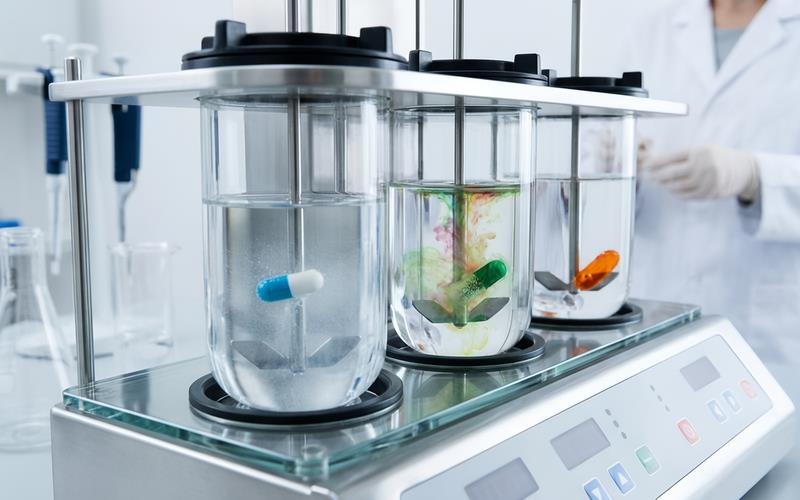
Enteric or gastro-resistant capsule systems are designed to resist release under specified acidic conditions and permit release under defined later-stage conditions.
They may be considered when the product requires protection from gastric conditions or a particular release profile.
However, not all products need enteric protection, and not all enteric systems work in the same way.
Some approaches use capsule shells made with functional polymers. Others use standard capsules filled with enteric-coated pellets or particles.
When evaluating an enteric option, clarify:
The intended release profile
The test method and acceptance criteria
The relevant pH conditions
Whether the shell itself is enteric or the fill contains coated particles
The impact of the formulation on capsule performance
Whether the product requires specific regulatory or pharmacopoeial testing
Do not rely on the term “enteric” alone. Request technical information and performance data for the specific capsule system.
Compare the Main Capsule Options
| Evaluation point | Gelatin | HPMC | Enteric system |
|---|---|---|---|
| Shell material | Gelatin-based | Cellulose-derived polymer | Functional polymer system or enteric-coated fill |
| Typical selection reason | Conventional capsule applications | Non-gelatin material preference or specific formulation needs | Defined gastro-resistant release requirement |
| Moisture considerations | Shell and fill interactions need assessment | Product-specific shell and fill compatibility needs assessment | Depends on the particular system |
| Formulation compatibility | Must be tested | Must be tested | Must be tested against the intended release requirement |
| Key development question | Is the fill compatible with the shell? | Does the material suit the formulation and process? | Does the system achieve the required release performance? |
This comparison is a starting point, not a universal ranking. Actual performance depends on the capsule product and formulation.
Formulation Compatibility: The Issue Buyers Should Not Overlook
A capsule shell and its fill formulation are in direct contact during storage.
Interactions may affect the shell’s physical integrity or the behavior of the fill.
For hard capsules, consider:
Hygroscopic ingredients: Materials that absorb moisture may affect the shell or the stability of the fill.
Liquid and lipid-based fills: The oils, surfactants, solvents, and other excipients may interact differently with different shell materials.
Reactive components: Certain formulation components may affect shell properties and release behavior.
Powder blends: Particle size, flowability, and fill volume may influence capsule filling performance.
For softgels, the relationship between shell composition and fill formulation is particularly important. Plasticizers, water content, fill composition, and storage conditions can all influence shell performance.
The correct approach is to evaluate the complete shell-fill system rather than selecting a capsule material in isolation.
What Procurement Should Specify When Requesting Capsule Quotations
A vague request such as “Please quote vegetarian capsules” is unlikely to produce a fully comparable quotation.
A more useful RFQ should include:
Capsule type: hard capsule or softgel
Shell material: gelatin, HPMC, or specified functional system
Capsule size
Color and transparency
Printing requirements, if any
Intended fill material and dosage format
Special release requirements, if applicable
Required certifications and supporting documents
Packaging quantity
Sample and commercial quantities
Destination market and delivery requirements
If the project requires a customized color, printing, or special shell design, clarify minimum order quantities and lead times early.
A Practical Capsule Evaluation Checklist
Before approving a capsule shell, R&D and procurement teams should confirm:
Is the shell material suitable for the target product?
Is the capsule size compatible with the intended fill weight and volume?
Does the fill formulation interact with the shell?
Are storage conditions and packaging appropriate?
Does the capsule meet the intended release requirements?
Are the test methods and acceptance criteria documented?
Can the supplier support the required color, printing, and quantity?
Are samples available for filling and stability evaluation?
The final decision should be based on actual formulation and process performance—not material labels alone.
How Esubio Supports Capsule Shell Sourcing
Esubio supports supplement brands, manufacturers, and product development teams with sourcing coordination for selected capsule shell options and functional ingredients.
When reviewing a capsule requirement, we encourage customers to specify the shell material, size, color, printing needs, fill type, special release requirements, and estimated quantity.
This allows the sourcing requirement to be reviewed more accurately before samples, quotations, and commercial order planning.
If your team is evaluating gelatin, HPMC, or enteric capsule options, share your target specifications with us.
Explore: https://www.esubio.com/product-catalog/
Contact: https://www.esubio.com/contact/
References
- https://pubmed.ncbi.nlm.nih.gov/34378150/?utm_source=chatgpt.com Lipid Based Formulations in Hard Gelatin and HPMC Capsules: A Physical Compatibility Study
- https://pmc.ncbi.nlm.nih.gov/articles/PMC9696354/?utm_source=chatgpt.com Commercially Available Enteric Empty Hard Capsules, Production Technology and Application
- https://pmc.ncbi.nlm.nih.gov/articles/PMC11468233/?utm_source=chatgpt.com Shell Formulation in Soft Gelatin Capsules: Design and Characterization