
Botanical Extract Authentication: How to Verify Ingredient Identity and Quality
Botanical extract authentication is a critical part of ingredient quality evaluation. A botanical extract may have an attractive specification, a competitive price, and a declared marker compound content. But do these details prove that the material is genuinely derived from the stated plant and meets the intended quality requirements?
Not necessarily.
Botanical ingredients are naturally variable. Plant species, plant parts, growing conditions, geographic origin, harvest season, and extraction processes can all influence their chemical profiles.
For procurement teams, this creates a sourcing challenge: two materials with similar product names or marker compound percentages may not be equivalent. For R&D and QA teams, the challenge is to confirm identity and detect potential adulteration using appropriate analytical evidence.

Why a Marker Compound Alone Cannot Prove Authenticity
Many botanical extracts are standardized to one or more marker compounds. These markers can be useful for evaluating consistency and meeting product specifications.
However, a marker result alone may not establish the botanical identity of the entire extract.
For example, an analytical method that measures a specific compound may confirm that the compound is present, but it may not prove that the material comes from the declared plant species or plant part.
Some adulteration practices are designed to exploit limitations in analytical methods, including the addition of isolated compounds or lower-cost materials that produce a similar test result.
This is why buyers should distinguish between:
Botanical identity
Marker compound content
Overall chemical profile
Purity and contaminant status
Processing and extraction information
These are related but different quality questions. A strong evaluation should address each one according to the ingredient’s risk and intended use.
Start With the Full Botanical Identity
Before reviewing test results, define exactly what is being purchased.
A useful botanical specification should identify, where relevant:
| Information | What buyers should confirm |
|---|---|
| Botanical name | Genus and species |
| Plant part | Root, leaf, fruit, seed, flower, bark, or other part |
| Geographic origin | Declared country or growing region, where relevant |
| Extraction method | Water, ethanol, or another extraction process |
| Extract ratio | What the declared ratio represents |
| Standardization | Marker compound and analytical method |
| Carrier system | Whether maltodextrin or another carrier is included |
| Physical form | Powder, liquid, or other commercial form |
A botanical extract ratio should not be confused with active compound content. Likewise, a commercial extract containing carriers should not be compared directly with a carrier-free native extract without understanding the composition.
These details help procurement teams avoid comparing materials that are commercially described in similar ways but have different specifications.
Which Analytical Methods Can Help Verify Botanical Identity?
No single analytical method is suitable for every botanical ingredient or processing stage.
The appropriate approach depends on the plant material, extraction process, expected chemical constituents, and potential adulteration risks.
Common methods include:
Macroscopic and microscopic examination
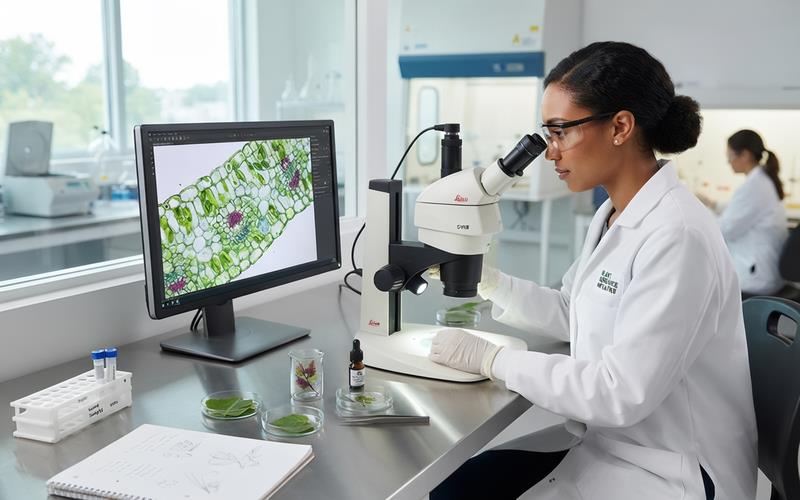
These approaches can help identify raw plant materials through their physical and anatomical characteristics. They are particularly useful when the original plant material retains recognizable structures.
Chromatographic fingerprinting
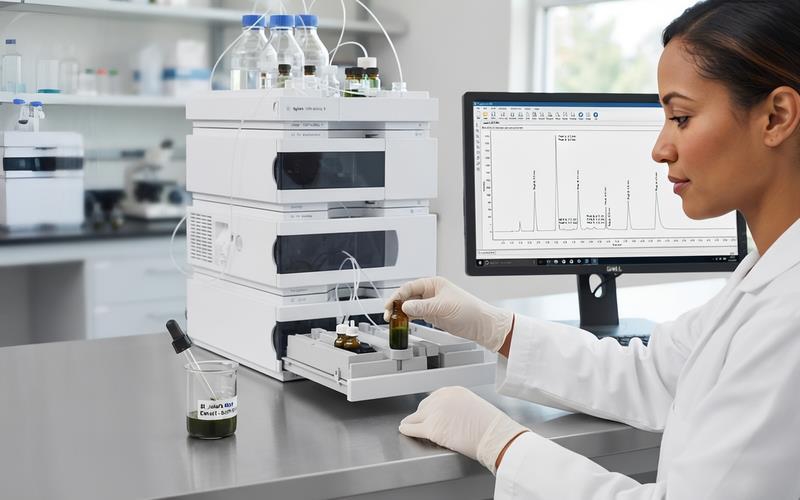
Methods such as HPLC and HPTLC can compare the chemical profile of a sample with an appropriate reference. They can help identify differences that a single marker assay may not reveal.
Spectroscopic techniques
Techniques such as infrared spectroscopy and other chemical profiling approaches can provide additional information about material composition and identity.
DNA-based methods
DNA barcoding and related techniques may help identify botanical species in suitable materials. However, DNA can be degraded or removed during processing, particularly in highly processed extracts. DNA testing should not be assumed to work equally well for every extract.
The best authentication strategy may combine multiple complementary methods rather than relying on one test.
Understand the Difference Between Identity Testing and Marker Testing
A botanical COA may report a marker compound result, but buyers should check whether the document also provides evidence of botanical identity.
Consider these two questions:
Does the material contain the declared marker compound at the required level?
Does the material have the expected identity and chemical profile for the declared botanical ingredient?
A result that answers the first question does not necessarily answer the second.
When evaluating a new botanical source, ask which identification method was used, whether a reference standard or fingerprint was applied, and whether the method is suitable for the processed material.
For higher-risk ingredients, discuss whether additional testing is justified.
What Procurement and QA Teams Should Request
A practical botanical documentation package may include:
Product specification
Batch-specific COA
Botanical identity information
Marker compound assay and test method
Chromatographic fingerprint, where available
Plant part and origin declaration
Extraction solvent and process information
Carrier or excipient declaration
Relevant contaminant testing
Allergen and other applicable statements
Not every document is required for every ingredient. The package should be determined by the ingredient’s intended use, risk profile, and target market.
A supplier’s general company certification should not be treated as a substitute for product-specific identity and quality evidence.
A Practical Botanical Extract Evaluation Checklist
Before approving a botanical extract, ask:
| Evaluation area | Key question |
|---|---|
| Identity | Is the full botanical name and plant part declared? |
| Composition | Is the marker content clearly defined? |
| Analytical method | Does the method support the stated quality claim? |
| Fingerprint | Is a suitable chemical profile available? |
| Extraction | Are solvent and process details understood? |
| Carrier | Is the commercial extract composition transparent? |
| Contaminants | Are relevant safety parameters covered? |
| Batch consistency | Can results be compared across batches? |
The level of testing should be proportionate to the ingredient’s risk. A high-value botanical extract with known adulteration concerns may require a more comprehensive approach than a common, well-characterized plant powder.
How Esubio Supports Botanical Extract Sourcing
Esubio supports supplement brands, manufacturers, and R&D teams with sourcing coordination for selected botanical extracts and functional ingredients.
When reviewing a botanical requirement, we encourage customers to specify the botanical name, plant part, extraction ratio, marker compound, carrier requirements, intended application, and target quantity.
This helps clarify whether the available product information matches the actual requirement before sample evaluation and commercial discussion.
If your team is sourcing a botanical extract or evaluating an alternative supplier, share your target specification and documentation requirements with us.
Explore: https://www.esubio.com/botanical-extracts/
Contact: https://www.esubio.com/contact/
References
- https://pmc.ncbi.nlm.nih.gov/articles/PMC9972475/?utm_source=chatgpt.com Why a Marker Compound Alone Cannot Prove Authenticity
- https://analyticalsciencejournals.onlinelibrary.wiley.com/doi/10.1002/pca.3466?utm_source=chatgpt.com Integrating DNA Barcoding Within an Orthogonal Approach for Herbal Product Authentication
- https://pubmed.ncbi.nlm.nih.gov/33331682/?utm_source=chatgpt.com Botanical origin authentication of dietary supplements by DNA-based approaches