
Curcuminoid COA Analysis: 5 Questions to Ask Before You Approve a Batch
Every week, procurement teams and formulators approve ingredient purchases based on a single number printed on a Certificate of Analysis — “95% curcuminoids by HPLC.” It looks authoritative. It looks scientific. It can also be incomplete. A proper curcuminoid COA analysis goes beyond the headline number, because three different HPLC protocols — all legitimately described as “HPLC detection” — can produce three meaningfully different purity readings from the exact same sample.
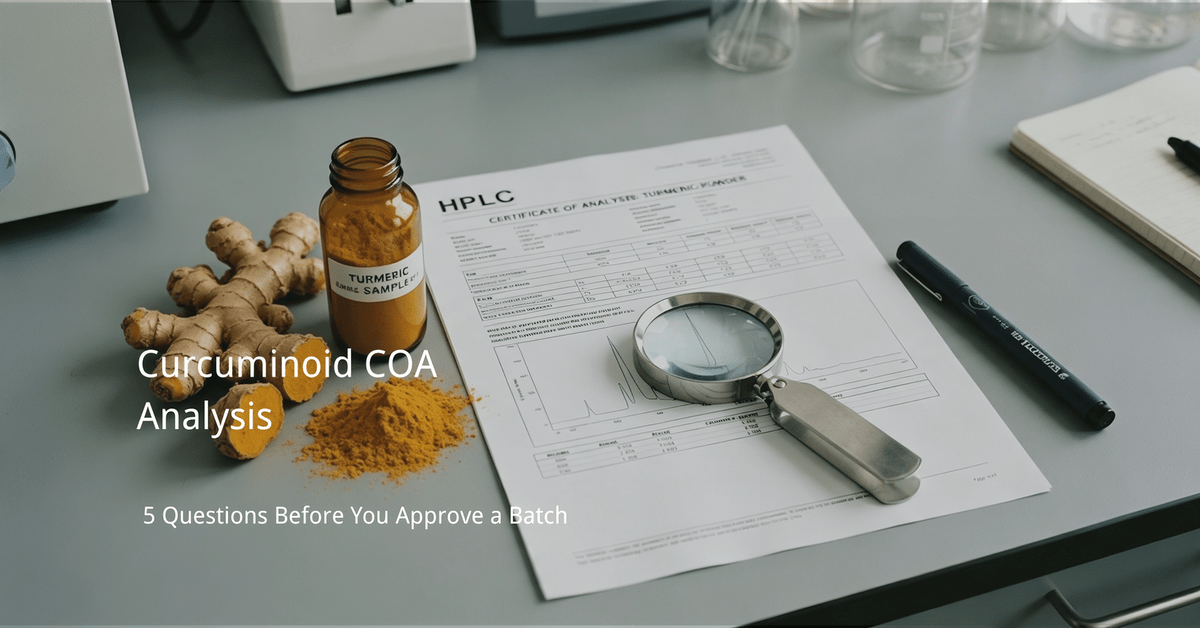
The Core Problem With Curcuminoid COA Analysis
When a supplier reports “95% curcuminoids, tested by HPLC,” the statement is technically accurate — but it can omit the context that changes everything. The result depends on three compounding variables: the detection wavelength used, the reference standard the method was calibrated against, and whether the three individual curcuminoids — curcumin, demethoxycurcumin, and bisdemethoxycurcumin — are quantified separately or reported as a loosely summed total.
Consider a common scenario: a turmeric extract manufacturer runs an internal HPLC method with UV detection at 425nm, calibrated against a single curcumin standard rather than a certified curcuminoid mixture. The COA reports 95%. The same batch, retested at a contract lab using the European Pharmacopoeia curcuminoids monograph, returns a meaningfully lower figure. Both labs used HPLC. Both are technically correct — by their own method.
Three HPLC Methods Behind the Same Reported Number
Understanding how methodology shapes the final reported percentage is foundational to reading a COA critically.
| HPLC Method | What It Measures | Reported % | Analytical Reliability |
|---|---|---|---|
| Method A — UV 425nm, no certified standard | Absorbing pigments at 425nm | 95% | Reported figure may overstate true curcuminoid content |
| Method B — USP-referenced single curcumin standard | Three curcuminoids measured against a single-compound standard | 95% | Closer approximation, but not fully individualized |
| Method C — EP/USP full method with certified mixed standard | Curcumin, DMC, and BDMC quantified individually against a certified mixture standard | 95% | Regulatory-defensible, individually verified result |
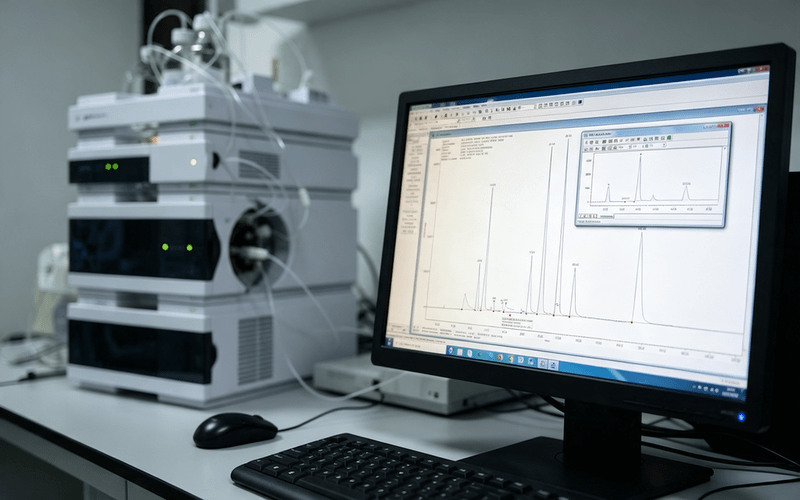
Why Curcuminoid COA Analysis Matters Across Export Markets
The stakes of getting this wrong vary by market, but they’re never low. In the US, dietary supplement manufacturers are expected to substantiate label claims with validated, traceable analytical methods — a COA supported by a non-validated in-house HPLC method can expose a brand to enforcement risk if a third-party lab later finds the product non-conforming. In the EU, the European Pharmacopoeia monograph for curcuminoids specifies reference standards and detection wavelengths explicitly, and deviations from these conditions can invalidate comparability across labs. For functional food certification in markets like Japan, specific analytical traceability is required, and underdocumented methods can create real barriers to certification. And in private label or contract manufacturing arrangements, COA discrepancies between a raw material supplier and a CMO’s in-house testing can trigger production holds, reformulation costs, and downstream customer complaints.
A 5-Point Framework for Reading the Analytical Method Section
Most procurement checklists stop at the result — “does it say 95%? Approved.” That’s insufficient. The analytical method section is where real due diligence begins.
1. Detection Wavelength
Look specifically for 425nm, the standard wavelength for curcuminoid detection. If it’s absent or different, ask why.
2. Reference Standard Identity and Source
Confirm whether the method used a USP, EP, or certified ISO reference standard — and whether it was a single compound or a certified curcuminoid mixture standard.
3. Individually Listed Analytes
Check whether the COA breaks out curcumin, demethoxycurcumin (DMC), and bisdemethoxycurcumin (BDMC) separately, or reports only a combined total.
4. Method Validation Reference
Confirm whether the method is traceable to a pharmacopoeial monograph or a published, peer-reviewed method — an internal SOP without external validation is a signal to ask further questions.
5. Third-Party Verification Availability
Ask whether the supplier will provide a split sample for third-party retesting. A supplier unwilling to support this is a meaningful risk signal.
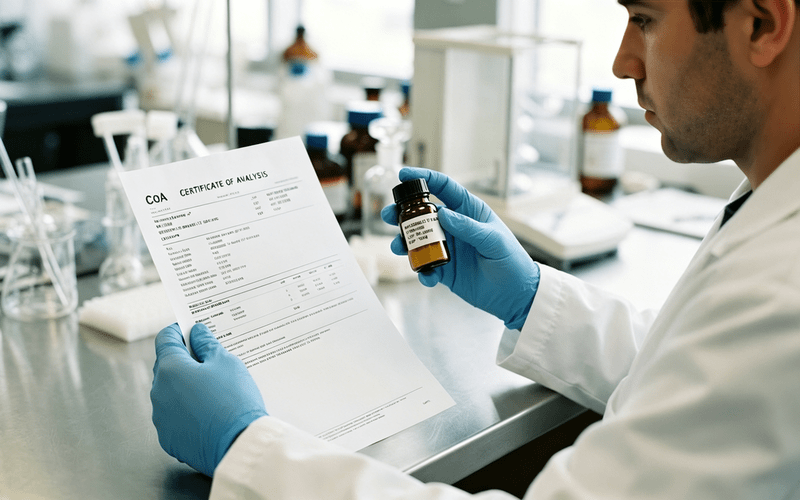
What Responsible Suppliers Do Differently
At Esubio, we work from the position that comprehensive analytical documentation isn’t a nice-to-have — it’s the baseline for a defensible curcuminoid COA analysis. That means providing full method sections including column type, mobile phase composition, and reference standard lot numbers, and supporting split-sample third-party retesting when requested. The presence of this level of documentation is one of the most predictive indicators of a supplier’s underlying quality infrastructure.
Questions to Send Your Supplier Before Approving a Batch
Before signing off on a plant extract COA, consider sending your supplier these five questions: What HPLC detection wavelength, column specification, and mobile phase were used for the curcuminoid assay? Which reference standard was used, and can you provide the standard’s lot number and Certificate of Analysis? Are curcumin, DMC, and BDMC reported individually in the chromatogram? Can you provide the annotated HPLC chromatogram for our review? Has this method been validated against an EP or USP monograph?
Sourcing Botanical Extracts With Verified Documentation
The global plant extract market continues to expand as formulations grow more sophisticated and regulatory scrutiny increases — industry analysts project continued double-digit growth through the end of the decade. As that happens, the margin for analytical ambiguity narrows. We supply botanical extracts, including curcumin and other standardized plant actives, with full CoA and MSDS documentation, ISO and HACCP certification, and MOQ starting from 1kg. Visit our botanical extract range or request a quote to review our analytical documentation directly.
A COA is not a guarantee — it’s a declaration of conditions. A rigorous curcuminoid COA analysis means knowing exactly what those conditions were before you approve the batch.
This content is provided for general sourcing and educational purposes and does not constitute regulatory or legal advice. Always verify current pharmacopoeial monograph requirements and analytical method validity directly with your supplier and testing laboratory.
References
U.S. Pharmacopeia (USP)
https://www.usp.orgEDQM — European Pharmacopoeia
https://www.edqm.euU.S. Food and Drug Administration — Dietary Supplements
https://www.fda.gov/food/dietary-supplements