
China Ingredient Supplier: 7 Critical Reasons You're Overpaying in 2026
If your OEM factory or brand is still sourcing functional ingredients exclusively from Western suppliers, you may be paying significantly more than necessary. Working with a China ingredient supplier is no longer just a cost play — it reflects a structural shift in how the global nutraceutical supply chain is organized, driven by improvements in fermentation technology, extraction standardization, and compliance documentation.
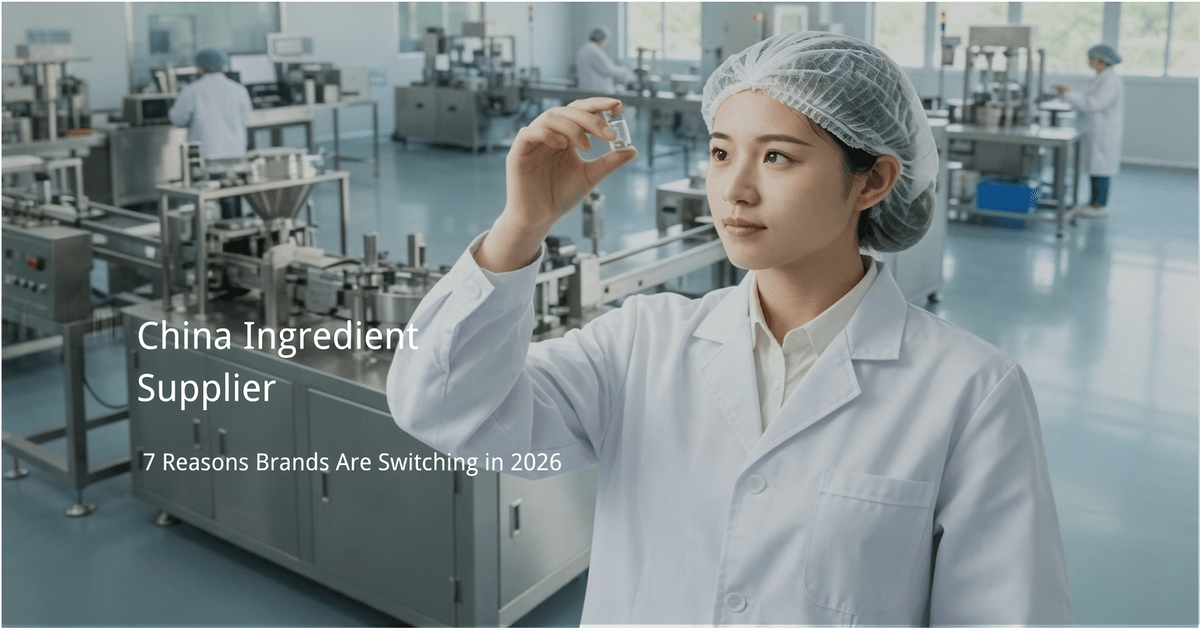
Why a China Ingredient Supplier Now Leads Global Sourcing
Three developments have changed how global brands evaluate a China ingredient supplier: production technology has matured, standardization practices have caught up to Western lab standards, and compliance documentation now routinely covers major export markets. Together, these shifts have made China-based sourcing a serious consideration for procurement teams — not just a budget option.
7 Reasons Brands Are Switching to a China Ingredient Supplier
1. Fermentation Technology Has Matured
Advances in scaled enzymatic and fermentation processes have meaningfully reduced production costs for next-generation functional actives, while maintaining high purity standards backed by CoA and third-party lab testing.
2. Botanical Extract Standardization Has Caught Up
Leading Chinese botanical extract suppliers have built standardization systems that support consistent active-compound ratios across batches — a level of consistency that was historically associated only with Western labs.
3. Compliance Coverage Now Spans Major Export Markets
A well-established China ingredient supplier should be able to support documentation aligned with major regulatory frameworks across the US, EU, Australia, and Canada, along with Halal and Kosher certification where required. Always verify current certification status directly with the supplier rather than assuming market-wide claims apply.
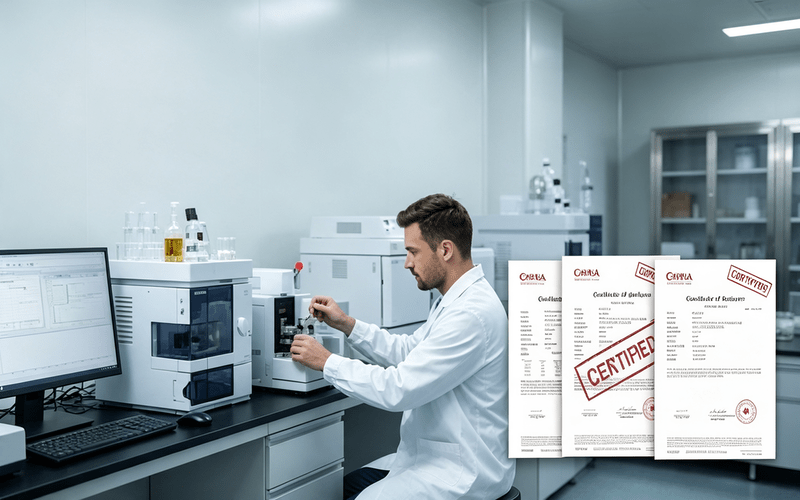
4. Batch-to-Batch Consistency Has Improved
Ask any China ingredient supplier for consistency data across at least three consecutive production batches — this is one of the clearest ways to evaluate manufacturing discipline before committing to volume.
5. Documentation Standards Have Caught Up
Full Certificates of Analysis, independent third-party lab reports, and material safety documentation are now standard practice among established suppliers, not a premium add-on.
6. Emerging Ingredients Scale Faster in China
Categories like fermentation-derived actives, postbiotics, and functional fibers are scaling production capacity quickly, often reaching commercial-ready volume faster than in Western markets.
7. Lead Times and MOQ Flexibility Favor China-Based Supply
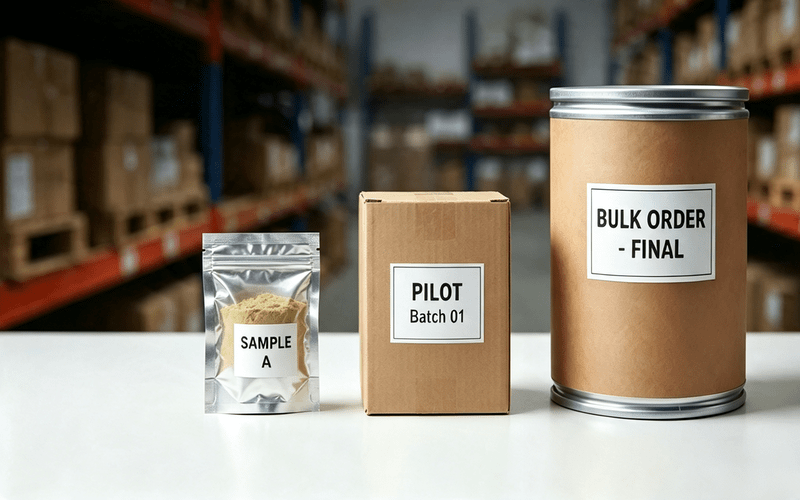
Many China-based suppliers now offer phased ordering — sample, pilot batch, then commercial volume — reducing the financial risk of validating a new ingredient before scaling.
How to Vet a China Ingredient Supplier Before You Order
Before committing to volume, request full CoA and independent third-party lab reports (from labs such as SGS, Eurofins, or Intertek), verify batch-to-batch consistency across multiple production runs, inspect original certification documents for your target market rather than copies, and request a factory audit report or qualify for an on-site audit. Phase your validation — sample, then a pilot batch, then commercial volume — rather than skipping straight to a large order.
Working With Esubio as Your China Ingredient Supplier
We supply botanical extracts, probiotics, amino acids, and functional ingredient blends with full CoA and MSDS documentation, ISO and HACCP certification, and MOQ starting from 1kg. Visit our product catalog or request a quote to start with a sample order.
Evaluating a China ingredient supplier on documentation, consistency, and compliance — not just price — is what separates a reliable long-term sourcing partner from a short-term cost saving.
This content is provided for general sourcing information purposes. Statements regarding specific ingredients have not been evaluated by the FDA and are not intended to diagnose, treat, cure, or prevent any disease. Always verify current certification and compliance status directly with your supplier.
References
U.S. Food and Drug Administration — Dietary Supplements
https://www.fda.gov/food/dietary-supplementsISO — Certification and Quality Management Standards
https://www.iso.org/certification.html