
Granulation Defects: Why They Surface Months Later
Granulation defects rarely show up where they start. A batch can pass every release test at shipment and still fail two to six months later — as caking in a powder mix, capping in a tablet, or deformation in a filled capsule — because the moisture problem was already sitting inside the granule when it left the production line. For OEM and ODM factories running powder drink mixes, tablets, or capsule fills, granulation is the shared upstream process behind all three, which means a hidden defect at this one stage tends to surface simultaneously across multiple downstream product lines.
What Actually Causes Granulation Defects
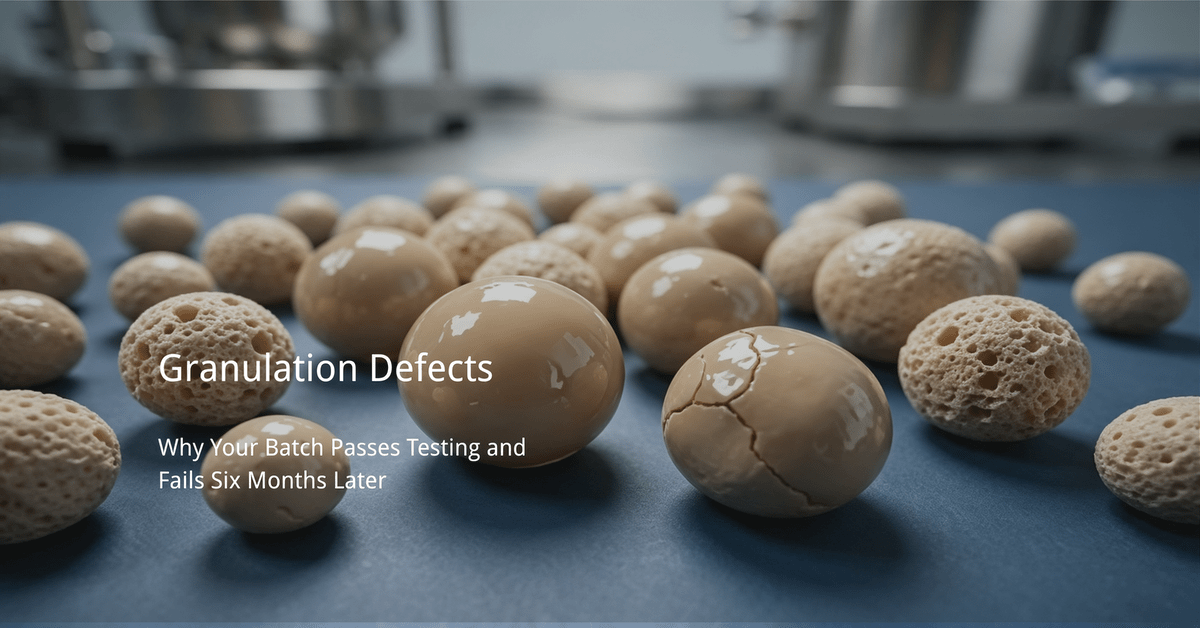
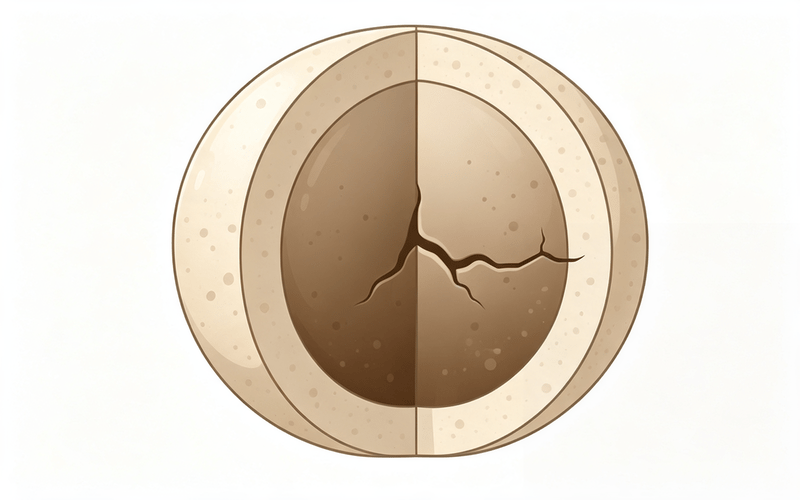
Most granulation defects trace back to three points of failure. In wet granulation, any deviation in binder level, liquid addition rate, or mixer shear can leave granules too hard or too soft, which directly affects flowability and disintegration once the material reaches tableting or capsule filling. If drying temperature spikes or the bed depth is uneven, the granule surface dries first and forms a hard shell while moisture stays trapped inside — a condition known as case hardening. The batch passes release testing because the surface reads dry, but the granule keeps shedding moisture in storage, and that delayed moisture release is what triggers caking or capping weeks or months later. The third and most underestimated failure point is scale-up itself: lab-scale equipment and production equipment have systematically different heat- and mass-transfer efficiencies, which is the real reason a formulation that looked perfect in a lab trial fails once it moves to production — not usually a flaw in the formulation.
Why Granulation Defects Are So Expensive to Trace
Residual moisture from granulation has what industry data describes as a delayed detonation characteristic. It passes release testing at shipment, then resurfaces two to six months later as caking, capping, or capsule deformation in a completely different dosage form and sometimes a completely different production line. By the time the defect is visible, root-cause tracing back to the original granulation batch is expensive and often inconclusive, which is exactly why granulation defects are one of the most overlooked systemic risk points in nutraceutical manufacturing rather than a problem confined to a single product category — and why tracing granulation defects after the fact is so much more expensive than preventing them at the process stage.
How Leading Manufacturers Prevent Granulation Defects
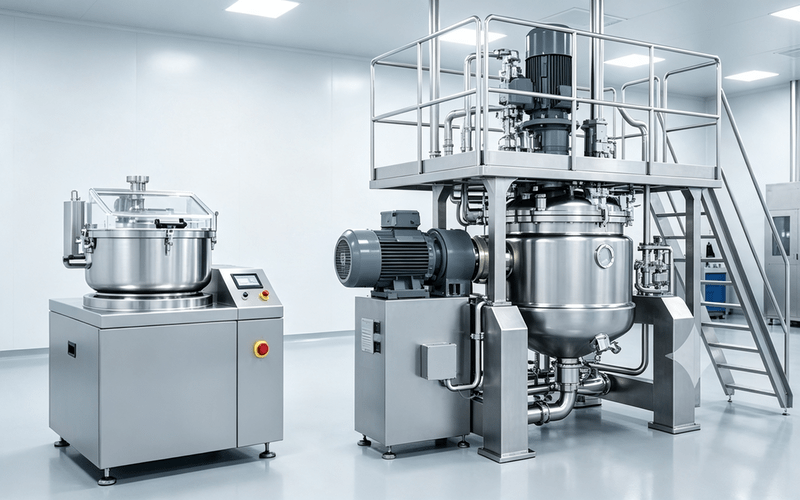
The manufacturers who avoid this problem consistently share a few practices. They replace a fixed end-point time with in-line moisture and particle-size monitoring, so the granulation step ends based on the material’s actual state rather than a clock. They run a standardized scale-up validation protocol that tests lab, pilot, and production scale separately, rather than assuming lab-scale data will hold at commercial volume. They set a staged drying temperature profile based on bed depth instead of applying one fixed parameter set across every batch. And for highly hygroscopic raw materials such as plant proteins or certain probiotic carriers, they pre-treat the material before granulation or route it through dry granulation or direct compression entirely, avoiding high-moisture exposure at the source rather than managing it after the fact.
Continuous Granulation and the Plant-Protein Shift
Continuous granulation, specifically twin-screw wet granulation, is being adopted by more large-scale manufacturers, and its process logic differs entirely from traditional batch granulation. Before adopting a new production line or a new contract manufacturer for this process, it is worth requesting historical batch data for your specific formulation on that exact line, rather than relying on a general equipment specification sheet. At the same time, high-protein plant-based formulations — which tend to have poor flowability and clump easily — are pushing manufacturers to re-evaluate where the line sits between granulation and direct-compression routes, since a process that worked reliably for whey or synthetic actives does not automatically transfer to a plant-protein matrix.
What to Ask Before You Commit to a Granulation Partner
Before qualifying a granulation supplier, or before requesting granulation on a raw material order, four questions are worth asking directly. Does the process include in-line moisture or particle-size monitoring, or only an end-of-batch spot check? Is there a documented scale-up validation record moving from lab to pilot to production for a formulation similar to yours? What is the drying temperature profile, and is it adjusted for bed depth or applied uniformly regardless of batch size? And for hygroscopic raw materials specifically, is there a pre-treatment step before granulation begins, or does the material go straight into wet processing at full moisture exposure?
Granulation Service Built Into Your Raw Material Order
Avoiding granulation defects starts with treating granulation as a controlled process step, not an afterthought bolted onto the end of a raw material order. esubio’s granulation service is designed to work directly with the botanical extracts, probiotic powders, and amino acids you are already sourcing from us, with particle size and process parameters confirmed against your target dosage form before processing begins. Rather than shipping your raw material to a separate contract manufacturer for granulation, you can request this processing on the same order and receive both together. Visit our Capsule Shells and Granulation Solutions page to confirm feasibility for your formulation.
References
International Society for Pharmaceutical Engineering. Granulation and Scale-Up Considerations in Solid Dosage Manufacturing. https://ispe.org/pharmaceutical-engineering
Freund Global. Basics of Wet and Dry Granulation for Pharmaceutical Manufacturing. https://www.freundglobal.com/basics-of-wet-and-dry-granulation-for-pharmaceutical-manufacturing/