
Ashwagandha Extract Sourcing Guide: What Supplement Brands Need To Know
Capsule shell defects rarely start with the shell itself — they start with the environment the shell sits in, and how that environment interacts with what is inside it. Shell brittleness and cracking, cap and body separation, powder leakage, and shells that soften and stick together are among the most frequently reported visible-defect complaints filed with regulators worldwide, and nearly all of them trace back to a dynamic equilibrium between shell material, fill material, and ambient humidity that most factories manage the same way regardless of which shell type they are actually using.
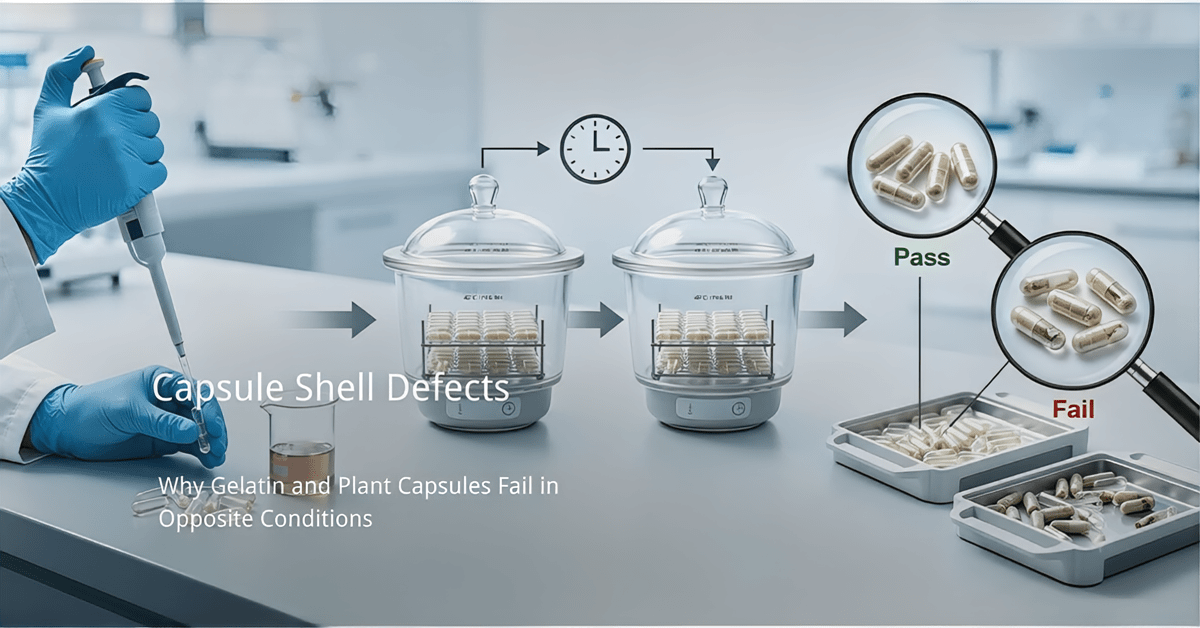
Why Gelatin and Plant Capsules Fail at Opposite Ends of the Humidity Range
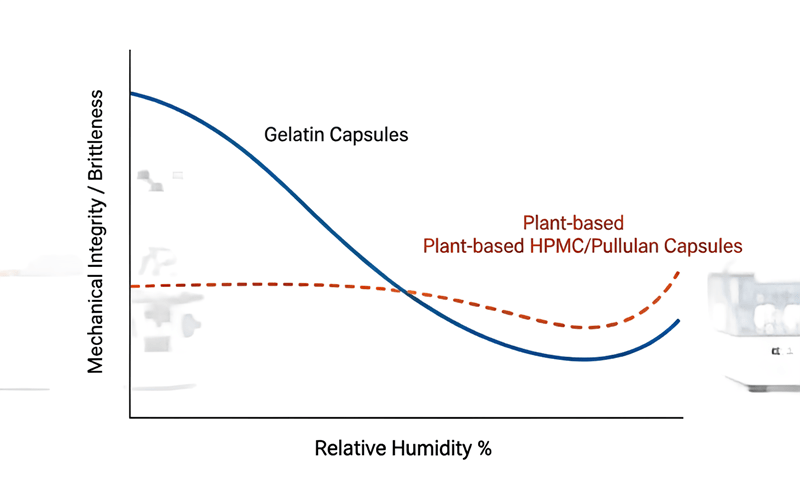
Gelatin shells become brittle and crack when over-dried below roughly 30 percent relative humidity, and soften, deform, and stick together above roughly 65 percent relative humidity. Plant-based shells — HPMC, gellan gum, pullulan — have a different brittleness threshold entirely, and applying gelatin storage and packaging standards to a plant-based shell is one of the most direct routes to shell cracking during shipment or storage. In effect, gelatin and plant capsules behave like they have inverted humidity sensitivity curves, and a factory that qualifies a new plant-capsule supplier against legacy gelatin specifications is setting up capsule shell defects as a near-certain outcome once the product crosses seasons or climates during export.
The Fill Material Is Half the Problem
Capsule shell defects are not only a shell-material issue. Highly hygroscopic or oily fill materials can migrate moisture or components directly into the shell, accelerating changes in shell properties over time. A fill that looks stable in isolation can still destabilize the shell around it, which is why compatibility between fill and shell has to be validated as a pair, not assessed separately. This is particularly relevant as global demand for vegan, halal, and kosher certification pushes more brands toward plant-based shells without always updating the compatibility testing that goes with the switch, which is where a large share of capsule shell defects originate in practice.
What This Costs When It Reaches the Shelf
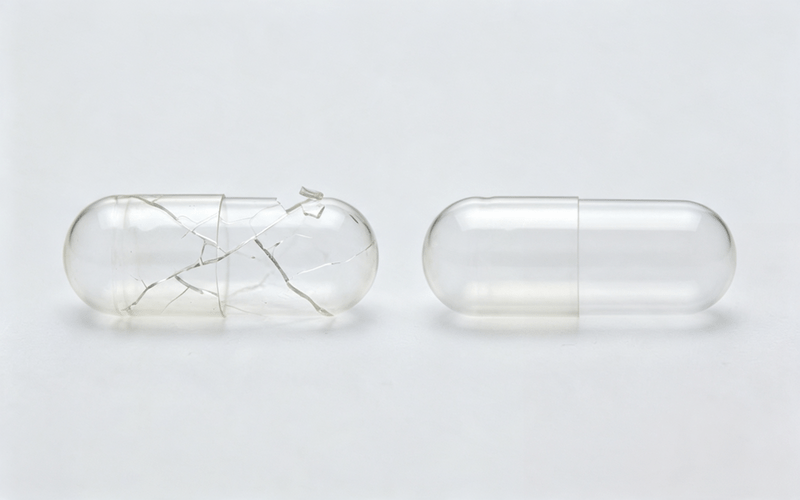
Shell cracking discovered during shelf life is one of the most frequently reported visible foreign matter complaints filed with regulators globally, and it typically surfaces after the product has already left the factory, when the cost of correction is highest. Rising demand for vegan, halal, and kosher certified capsules is accelerating plant-capsule adoption across the industry, but the matching environmental-control standards for these newer shell types often lag behind the pace of adoption, leaving a gap between what brands are ordering and what their supply chain is actually validated to handle.
How to Prevent Capsule Shell Defects Before They Reach Production
Preventing capsule shell defects starts with treating filling and primary packaging rooms as a controlled environment, held at a stable 30 to 45 percent relative humidity rather than whatever the ambient conditions happen to be. Plant-based and gelatin capsules need separate environmental and packaging standards rather than a single shared specification, since their humidity tolerance runs in opposite directions. Any new fill-and-shell combination should go through a formal compatibility study, with a minimum of six months of accelerated stability testing, before it moves into full production. For strongly hygroscopic powders specifically, capsule-body band sealing generally improves seal integrity over standard fitted closures. Print inks used for branding or dosage markings should also be validated against migration testing, since ink components can interact with shell material over shelf life in ways that are easy to overlook during initial formulation review.
What to Ask a Capsule Shell Supplier Before You Switch
If you are trying to prevent capsule shell defects before switching from gelatin to a plant-based shell, or introducing a new fill material into an existing shell, four questions are worth asking directly. What relative humidity range is this specific shell type validated for, and is it documented separately from your gelatin specification? Has a compatibility study actually been run for this fill-and-shell combination, and for how long? Is capsule-body band sealing available for hygroscopic fills, or only standard closure? And has the print or branding ink been validated for migration against this shell material specifically, rather than assumed compatible from a prior product?
Sourcing Capsule Shells Built for Your Fill Material
Getting capsule shell selection right means matching shell type, environmental control, and fill compatibility from the start, not adjusting after a cracking or leakage complaint reaches your desk. esubio supplies a full range of capsule shells — standard and enteric gelatin, standard and enteric HPMC, and pullulan — with specification sheets available for each, so you can select based on your fill material’s hygroscopicity and your target certification requirements rather than defaulting to whichever shell your last product used. Visit our Capsule Shells and Granulation Solutions page to compare shell types and request a sample.
References
United States Pharmacopeia. General Chapter <1151> Pharmaceutical Dosage Forms. https://www.usp.org/health-quality-safety/pharmaceutical-dosage-forms
European Directorate for the Quality of Medicines & HealthCare. Ph. Eur. Capsules Monograph. https://www.edqm.eu/en/european-pharmacopoeia-ph-eur-11th-edition