
Fruit and Vegetable Powders: What Formulators Should Evaluate
Fruit and vegetable powders are widely used in functional foods, nutritional blends, beverage powders, and dietary supplement formulations. They offer a convenient way to incorporate fruit- and vegetable-derived ingredients into dry products without handling large volumes of fresh raw materials.
However, not all fruit and vegetable powders behave the same way during formulation.
Their composition, drying process, carrier system, particle characteristics, color, flavor, and moisture behavior can influence the performance of a finished product. For R&D teams and ingredient buyers, selecting a powder based only on its fruit or vegetable name is not enough.
The more useful question is whether the ingredient matches the technical and sensory requirements of the intended application.
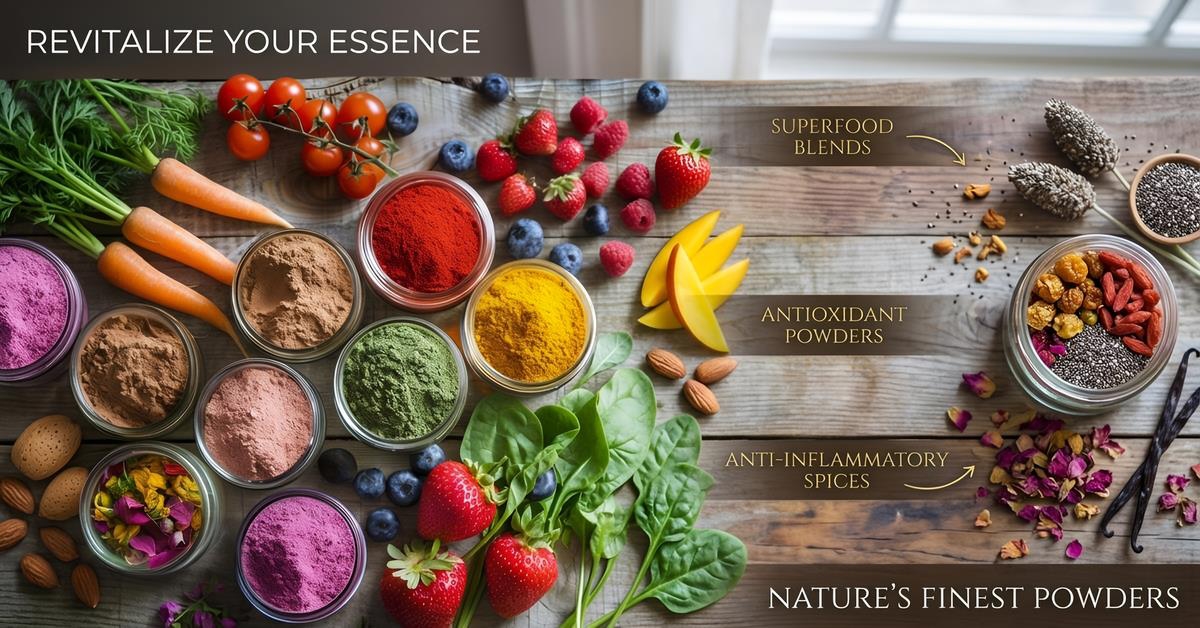
Why Fruit and Vegetable Powders Are Used in Functional Products
Converting fresh fruit and vegetable materials into powders can improve convenience in storage, transportation, weighing, and dry blending.
Powders can also be incorporated into products where fresh ingredients would be impractical, such as sachets, instant beverage mixes, nutritional powders, and dry functional blends.
Depending on the raw material and processing method, fruit and vegetable powders may contribute:
Characteristic color and flavor
Naturally occurring sugars and organic acids
Dietary fiber
Vitamins and minerals
Polyphenols, carotenoids, and other plant compounds
The actual composition depends on the source material and processing conditions. A fruit powder should not automatically be treated as nutritionally equivalent to fresh fruit or as a standardized botanical extract.
If a formulation requires a defined active compound or marker level, the relevant analytical specification should be requested separately.
Whole Fruit Powder, Juice Powder, and Extract Powder Are Different
One of the first questions buyers should clarify is what type of powder is being offered.
Whole fruit or vegetable powder is generally made from the edible raw material after suitable preparation and drying. Depending on the process, it may retain more of the original material’s fiber and other insoluble components.
Juice powder is produced from juice or concentrate that has been converted into powder. It may have a different fiber profile and a different concentration of soluble components compared with whole fruit powder.
Fruit or vegetable extract powder is produced through an extraction process that selectively obtains certain components. Its composition and intended use may differ substantially from a whole-food powder.
These products should not be treated as interchangeable.
For example, a beverage developer looking for a fruit flavor and color contribution may prefer a juice powder. A formulation requiring more of the original fruit material may consider a whole fruit powder. A project targeting a specific polyphenol or other marker may need an extract with a defined analytical specification.
The product description should clearly identify the material type, source, and processing approach.
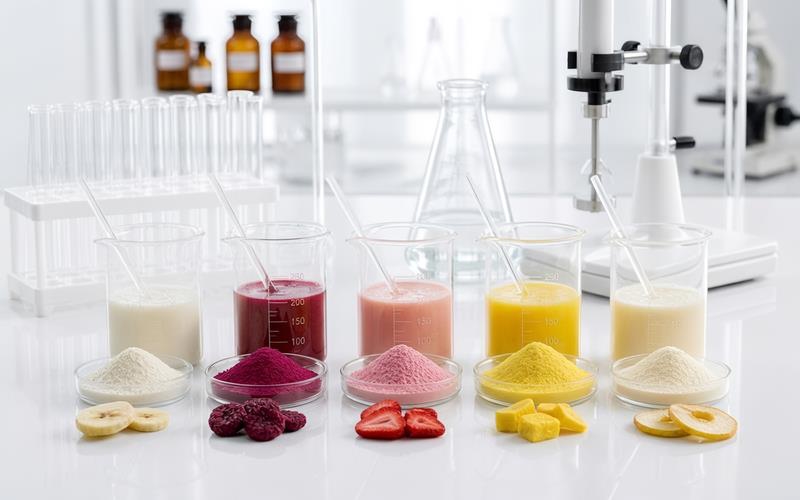
The Role of Carrier Systems
Many fruit juice powders are produced using spray drying. Fruit juices contain sugars and organic acids that can make direct drying difficult because the resulting material may be sticky and prone to deposition during processing.
Carrier or wall materials can help improve powder formation and handling.
Commonly used materials include:
Maltodextrin
Gum arabic
Modified starch
Inulin
Other suitable carbohydrate or protein-based materials, depending on the application
These materials may influence drying performance, powder recovery, hygroscopicity, solubility, color, and the retention of certain sensitive compounds.
However, adding a carrier also changes the composition of the final ingredient.
This is particularly important for buyers who want a high fruit-content product or need to calculate the actual fruit-derived contribution in a finished formula.
Ask suppliers to clarify:
Whether a carrier is present
The carrier type
The declared carrier content or composition, where available
Whether the product is a whole-food powder, juice powder, or extract powder
Whether the specification refers to the finished powder or the fruit-derived fraction
Do not assume that two products with the same fruit name contain the same proportion of fruit solids.
Color and Flavor Are Formulation Variables
Fruit and vegetable powders can contribute natural color and flavor, but the result depends on the raw material and processing method.
Anthocyanin-rich materials such as berries may show color changes under different pH, temperature, and storage conditions. Carotenoid-containing materials may be sensitive to oxidation and processing conditions. Other plant pigments also have their own stability characteristics.
Flavor can change during drying and storage. Volatile aroma compounds may be lost, while the concentration of sugars and organic acids can influence sweetness, acidity, and overall taste.
For this reason, a powder should be evaluated in the actual formulation rather than judged only by its appearance in a sample bag.
For a beverage powder, assess color after reconstitution, taste balance, aroma, and any sediment or suspended particles.
For a dry nutritional blend, evaluate whether the ingredient contributes an acceptable flavor and whether it remains visually consistent after blending.

Solubility, Dispersibility, and Wettability
These terms describe different powder behaviors and should not be used interchangeably.
Wettability describes how readily a powder becomes wet when it contacts a liquid.
Dispersibility describes how well the powder distributes through the liquid.
Solubility describes how much of the material dissolves under specified conditions.
A fruit powder containing insoluble fiber or whole-fruit particles may not dissolve completely, even if it disperses adequately. This is not necessarily a defect; it may be an expected feature of the material.
For instant beverage products, the required performance should be defined clearly.
A useful sample evaluation can include:
Time required for the powder to become wet
Ease of mixing with water
Presence of floating particles or lumps
Degree of dissolution
Sedimentation after standing
Appearance and color after reconstitution
Test conditions should be consistent. Powder-to-water ratio, water temperature, mixing speed, and mixing time can all influence the observed result.
Moisture Behavior and Powder Handling
Fruit powders can be sensitive to moisture because many contain sugars and other hygroscopic components.
Moisture absorption may contribute to stickiness, caking, changes in flowability, and difficulties during filling or blending.
The carrier system, drying method, particle structure, packaging, and storage environment can all influence these behaviors.
For ingredient evaluation, consider:
| Parameter | Why it matters |
|---|---|
| Moisture content | Indicates the amount of water in the material |
| Water activity | Provides information about water availability |
| Hygroscopicity | Helps assess moisture uptake from the environment |
| Particle size | Influences blending, mouthfeel, and dispersion |
| Bulk density | Relevant to filling and formulation calculations |
| Flowability | Affects handling and production |
| Color | Helps evaluate visual consistency |
| Solubility and dispersibility | Important for beverage applications |
A powder that looks free-flowing immediately after opening may behave differently after exposure to humid air. Packaging and handling conditions should therefore be considered alongside the raw material specification.
How to Compare Suppliers More Effectively
When comparing fruit and vegetable powders, buyers should request enough information to understand what is actually being supplied.
A practical supplier request can include:
Full ingredient name and botanical source
Whole powder, juice powder, or extract powder classification
Raw material origin and processing information, where available
Carrier type and composition
Moisture and Aw specifications
Particle size and bulk density, if relevant
Microbiological and contaminant testing appropriate to the material
Color and sensory information
Batch-specific COA and product specification
The required documents and tests should be determined by the ingredient type, intended use, and market requirements.
For a project with a specific color, taste, or reconstitution target, request a sample and evaluate it under the intended formulation conditions.
Choosing the Right Powder for Your Application
The best fruit or vegetable powder is not necessarily the one with the most attractive product name or the lowest quotation.
It is the ingredient that fits the intended product.
A beverage powder may prioritize taste, color, wetting, and dispersibility. A whole-food nutritional blend may place more emphasis on raw material identity and the contribution of the original fruit or vegetable material. A product targeting specific bioactive compounds may require a standardized extract rather than a general fruit powder.
At Esubio, we support sourcing requirements for functional ingredients, including botanical and plant-derived powders, probiotics, amino acids, and other materials used in supplement and functional food development.
To evaluate a suitable option, share the target fruit or vegetable, intended application, desired powder characteristics, carrier restrictions, and required documentation.
Explore our Product Catalog or contact our team to discuss specifications and sample arrangements.
The key takeaway: selecting a fruit or vegetable powder requires understanding its material type, carrier system, physical properties, and intended application. A clear specification and a practical formulation trial are more useful than relying on the ingredient name alone.
References
- Effects of Carrier Agents on Powder Properties and Carotenoid Stability of Goldenberry Powder
- Effect of Different Carriers on Microstructure and Physical Characteristics of Spray-Dried Apple Juice Concentrate
- Effect of Carrier Type and Spray Drying on the Physicochemical Properties of Powdered and Reconstituted Pomegranate Juice
- Effect of Drying Methods on the Physical and Surface Properties of Blueberry and Strawberry Fruit Powders