
Anhydrous Excipients Explained: Solving Moisture Migration at the Source
Low-Aw fillers solve most moisture-sensitivity problems. But for a subset of formulations — typically APIs with ester or acetal functional groups, where even trace water of crystallization can drive degradation over a long shelf life — anhydrous excipients solve a different problem entirely: they remove water of crystallization from the excipient matrix altogether, rather than simply keeping it in a low-Aw state.
What makes an excipient “anhydrous”
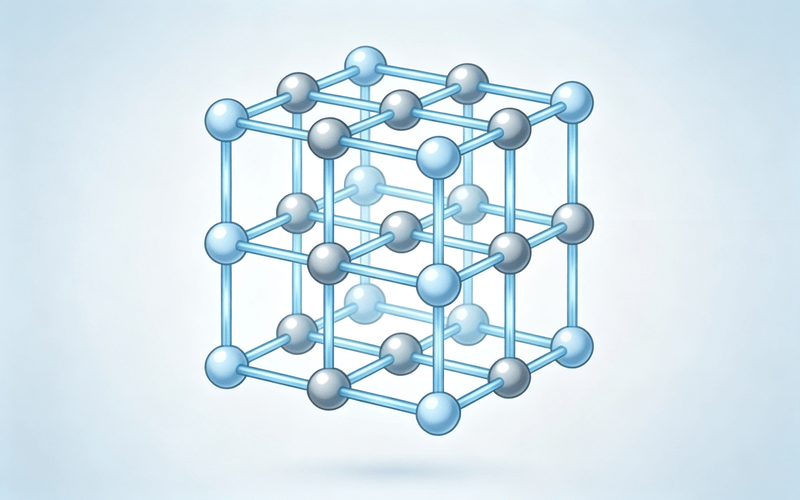
Standard forms of many common excipients carry water of crystallization as part of their crystal structure — water molecules bound within the lattice itself, distinct from the free water that Aw measures. Anhydrous excipients remove this water entirely during manufacturing, producing a material with a fundamentally different crystal structure than its hydrated counterpart, not just a drier version of the same material.
Anhydrous dibasic calcium phosphate and anhydrous lactose
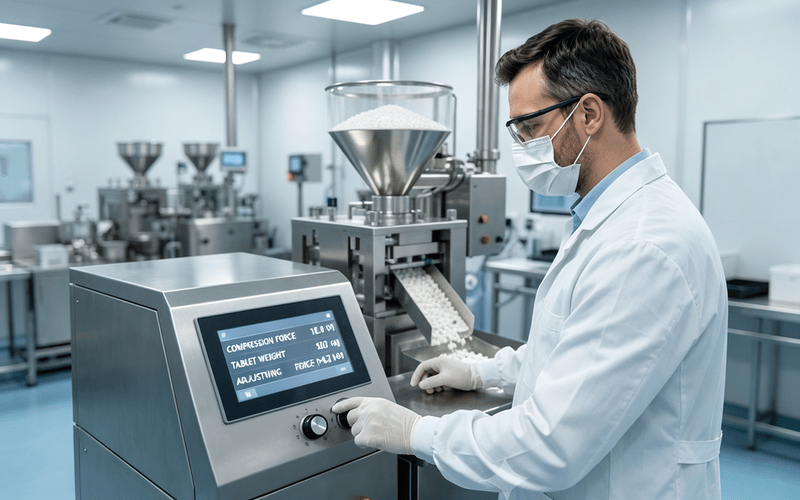
These are the two most common anhydrous excipients used in solid dosage formulation. Standard dibasic calcium phosphate dihydrate and standard lactose monohydrate both carry water of crystallization; their anhydrous counterparts remove it, at the cost of somewhat different compaction and flow behavior that formulation teams need to account for during development. Anhydrous grades are frequently more brittle under compression and may require adjusted binder levels or compression force compared to their hydrated equivalents.
When anhydrous excipients are worth the process adjustment
The tradeoff only makes sense for formulations where even trace bound water is a meaningful risk — typically APIs with ester or acetal functional groups prone to hydrolysis over a long shelf life, such as certain acetylsalicylic acid or acetal-containing compound classes. For less hydrolysis-sensitive actives, an intrinsically low-Aw filler like mannitol usually achieves adequate protection without the compression and flow adjustments anhydrous materials often require.
How anhydrous excipients relate to low-Aw and moisture-scavenging strategies
Anhydrous excipients sit at the most conservative end of a three-strategy spectrum. Intrinsically low-Aw fillers avoid introducing free water. Moisture-scavenging excipients actively remove free water already present in the system. Anhydrous excipients go a step further, eliminating even the bound water of crystallization at the source. Our broader guide, Moisture Sensitive API Excipients: A Practical Guide to Protecting Unstable Actives, walks through how formulators choose between all three strategies.
A notable domestic supply gap
Chinese domestic production of anhydrous-grade dibasic calcium phosphate and anhydrous lactose is comparatively limited next to the country’s dominant capacity in sugar alcohols — this is a category where import substitution has lagged behind other excipient families, and where supply verification deserves extra diligence if you’re sourcing from a Chinese manufacturer for the first time. Buyers evaluating this category should expect fewer qualified domestic sources and confirm production capacity and consistency more carefully than they might for a more commoditized excipient.
What to verify when sourcing anhydrous excipients
Beyond the standard compliance checklist — compendial standard, CDE or DMF status, GMP certification — confirm specifically that the grade offered is genuinely anhydrous rather than simply low-moisture. The two are not the same thing: a low-moisture hydrate still carries water of crystallization within its structure, while a true anhydrous grade does not. This distinction matters enough that it’s worth requesting crystal form confirmation, not just a moisture percentage, from any new supplier.
Esubio is actively mapping qualified Chinese sources for anhydrous-grade excipients — reach out if this is a category you’re currently sourcing. Browse our broader Low Water Activity Excipients range in the meantime.
References
- USP General Chapter <1112>, Application of Water Activity Determination to Nonsterile Pharmaceutical Products — https://doi.usp.org/USPNF/USPNF_M402_01_01.html
- S. FDA, “Water Activity (aw) in Foods” — https://www.fda.gov/inspections-compliance-enforcement-and-criminal-investigations/inspection-technical-guides/water-activity-aw-foods
- Wikipedia, “Water activity” — https://en.wikipedia.org/wiki/Water_activity