
From Ingredient Sample to Commercial Order: What Buyers Should Verify Before Scaling Up
Ingredient sample evaluation is a critical step for procurement and R&D teams before moving from laboratory testing to commercial purchasing.
A sample may perform well during initial testing, receive approval from the formulation team, and meet the expected technical requirements. But does that mean the commercial batch will perform in the same way?
Not necessarily.
The sample may come from a different batch than the commercial material. The larger order may involve different production schedules, packaging configurations, transportation conditions, or storage periods.
For procurement and R&D teams, sample approval should be the beginning of a controlled sourcing process—not the final proof that a material is ready for commercial use.
The objective is to establish a clear connection between the approved sample, the agreed specification, and the material supplied for production.
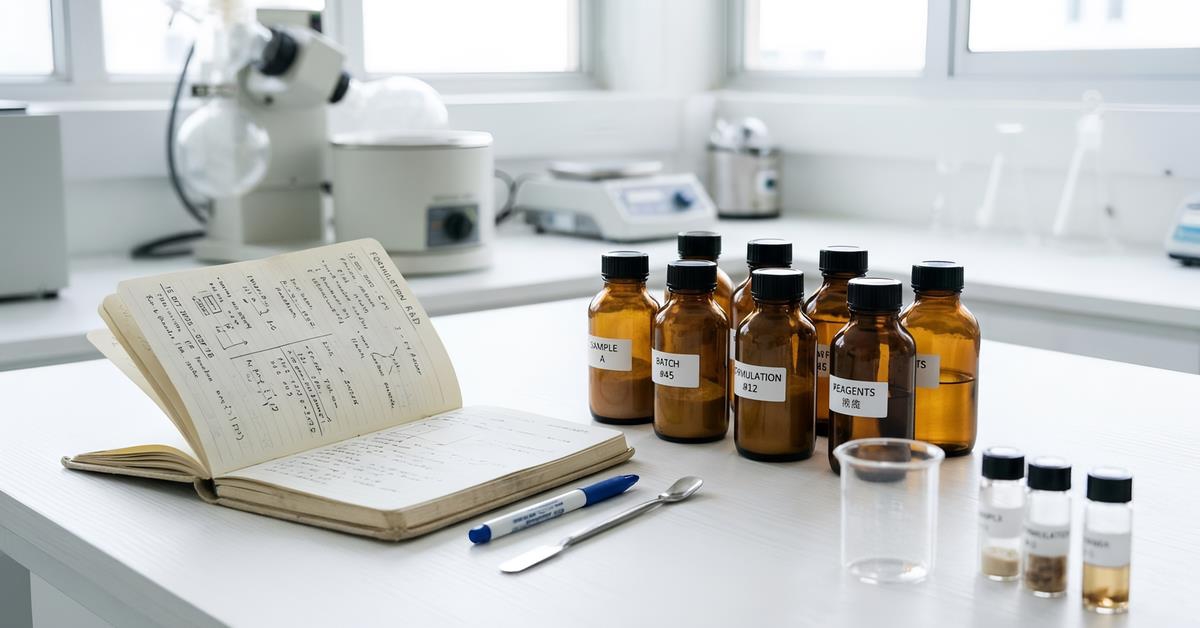
Why Sample Approval Does Not Guarantee Commercial Consistency
A laboratory sample is usually evaluated under limited conditions and at a relatively small scale.
A commercial order introduces additional variables:
Different batch or production lot
Larger production quantity
Different packaging configuration
Longer storage or transportation period
Different handling and sampling conditions
Potential changes in source, process, or material availability
These variables do not automatically mean that commercial material will perform differently. They do mean that the assumptions behind sample approval should be checked before the first large order.
The goal is to maintain a clear connection between the approved sample, the agreed specification, and the material supplied for production.
Step 1: A documented ingredient sample evaluation should identify exactly which material was tested and approved.
One of the most common sourcing problems is that the sample is approved without a sufficiently clear record of what was tested.
Before moving forward, document:
Product name and exact grade
Manufacturer or source information available
Batch or lot number of the evaluated sample
Specification version
Key analytical results
Physical appearance and relevant sensory observations
Sample packaging and storage conditions
Intended application and test conditions
Approval date and responsible team
If the sample was tested using a specific particle size, carrier system, active content, or physical form, these details should be part of the approval record.
“Sample approved” is not a complete technical specification.
Step 2: Separate Critical Specifications From Performance Preferences
Not every observation during sample testing should become a mandatory purchasing specification.
It is useful to separate requirements into two groups.
Critical material requirements are characteristics that must be met for quality, safety, identity, or regulatory reasons. Depending on the ingredient, these may include identity, assay, contaminants, microbiological limits, or specific compositional attributes.
Application performance requirements describe how the ingredient should behave in the intended formulation or process. Examples may include dispersibility, flavor profile, color, particle size, flowability, or blend compatibility.
This distinction helps prevent confusion between a material failing its agreed specification and a material needing further formulation optimization.
It also helps procurement teams avoid adding unnecessary limits that have not been technically justified.

Step 3: Confirm the Commercial Batch and Documentation Plan
Before placing a larger order, ask how the supplied batch will be identified and documented.
Important questions include:
Will the commercial order come from one batch or multiple batches?
Can the supplier identify the batch or lot number before dispatch?
Will the shipment include a batch-specific COA?
Are the test methods and specifications aligned with the approved requirements?
Will any relevant source, process, or formulation changes be communicated?
Are retained samples or additional testing records available where appropriate?
If multiple batches are combined or supplied against one purchase order, clarify how batch identity and traceability will be maintained.
For regulated dietary supplement manufacturing in the United States, component specifications and verification activities are addressed under 21 CFR Part 111. Other markets and product categories may have different regulatory requirements, so the applicable framework should be confirmed for the intended market.
Step 4: Ingredient sample evaluation should move progressively toward the intended manufacturing conditions.
A sample may perform well in a beaker or small laboratory blend but behave differently in pilot or production equipment.
The evaluation should move progressively toward the intended manufacturing conditions.
| Evaluation stage | Main objective | Example checks |
|---|---|---|
| Laboratory sample | Initial suitability | Appearance, taste, solubility, dispersibility, compatibility |
| Formulation trial | Performance in the complete formula | Blend uniformity, sensory profile, stability indicators |
| Pilot evaluation | Process suitability | Feeding, mixing, filling, handling, process variation |
| Commercial qualification | Repeatability under routine conditions | Batch records, acceptance criteria, ongoing quality monitoring |
Not every ingredient requires the same level of testing. A routine material with an established history may need a different qualification approach from a new probiotic strain or a highly functional specialty ingredient.
The evaluation plan should be risk-based and appropriate to the product and manufacturing process.
Step 5: Check Supply and Lead-Time Assumptions
Technical approval does not guarantee that the material can be supplied in the required quantity and timeframe.
Procurement should confirm:
Minimum order quantity: Is the commercial MOQ different from the sample quantity or pilot requirement?
Availability: Is the material in stock, scheduled for production, or dependent on sourcing from another location?
Lead time: Does the estimate include production, testing, documentation, packaging, and dispatch preparation?
Packaging: Will the commercial packaging be the same as the sample packaging? If not, does the change affect handling or storage?
Shipping conditions: Are there specific temperature, humidity, or handling considerations?
Repeat-order planning: Can the supplier discuss expected availability for future orders without making unsupported guarantees?
For seasonal botanical ingredients or materials with longer production cycles, supply planning may need to start well before the next purchase order.
Step 6: Agree on Change Notification and Deviation Handling
Commercial supply is an ongoing relationship. The initial sample approval should not be treated as permission for uncontrolled changes.
Before the first commercial order, clarify how relevant changes will be handled.
Examples include:
Change in raw material source
Change in manufacturing or processing site
Change in carrier or excipient system
Change in specification or test method
Change in particle size or physical form
Significant deviation from an agreed quality requirement
The buyer and supplier should define which changes require notification, review, or approval before implementation.
They should also clarify how nonconforming material, missing documentation, or unexpected results will be investigated.
This is especially important when the ingredient has a direct impact on finished-product performance.
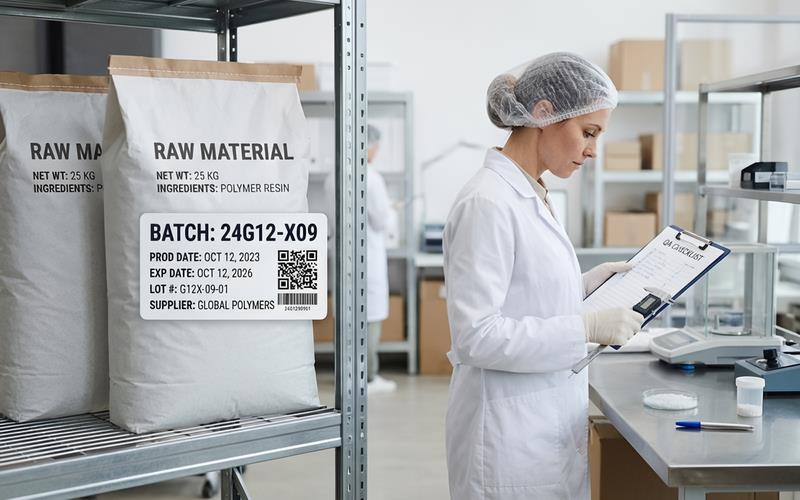
A Sample-to-Order Checklist for Procurement and R&D
Before approving the first commercial order, confirm the following:
| Checkpoint | What should be confirmed |
|---|---|
| Sample identity | Exact product, grade, source, and sample batch |
| Technical approval | Documented application and test results |
| Specification | Agreed limits, methods, and critical attributes |
| Commercial batch | Batch identification and traceability plan |
| Documentation | COA and other required product-specific records |
| Quantity | Sample, pilot, and commercial requirements |
| Lead time | Realistic production and dispatch schedule |
| Packaging | Commercial pack format and storage requirements |
| Change control | Notification and approval expectations |
| Repeat supply | Availability and future order planning |
The checklist should be adapted to the ingredient’s risk, intended use, and regulatory requirements.
The Better Question Is Not “Can You Supply This Quantity?”
A supplier may confirm that a particular quantity can be supplied. That answer alone does not establish whether the commercial material will match the approved sample or whether the supply arrangement is suitable for ongoing production.
A more useful discussion connects four elements:
The material that R&D approved
The specification that QA and procurement accepted
The batch and documentation plan for commercial supply
The quantity, timing, and packaging required by the business
When these elements are aligned, the transition from sample evaluation to commercial purchasing becomes more predictable.
How Esubio Supports Sample Evaluation and Ingredient Sourcing
Esubio works with supplement brands, manufacturers, and R&D teams to coordinate sourcing for selected functional ingredients.
We encourage customers to share the intended application, target specification, sample quantity, expected commercial volume, and required documentation early in the evaluation process.
This helps clarify the sourcing requirements before a project moves from laboratory testing to a larger purchase.
If your team is evaluating a new ingredient, send us the product details and target requirements. We can review the request and discuss available supply options, documentation, and sample arrangements.
Explore: https://www.esubio.com/product-catalog/
Contact: https://www.esubio.com/contact/
References
https://www.fda.gov/media/71021/download?utm_source=chatgpt.com FDA — Process Validation: General Principles and Practices
U.S. Food and Drug Administration+1https://www.fda.gov/regulatory-information/search-fda-guidance-documents/small-entity-compliance-guide-current-good-manufacturing-practice-manufacturing-packaging-labeling?utm_source=chatgpt.com FDA — Small Entity Compliance Guide: Dietary Supplement CGMP
https://www.ecfr.gov/current/title-21/section-111.75?utm_source=chatgpt.com eCFR — 21 CFR § 111.75