
Quercetin Ingredient Sourcing: 7 Critical Checks for Better Formulation
Quercetin ingredient sourcing involves more than selecting a powder with a high assay or comparing quotations from several suppliers. For dietary supplement brands, contract manufacturers, and formulation teams, the decision must account for chemical identity, application requirements, bioavailability considerations, stability, documentation, and commercial supply conditions.
Quercetin is a plant-derived flavonoid that has attracted scientific interest because of its antioxidant and other biological properties. Its potential applications have also created practical questions for product developers: Which chemical form is appropriate? How should solubility be evaluated? What does the assay actually tell us? And how can buyers assess whether a supplier’s material is suitable for the intended formulation?
These questions matter because two materials carrying the same ingredient name may not be interchangeable in every application. A sourcing decision should therefore connect technical specifications with the intended product and the evidence required to qualify the supplier.
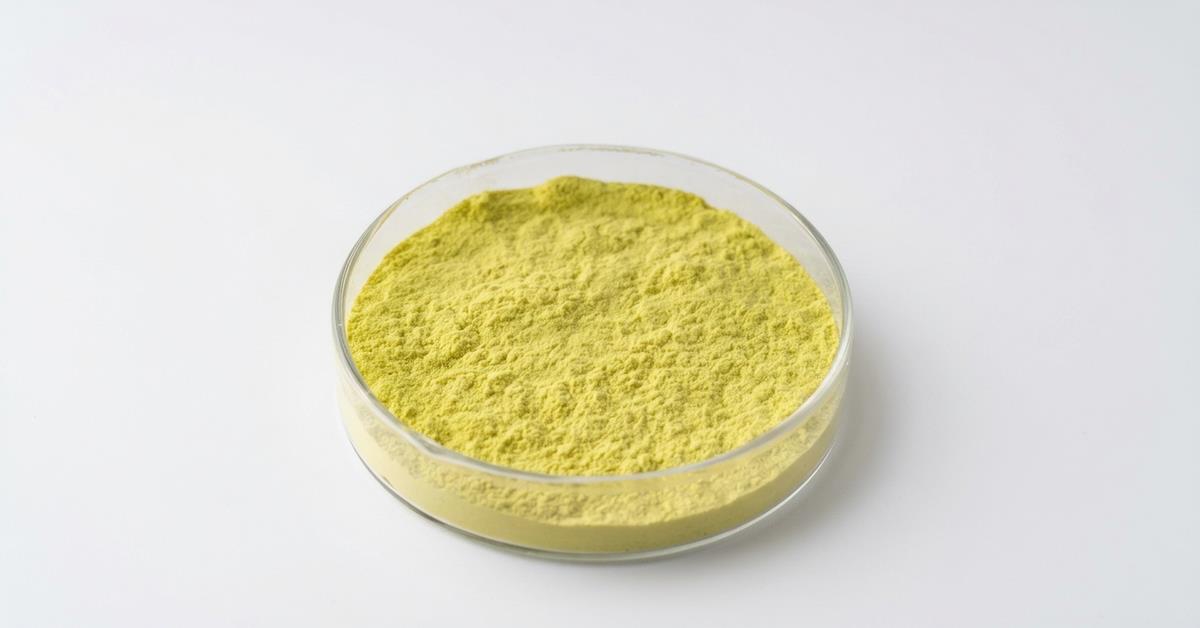
Why Quercetin Ingredient Sourcing Requires Technical Evaluation
Quercetin is available in different chemical and formulation contexts. Quercetin aglycone, glycoside forms, and specialized delivery systems may have different physicochemical characteristics and absorption profiles.
These differences can affect how a material behaves during manufacturing, how it disperses in a formulation, and how its supporting evidence should be interpreted.
A supplier quotation typically provides only part of the information needed for a technical decision. A product name and assay value do not, by themselves, establish solubility in a particular formulation, stability throughout shelf life, or equivalence to a material used in a published study.
The PubMed review on quercetin bioavailability discusses limitations associated with solubility, absorption, and bioavailability. A more recent systematic review of human intervention studies also examines how chemical form, formulation, and food matrices influence quercetin exposure.
For buyers, the implication is clear: define the intended application first, then evaluate the ingredient and its supporting documentation against that application.
7 Critical Checks for Quercetin Ingredient Sourcing
1. Confirm the Chemical Form and Identity
The first step is to establish exactly which material is being offered.
Ask whether the ingredient is quercetin aglycone, a specified glycoside, or a formulated delivery system containing quercetin. Do not assume that all products described as quercetin have the same chemical composition or physical characteristics.
For a formulated ingredient, clarify whether the stated assay refers to the total preparation or the amount of quercetin itself. If the product includes carriers, encapsulating materials, or other formulation components, the composition should be understood before comparing specifications or prices.
Identity should be supported by an appropriate analytical method. The method used should be suitable for the material and the purpose of the test.
This first check prevents a common purchasing mistake: comparing materials that share a marketing name but differ in the characteristics that matter to the project.
2. Evaluate Assay, Purity, and Relevant Impurities
Assay indicates the measured content of a specified substance according to the stated method. It is important, but it does not describe every aspect of quality.
Buyers should establish the required assay range and clarify how the result is expressed, whether on an as-is or dry basis where applicable, and which analytical method is used.
The specification should also identify relevant impurities and other acceptance criteria appropriate to the ingredient, manufacturing process, intended application, and destination market. Depending on the material, this may include residual solvents, elemental impurities, microbiological parameters, or other risk-based tests.
Do not assume that a higher assay automatically means a better ingredient for every formulation. The correct decision depends on the intended chemical form, product requirements, and overall quality profile.
A batch-specific certificate of analysis (CoA) should be reviewed alongside the product specification, not treated as a replacement for it.
3. Assess Solubility and Physical Properties in the Intended Application
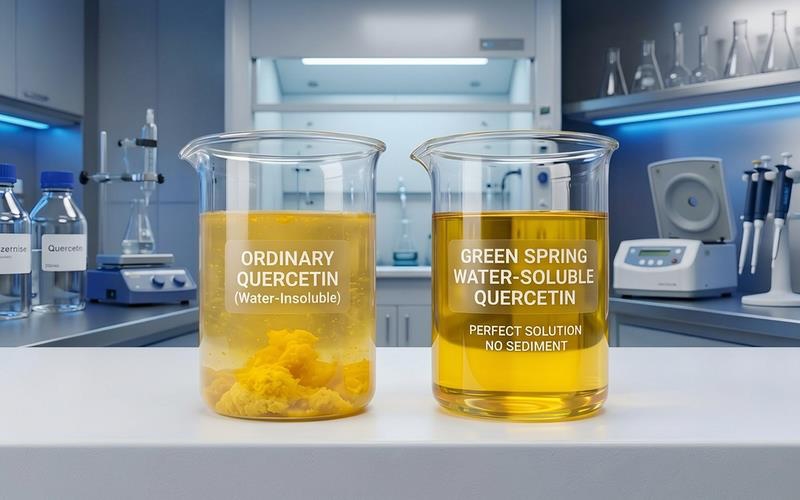
Quercetin aglycone has limited water solubility. For formulation teams, this can influence dispersion, processing, appearance, and the design of a finished product.
However, solubility is not a single number that applies to every formulation. Results depend on factors such as temperature, pH, solvent or carrier system, concentration, and the test method.
Before approving a material, define the actual performance requirement. Is the ingredient intended for a dry powder blend, capsule, tablet, beverage, or another delivery format? Does the process require rapid dispersion, a particular particle size, or compatibility with other ingredients?
Where relevant, request available technical data and test the material under representative conditions.
A supplier’s statement that an ingredient is “water soluble” should be supported by a clear definition and evidence relevant to the intended use. Dispersibility, apparent solubility, and true molecular solubility are not interchangeable terms.
4. Examine Bioavailability Evidence Without Overinterpreting It
Bioavailability is an important consideration when evaluating oral quercetin formulations. Different chemical forms, food matrices, and delivery systems can produce different exposure profiles.
A 2025 systematic review and meta-analysis of human intervention studies examined factors affecting quercetin bioavailability. Its findings support the importance of formulation and chemical form when interpreting absorption data.
For buyers, three questions are especially useful.
First, was the evidence generated using the exact ingredient form being considered? Second, did the study measure the amount of quercetin or its metabolites in biological samples, or did it evaluate a clinical outcome? Third, are the study conditions relevant to the proposed finished product?
These distinctions prevent an important category error. Evidence that a delivery system improves measured absorption does not automatically prove that it produces a specific health benefit.
If a supplier makes enhanced-bioavailability claims, request the underlying evidence, clarify the comparator, and confirm that the tested material corresponds to the product being offered.
5. Verify Stability and Packaging Requirements
An ingredient that meets its specification when manufactured must also maintain appropriate quality during storage and use.
For quercetin, formulation development should consider relevant factors such as light exposure, temperature, moisture, oxygen, packaging compatibility, and interactions with other ingredients. The relative importance of these factors depends on the chemical form and finished product.
Ask what stability information is available, which storage conditions were studied, and whether the data apply to the material and packaging under consideration.
For finished formulations, stability should be evaluated in the actual product matrix rather than inferred solely from raw material data. A supplier’s shelf-life statement for a raw ingredient does not automatically establish the shelf life of a supplement containing it.
Packaging should also be appropriate for transport, storage, and the material’s handling requirements. Any special storage conditions should be documented and communicated through the supply chain.
6. Review Supplier Documentation and Batch Consistency
Supplier qualification should establish whether the material can be identified, evaluated, and monitored using appropriate records.
A practical documentation review may include:
- Product specification defining acceptance criteria.
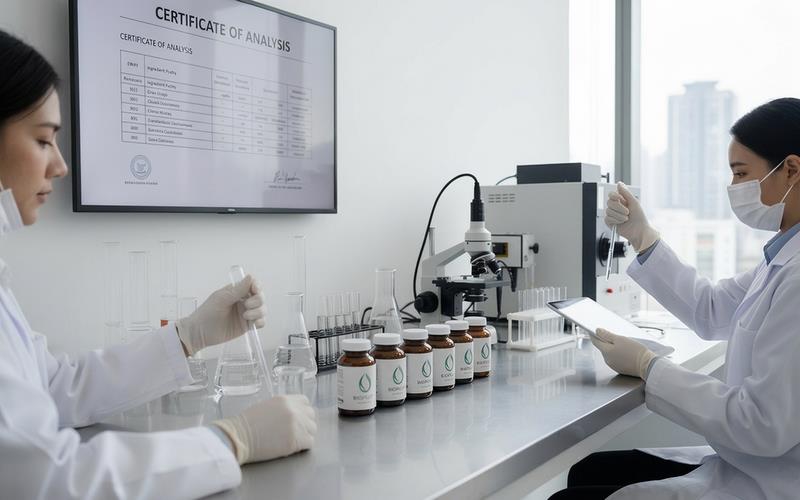
- Batch-specific CoA with relevant analytical results.
- Safety data sheet (SDS), where applicable.
- Available manufacturing or origin information when required.
- Relevant impurity, microbiological, or stability data.
- Applicable certifications or quality-system documentation, where claimed.
- Information about changes to the manufacturing source, process, or specification.
The exact document package should reflect the ingredient, intended use, customer requirements, and applicable regulations.
Batch consistency is another important consideration. Ask how specifications are controlled, how deviations are handled, and whether the supplier can provide batch-related information for the material being purchased.
A sample and a subsequent commercial batch should not be assumed equivalent solely because the product names match. Relevant specifications and batch documentation should be reviewed before approval.
7. Compare MOQ, Lead Time, and Total Sourcing Cost
The final check is commercial, but it should not be separated from the technical assessment.
An ingredient may meet every technical requirement and still be unsuitable for a project if the minimum order quantity is too high, the lead time is incompatible with the development schedule, or the supply arrangement cannot support anticipated demand.
During early development, a smaller evaluation quantity may reduce inventory exposure while the formulation is being tested. As the project advances, the team may need to confirm larger-volume availability, production lead times, packaging, and continuity of supply.
Compare total sourcing cost rather than unit price alone. Relevant factors may include testing, freight, storage, minimum commitments, formulation changes, and the consequences of delays.
A useful sourcing decision balances technical suitability, quality evidence, commercial feasibility, and supply reliability. No single factor should substitute for the others.
Building a Practical Quercetin Qualification Process
A structured process makes quercetin ingredient sourcing more efficient.
Start by documenting the target application, chemical form, required assay, relevant physical properties, target quantity, destination market, and documentation expectations.
Next, screen suppliers against the critical requirements before investing heavily in sample evaluation. Request the relevant specification and available quality records, then confirm that the proposed material matches the project requirements.
During testing, record the sample identity, batch reference where available, test conditions, acceptance criteria, and results. If a change in grade, source, or formulation is proposed, assess whether additional testing or approval is necessary.
Before moving to a larger order, reconfirm the commercial specification, expected lead time, quantity, packaging, and availability of the required batch documentation.
This approach helps connect laboratory evaluation with purchasing decisions and reduces the risk of approving a material that cannot support the finished product.
How Esubio Supports Quercetin Ingredient Sourcing
Esubio works with B2B customers sourcing functional ingredients and specialty raw materials for product development and commercial supply.
For quercetin projects, customers can define their preferred chemical form, assay, application, evaluation quantity, target specification, and documentation requirements. These details help determine which sourcing options are appropriate and what information needs to be confirmed before an order proceeds.
Our sourcing approach emphasizes flexible MOQ options where available, sample coordination, and communication around product specifications and quality documentation. The availability of particular grades, analytical records, and delivery arrangements should be confirmed for each project.
For buyers, the goal is not simply to find quercetin. It is to identify a material that fits the intended formulation, can be evaluated using appropriate evidence, and can be sourced under workable commercial conditions.
Planning a quercetin formulation? Contact Esubio to discuss the required chemical form, assay, application, sample quantity, and sourcing documentation.
References
- Improving quercetin bioavailability: A systematic review and meta-analysis of human intervention studies.
https://pubmed.ncbi.nlm.nih.gov/40037045/ - Bioavailability of quercetin: problems and promises.
https://pubmed.ncbi.nlm.nih.gov/23514412/ - Bioavailability of Quercetin in Humans with a Focus on Interindividual Variation.
https://pubmed.ncbi.nlm.nih.gov/33350133/ - Drug design strategies that aim to improve the low solubility and poor bioavailability conundrum in quercetin derivatives.
https://pubmed.ncbi.nlm.nih.gov/37515777/