
Supplier Qualification: 7 Smart Ways to Cut Ingredient Sourcing Time
Supplier qualification is often treated as a routine procurement task. In reality, it can become one of the biggest hidden time costs in ingredient development.
A new ingredient may look simple on paper: identify a supplier, request a quotation, receive a COA, order a sample, and start testing.
But experienced procurement and quality teams know that the real process is rarely that straightforward.
Before a new raw material supplier can be considered reliable, someone usually needs to review certifications, specifications, COAs, manufacturing information, quality systems, production capability, documentation, sample consistency, and sometimes audit records.
If three or four suppliers are being evaluated at the same time, the workload increases quickly.
The result is a common situation: the formulation itself is ready to move forward, but the project is still waiting for the supply side to be qualified.
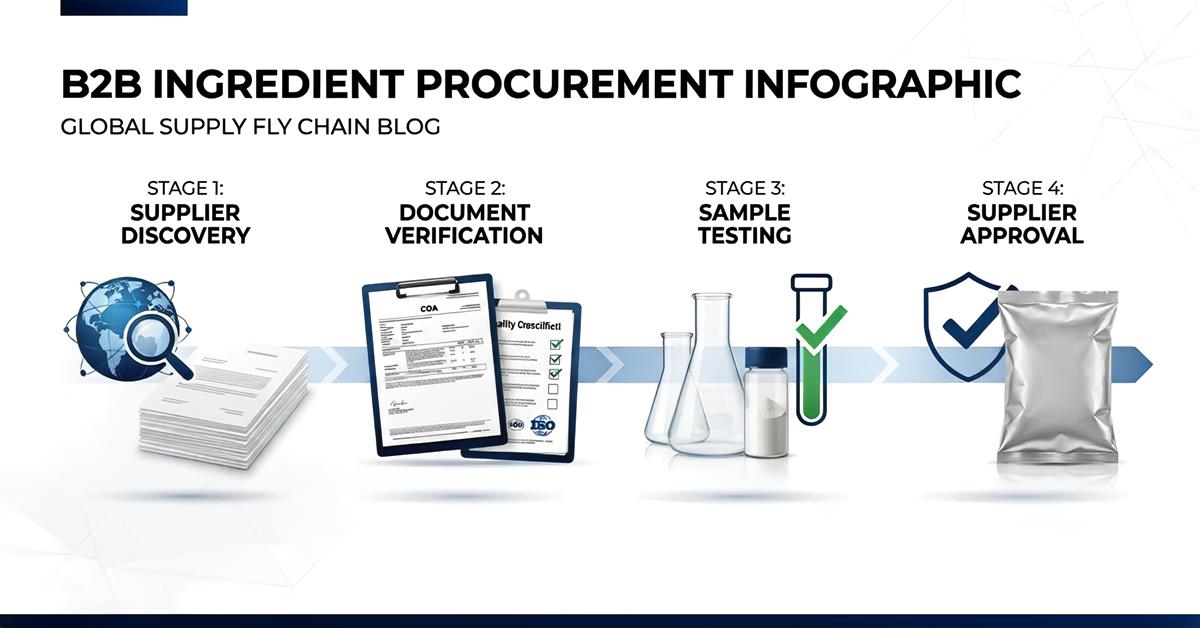
Why supplier qualification takes longer than expected
The biggest problem is not that supplier qualification is unnecessary. It is that much of the work is repetitive.
For a new ingredient, procurement may need to ask:
Is the company a manufacturer or trader?
Where is the actual manufacturing site?
Does the certification apply to the production facility?
Is the current COA representative of the material being offered?
Can the supplier provide the required specification?
Can the supplier consistently meet the specification?
What is the MOQ?
What is the normal lead time?
Can the supplier support future commercial volumes?
Are the packaging, storage and transportation conditions suitable?
These questions are individually reasonable. The problem appears when the same process has to be repeated for every new supplier.
For companies developing multiple formulas or working with dozens of functional ingredients, supplier qualification can quietly become a bottleneck.
FDA guidance also treats supplier approval and verification as a risk-based activity rather than a simple document collection exercise. Depending on the material and risk involved, supplier evaluation can include records review, testing, audits and ongoing verification.
That distinction matters.
A supplier having an ISO certificate does not automatically mean that a specific ingredient is suitable for a specific application.
A COA shows analytical results for a batch. It does not, by itself, prove that the supplier will consistently produce every future batch to the same standard.
Supplier qualification therefore needs to connect three things: the supplier, the material, and the actual application.
What should supplier qualification actually verify?
A practical supplier qualification process normally covers several layers.
First is company and manufacturing information.
The buyer needs to understand who is actually producing the material, where it is manufactured, and whether the production site matches the documentation provided.
Second is quality system information.
Depending on the ingredient and application, this may include ISO, HACCP, GMP or other relevant certifications. The important question is not simply whether a certificate exists, but whether the certification is relevant to the manufacturing site and product category.
Third is product documentation.
Specifications, COAs, MSDS/SDS, microbiological limits, heavy metal limits, allergen information, residual solvent data and other technical documents may be required depending on the ingredient.
Fourth is historical performance.
This is often overlooked.
A supplier can provide a technically acceptable sample and still become a problem later if batch-to-batch consistency is poor, lead times are unstable, or documentation changes without proper communication.
Codex guidance similarly emphasizes written ingredient specifications, supplier records, COAs and periodic verification rather than relying on a single document or shipment.
The objective is therefore not to collect the largest possible number of documents.
The objective is to build enough evidence to make a reasonable purchasing decision.
The hidden cost of qualifying multiple suppliers
Consider a simple sourcing project.
A customer needs one botanical extract.
Procurement identifies four potential suppliers.
Each supplier requires:
- Company and factory information
- Certifications
- Product specification
- Recent COA
- Sample
- MOQ and pricing
- Production lead time
- Packaging information
- Additional quality documents
Even if each supplier requires only a few hours of internal work, the total effort can become significant.
Then comes the second stage.
The samples arrive. R&D tests them. Quality compares analytical results. Procurement asks follow-up questions. One supplier cannot meet the MOQ. Another cannot provide the required documentation. A third supplier’s sample works, but its commercial lead time is too long.
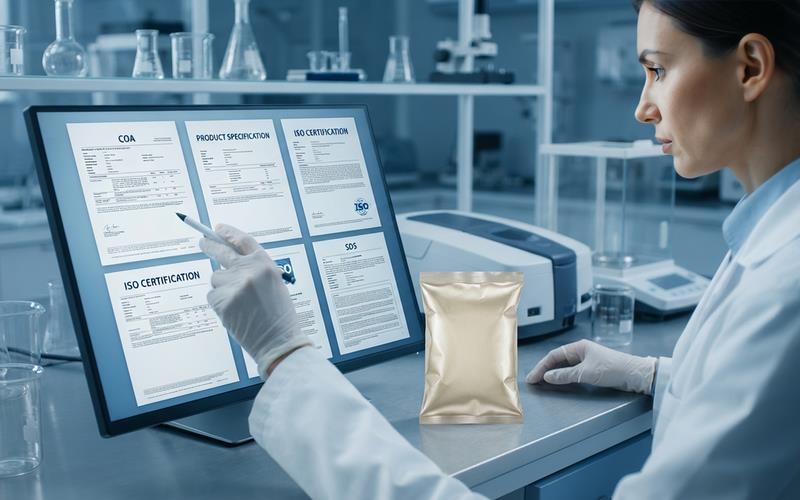
The project may have spent several weeks determining something that looked simple at the beginning:
Which supplier can actually support the project?
This is why supplier qualification should be viewed as a sourcing capability, not merely an administrative task.
7 ways to make supplier qualification more efficient
1. Start with the material risk, not the supplier list
Not every ingredient requires exactly the same level of qualification.
A low-risk ingredient and a critical active ingredient should not necessarily follow an identical verification process.
Risk, application, regulatory requirements, intended market and product sensitivity should determine how deeply the supplier is evaluated.
A risk-based approach prevents procurement teams from spending excessive time on low-impact materials while critical materials receive insufficient attention.
FDA materials-management guidance similarly emphasizes risk-based supplier qualification and ongoing monitoring for critical raw materials.
2. Verify the manufacturing source early
One of the most useful questions to ask at the beginning is:
Who actually manufactures this material?
This can prevent a long qualification process from being built around the wrong counterpart.
If the supplier is a distributor, the buyer may also need to understand the original manufacturer, manufacturing location and traceability of the material.
Knowing the real source early makes later quality and documentation checks much more efficient.
3. Request the core technical package together
Instead of requesting documents one by one, create a standard document checklist.
For example:
Company profile, manufacturing information, certification, product specification, recent COA, SDS/MSDS, packaging details, MOQ and lead time.
This reduces email cycles and makes supplier comparison easier.
More importantly, it creates a consistent qualification framework across suppliers.
4. Treat the COA as evidence, not proof
A COA is important, but it should not become a substitute for supplier qualification.
The useful questions are:
Does the COA match the agreed specification?
Are the analytical methods identified where necessary?
Is the batch information clear?
Are the results realistic and internally consistent?
Can the supplier provide historical batch information when required?
For higher-risk materials, buyers may also need independent or incoming testing to verify supplier results.
FDA guidance specifically discusses verifying the reliability of supplier analytical results rather than assuming that a supplier COA is automatically sufficient.
5. Evaluate consistency, not just the first sample
A good sample is the beginning of supplier qualification, not the end.
A supplier should ultimately demonstrate the ability to repeatedly meet the agreed specification.
This is particularly important for standardized extracts, probiotics, functional blends and other ingredients where specification compliance and batch consistency directly affect formulation performance.
A supplier that performs well once but cannot maintain consistency may create more cost than a slightly more expensive but stable source.
6. Separate supplier qualification from price comparison
Price is important, but it should not be the first filter.
A lower quotation is not necessarily a lower procurement cost if the supplier requires repeated document follow-ups, has inconsistent lead times, fails incoming testing or cannot support future volume.
A more useful comparison includes:
Price + qualification effort + quality risk + lead time + documentation reliability + supply continuity.
That is closer to the supplier’s actual procurement cost.
7. Build a reusable supplier network
This is where the biggest efficiency gain can occur.
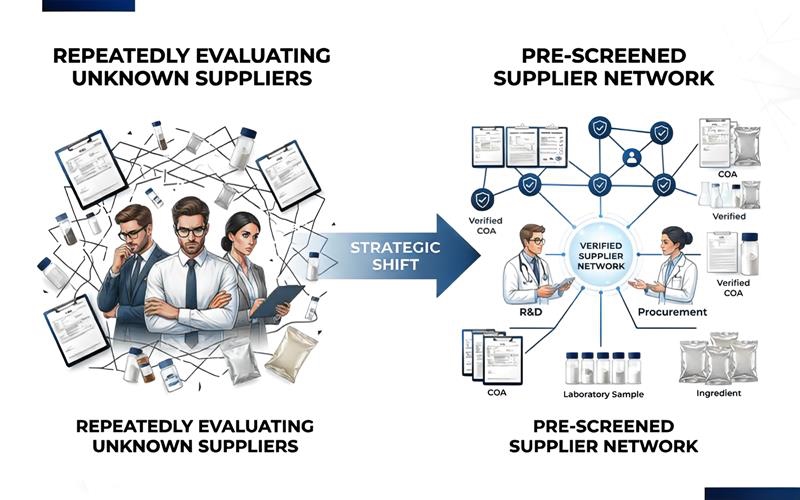
If every new ingredient requires starting from zero, supplier qualification remains an ongoing bottleneck.
But if a sourcing partner has already built a network of qualified suppliers, the process changes.
Instead of receiving a random list of suppliers, the buyer can begin with sources that have already been screened for basic company information, documentation and product capability.
The buyer still needs to conduct its own final qualification where required. But the amount of repetitive discovery work can be significantly reduced.
Supplier qualification should reduce risk without slowing innovation
The purpose of supplier qualification is not to create another administrative layer.
It is to reduce the probability that a promising formulation reaches the next stage and then fails because the raw material source cannot support it.
The most efficient sourcing model therefore does not eliminate qualification.
It moves qualification earlier, makes the process more structured, and avoids repeating the same supplier discovery work for every project.
For ingredient buyers, this can make a meaningful difference.
Instead of spending weeks answering the question, “Which supplier can we trust enough to test?”, procurement and R&D can spend more time answering the question that actually matters:
“Does this ingredient work for our product?”
At Esubio, we work with a verified-supplier approach for functional ingredients and raw materials, with supplier documentation and technical information reviewed before products are presented to customers.
Depending on the ingredient and project requirements, documentation may include specifications, COA, SDS/MSDS and relevant quality certifications.
The goal is not to replace the buyer’s own quality system or supplier approval process.
It is to reduce the amount of repetitive sourcing work required before that process can begin.
Because in ingredient development, the hidden cost is not always the price of the raw material.
Sometimes, it is the weeks spent trying to establish whether the source behind it is reliable enough to move forward.
References
- FDA — Supplier Approval and Verification
FDA Supplier Approval and Verification Guidance - FDA — Supplier Evaluation Resources
FDA Supplier Evaluation Resources - FDA — Materials Management / Supplier Qualification
FDA Materials Management Guidance - Codex / FAO — Ingredient Supplier Verification
FAO/Codex Food Hygiene Guidance