
Quercetin Antioxidant and Anti-Inflammatory Properties: 7 Essential Facts
Quercetin antioxidant and anti-inflammatory properties are central to the scientific interest surrounding this plant-derived flavonoid. Researchers have investigated its interactions with reactive oxygen species, cellular defense systems, and signaling pathways involved in inflammation. These mechanisms have also prompted interest in respiratory research, where oxidative stress and inflammatory responses can contribute to tissue injury.
However, understanding a mechanism is not the same as establishing a health outcome. A compound may influence a biological pathway under laboratory conditions without producing a clinically meaningful effect when consumed as a dietary supplement.
For supplement brands, formulation scientists, and ingredient buyers, the key is to understand what quercetin does in experimental systems, what remains uncertain in humans, and how these distinctions should influence product development.
Why Quercetin Antioxidant and Anti-Inflammatory Properties Matter
Oxidative stress and inflammation are interconnected biological processes. Oxidative stress can alter cellular structures and signaling, while inflammatory responses can increase the production of reactive molecules. Depending on the circumstances, these processes may reinforce one another.
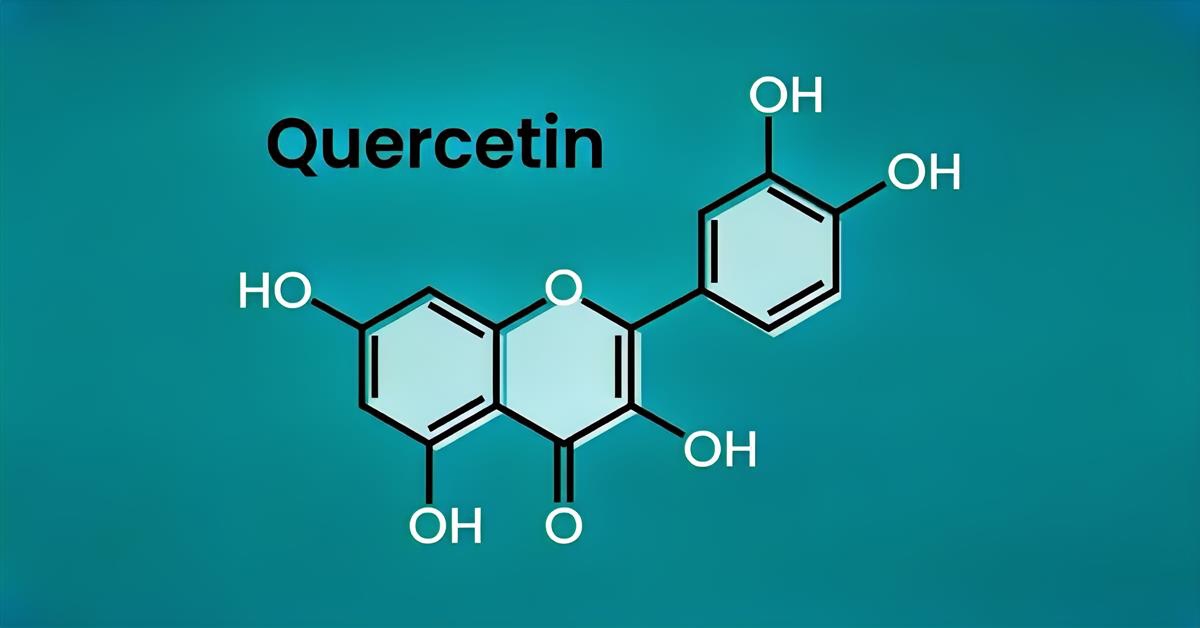
Quercetin is studied because its chemical structure and interactions with cellular pathways may affect several components of this relationship. Research has examined its direct interactions with reactive species, effects on antioxidant response systems, and influence on inflammatory signaling.
In respiratory models, these mechanisms are relevant to understanding how cells respond to environmental stressors and injury. Yet their significance depends on the experimental model, exposure level, tissue, and biological context.
A responsible assessment must therefore distinguish mechanistic evidence from evidence of benefit in humans.
7 Essential Facts About Quercetin’s Biological Activity
1. Quercetin Can Interact With Reactive Oxygen Species
Reactive oxygen species (ROS) are produced naturally during cellular metabolism and can also increase in response to environmental exposures and tissue injury. At controlled levels, they participate in normal signaling. At excessive levels, they can contribute to oxidative damage.
Quercetin has chemical features that allow it to interact with certain reactive species in experimental systems. Its antioxidant activity is one reason it is widely studied in nutrition and biological research.
However, antioxidant activity is not a single, universal effect. Results depend on concentration, the surrounding chemical environment, and the specific assay used. A result obtained in a test tube cannot be directly translated into the amount of oxidative stress experienced by human lung tissue.
For product developers, this means that an antioxidant claim should be supported by evidence appropriate to the ingredient, finished product, and intended claim.
2. Its Effects May Extend Beyond Direct Radical Scavenging
Quercetin research also examines indirect effects on cellular defense systems.
Cells use regulated networks to respond to oxidative challenges. One area of interest is the Nrf2-related antioxidant response, which helps regulate the expression of various protective enzymes and proteins.
Experimental studies have investigated whether quercetin influences these systems, alongside other pathways associated with cell survival and stress responses.
These mechanisms are scientifically relevant because biological effects can depend on changes in cellular regulation, not just direct chemical interactions.
Nevertheless, pathway activation in a laboratory model does not prove that an orally consumed ingredient will achieve the same response in human respiratory tissue. The dose reaching the relevant cells, the metabolites formed after absorption, and the duration of exposure all matter.
3. Quercetin Has Been Studied in Inflammatory Signaling
Inflammation involves coordinated signaling networks that regulate immune responses, tissue repair, and defense against harmful stimuli.
Quercetin has been investigated for its influence on pathways such as NF-κB and on the production or regulation of inflammatory mediators in experimental models.
These findings help explain why researchers have explored the compound in inflammatory conditions, including models of respiratory injury.
However, inflammation is not inherently harmful. It is also necessary for normal immune defense and tissue recovery. Broadly suppressing inflammatory activity is not always desirable, and the consequences of a specific intervention depend on the condition and context.
It is therefore more accurate to describe quercetin as a compound investigated for its effects on inflammatory signaling than to imply that it universally reduces inflammation in people.

4. Oxidative Stress and Inflammation Are Relevant to Respiratory Research
The lungs have extensive contact with the external environment and are exposed to inhaled particles, gases, and biological agents. Respiratory tissues rely on protective barriers, immune responses, and antioxidant systems to maintain normal function.
In certain respiratory diseases, oxidative stress and dysregulated inflammation are involved in tissue injury and disease progression. This has led researchers to investigate compounds that may influence these processes.
A 2023 review of quercetin in smoking-induced COPD examined antioxidant, inflammatory, immune, and related cellular mechanisms. Other research has explored quercetin in experimental models of acute lung injury.
These studies establish a scientific rationale for further investigation, not proof that quercetin supplements improve lung function or treat respiratory disease in humans.
5. Dose and Biological Exposure Change the Interpretation
The concentration used in an experiment is central to interpreting its results.
A cell study may expose cells directly to quercetin at a controlled concentration. An oral supplement, by contrast, must pass through digestion, absorption, and metabolism before quercetin-derived compounds enter circulation.
The original molecule may be transformed into metabolites with different chemical properties and biological activity. Exposure can also vary between individuals.
Consequently, the concentration that produces an effect in a laboratory experiment may not be achievable through an ordinary oral supplement. Even if exposure is achievable, the same biological effect cannot be assumed without supporting evidence.
Researchers must evaluate dose, pharmacokinetics, safety, and relevant outcomes rather than extrapolating directly from an experimental concentration.
6. Bioavailability Can Limit the Translation of Research
Quercetin aglycone has limited water solubility, and oral bioavailability varies with its chemical form, food matrix, formulation, and individual metabolism.
A 2025 systematic review and meta-analysis of human intervention studies examined how formulation and food-related factors affect quercetin bioavailability. Its findings highlight that different forms and delivery approaches can produce different exposure profiles.
This is an important distinction for ingredient developers. Two products containing the same nominal quantity of quercetin may not necessarily produce identical absorption or exposure.
However, greater bioavailability is not automatically equivalent to greater clinical benefit. Formulation studies should be interpreted according to what they actually measure, whether that is plasma exposure, a biomarker, or a health outcome.
7. Mechanistic Evidence Must Be Connected to Human Outcomes
A strong evidence assessment considers several levels of research.
In vitro studies can identify possible molecular interactions. Animal models can investigate biological responses in more complex systems. Human pharmacokinetic studies examine absorption and metabolism, while randomized controlled trials can assess specific outcomes under defined conditions.
These forms of evidence answer different questions and should not be treated as interchangeable.
For quercetin, researchers must determine whether proposed effects can be reproduced at realistic exposures, whether the formulation is suitable, and whether the outcomes matter to the intended population.
For commercial product development, claims should be limited to what the evidence and applicable regulations support. Antioxidant activity should not be presented as proof of disease prevention or treatment.

What These Mechanisms Mean for Ingredient Development
For a functional ingredient, biological plausibility is a starting point rather than a complete product-development strategy.
Developers should evaluate the ingredient’s chemical identity, assay, solubility, physical properties, formulation compatibility, stability, and analytical documentation. They should also determine whether the evidence applies to the specific chemical form and delivery system under consideration.
When a formulation uses an enhanced-delivery system, its composition and supporting data require separate evaluation. Evidence for one formulation should not automatically be transferred to another.
Quality documentation also matters. A batch-specific certificate of analysis can help verify measured characteristics, while a product specification defines acceptance criteria. Stability studies and appropriate analytical methods provide further information about performance over time.
These quality controls help establish ingredient suitability, but they do not substitute for clinical research.
A More Rigorous Approach to Quercetin
Quercetin’s antioxidant and anti-inflammatory properties provide a legitimate scientific basis for continued investigation. Its relevance to respiratory research is supported by experimental studies exploring oxidative stress, inflammatory signaling, and cellular responses.
The next step is not to turn every promising mechanism into a marketing claim. It is to establish which effects are reproducible, which formulations produce appropriate exposure, and which outcomes have been demonstrated in humans.
For supplement brands and formulation teams, this approach supports better technical decisions and more credible communication with customers.
Esubio supports B2B sourcing projects involving functional ingredients and specialty raw materials. For quercetin inquiries, customers should specify the required chemical form, assay, application, quantity, and documentation requirements so that suitable sourcing options can be assessed.
Interested in evaluating quercetin for a functional formulation? Contact Esubio to discuss ingredient specifications, sample requirements, and available quality documentation.
References
- Quercetin, Inflammation and Immunity.
https://pmc.ncbi.nlm.nih.gov/articles/PMC4808895/ - The therapeutic potential of quercetin for cigarette smoking–induced chronic obstructive pulmonary disease: a narrative review.
https://pmc.ncbi.nlm.nih.gov/articles/PMC10170608/ - Quercetin: A Flavonoid with Potential for Treating Acute Lung Injury.
https://pmc.ncbi.nlm.nih.gov/articles/PMC11630707/ - Improving quercetin bioavailability: A systematic review and meta-analysis of human intervention studies.
https://pubmed.ncbi.nlm.nih.gov/40037045/ - Bioavailability of Quercetin in Humans with a Focus on Interindividual Variation.
https://pubmed.ncbi.nlm.nih.gov/33350133/