
Quercetin for Lung Health: 7 Key Insights From Emerging Research
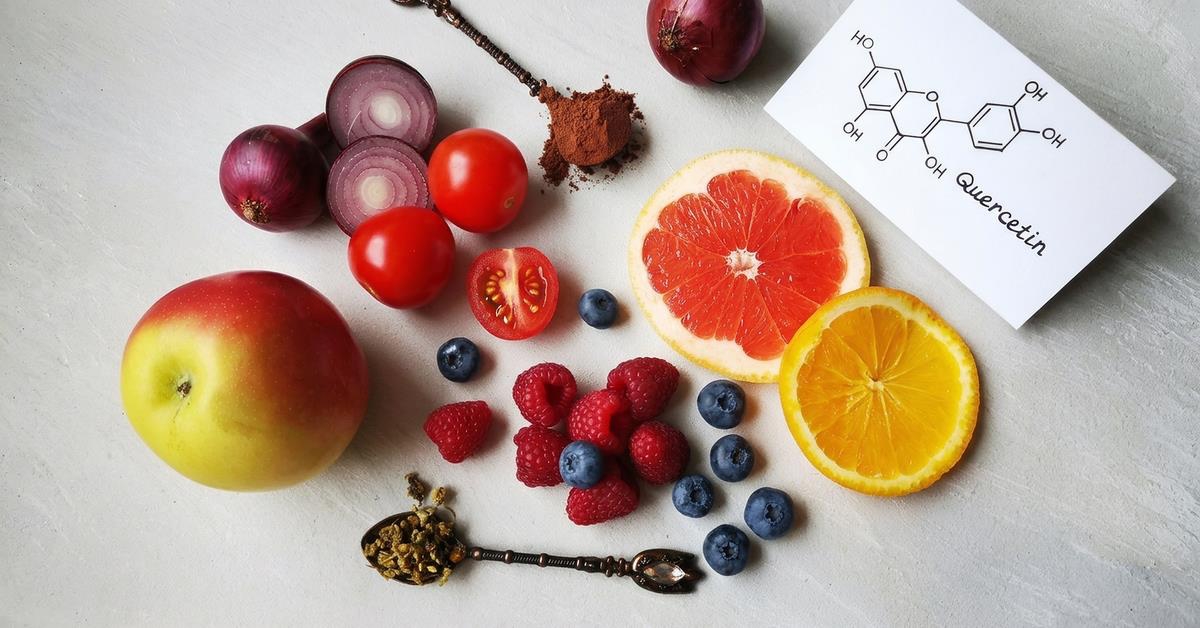
Quercetin for lung health has attracted growing scientific interest because this naturally occurring flavonoid is associated with antioxidant activity, inflammatory signaling, and cellular responses to oxidative stress. Found in foods such as onions, apples, and berries, quercetin is being investigated for its potential relevance to respiratory biology.
But what does the research actually show? And why are ingredient developers and dietary supplement brands interested in quercetin?
The answer requires a distinction between biological plausibility and demonstrated clinical benefit. Laboratory experiments and animal studies suggest that quercetin may influence several pathways involved in lung injury and inflammation. However, these findings do not establish that oral quercetin supplements prevent or treat human lung diseases.
For ingredient developers, understanding both the potential and the limitations is essential to responsible product development.
Why Quercetin for Lung Health Is Attracting Research Interest
Quercetin is a polyphenolic flavonoid naturally present in a variety of plant foods. Researchers have investigated its antioxidant and anti-inflammatory properties, as well as its effects on cellular signaling and immune responses.
These properties have prompted research into several respiratory conditions, including experimental models of acute lung injury and chronic obstructive pulmonary disease (COPD).
The biological rationale is that oxidative stress and dysregulated inflammation can contribute to tissue damage in certain respiratory conditions. Quercetin may influence some of the pathways involved in these processes.
However, the term “lung health” covers many different biological and clinical outcomes. A compound that changes an inflammatory marker in a cell experiment cannot automatically be assumed to improve lung function, reduce respiratory symptoms, or prevent disease in humans.
The scientific question is therefore not simply whether quercetin has antioxidant activity, but whether specific formulations, at appropriate exposures, produce meaningful benefits in well-designed human studies.
7 Key Insights Into Quercetin and Respiratory Research
1. Quercetin Has Antioxidant Properties
Oxidative stress occurs when the production of reactive oxygen species and other oxidants exceeds the capacity of biological systems to control them. Depending on the context, this imbalance can affect cell membranes, proteins, DNA, and normal cellular signaling.
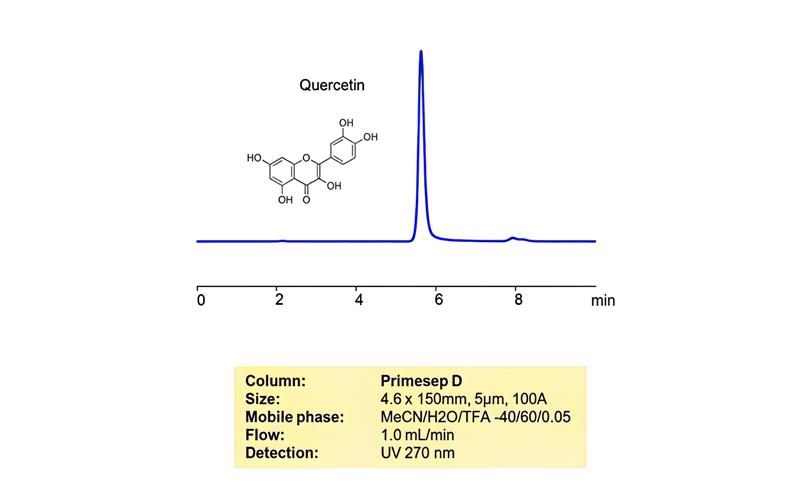
Quercetin has a chemical structure that allows it to interact with reactive species and influence antioxidant-related pathways. Experimental research has examined its effects on oxidative stress markers and endogenous antioxidant defenses.
This is relevant to respiratory research because lung tissue is exposed to environmental agents and depends on tightly regulated cellular defenses.
Nevertheless, antioxidant activity measured in a laboratory does not necessarily translate into a measurable health benefit after oral consumption. Absorption, metabolism, tissue exposure, dose, and the biological environment all affect the outcome.
2. Researchers Are Investigating Its Role in Inflammatory Signaling
Inflammation is a complex biological response rather than a single process that can be switched off universally.
Quercetin has been investigated for its effects on signaling pathways associated with inflammatory mediators, including pathways involving NF-κB and other regulatory proteins. Some experimental studies report changes in inflammatory signaling after quercetin exposure.
These findings help explain why the compound is being studied in models of inflammatory lung injury.
However, suppressing a pathway in an experimental model does not establish that a supplement will produce the same effect in people. Inflammation also serves essential functions in immune defense and tissue repair. Any proposed health application must be evaluated in the context of the specific condition and available human evidence.
3. Experimental Lung Injury Studies Provide a Research Foundation
A 2024 review, “Quercetin: A Flavonoid with Potential for Treating Acute Lung Injury,” discusses experimental evidence concerning quercetin and mechanisms associated with acute lung injury.
This literature examines biological processes such as oxidative stress, inflammatory mediator release, and cellular injury. It provides a foundation for further investigation into how quercetin interacts with respiratory biology.
The critical limitation is that preclinical findings are not equivalent to clinical evidence. Experimental models may use doses, delivery methods, and exposure conditions that differ substantially from ordinary oral supplementation.
Researchers must still establish whether these effects can be reproduced safely and meaningfully in humans.

4. COPD Research Raises Questions About Long-Term Inflammation
Chronic obstructive pulmonary disease is a complex respiratory condition involving persistent airflow limitation and, in many cases, chronic inflammation and oxidative stress.
A 2023 narrative review examined the therapeutic potential of quercetin in cigarette smoking-induced COPD, focusing on antioxidant, inflammatory, immune, and other cellular mechanisms.
This work provides a useful overview of why quercetin is being studied in the context of smoking-related lung injury.
It should not, however, be interpreted as proof that quercetin supplements prevent COPD, reverse smoking-related damage, or replace established medical treatment. The strength of the evidence depends on the type of study, the formulation used, and the outcomes measured.
5. Bioavailability Is a Major Formulation Challenge
One of the most important questions in quercetin research is whether an orally consumed formulation can deliver the compound in a form that the body absorbs and metabolizes effectively.
Quercetin aglycone has limited water solubility, and its absorption and metabolism can vary considerably. After consumption, quercetin undergoes metabolic transformation, meaning that the compounds circulating in the body may differ from the original ingredient.
Consequently, a formulation’s biological performance cannot be inferred from its labeled quercetin content alone.
Research into food matrices, delivery systems, and alternative formulations has explored ways to influence bioavailability. Yet improved absorption is not automatically proof of improved respiratory outcomes. Those outcomes require appropriate clinical testing.
6. Ingredient Quality Matters for Research and Product Development
The identity and quality of the ingredient are fundamental to interpreting any study or evaluating a commercial formulation.
Different quercetin materials may differ in chemical form, assay, purity, particle characteristics, and other physical or chemical properties. Formulation technologies may also introduce additional ingredients or change how the material behaves in a finished product.
When evaluating a quercetin ingredient, developers should establish the intended chemical form, assay requirements, relevant impurity limits, and the analytical methods used to verify product quality.
A certificate of analysis (CoA) can provide batch-specific test results when it is appropriately linked to the supplied batch. A product specification defines the required characteristics, while stability data help assess whether those characteristics are maintained over time.
These documents support quality evaluation, but they do not independently prove clinical efficacy.
7. Human Evidence Must Guide Health Claims
The final question is the most important: what benefits have actually been demonstrated in humans?
Evidence for quercetin’s biological activity is broader than evidence for specific respiratory outcomes. Findings from cell experiments, animal models, studies of blood biomarkers, and trials measuring clinical outcomes answer different questions.
A credible evaluation should examine the population studied, sample size, formulation, dose, duration, comparator, measured endpoints, and limitations of the trial.
It should also distinguish between studies investigating general inflammatory markers and studies specifically measuring respiratory symptoms, lung function, exacerbations, or other clinically meaningful outcomes.
Until adequate evidence supports a particular claim, quercetin should be described as a compound under investigation rather than an established treatment for lung disease.
What Quercetin Research Means for Functional Ingredient Developers
For dietary supplement brands and formulation teams, quercetin offers an opportunity to explore a well-studied plant flavonoid with several research-relevant biological properties.
But successful product development requires more than choosing an ingredient because it appears frequently in scientific literature. Teams must assess the intended product category, target market, chemical form, formulation compatibility, quality requirements, stability, and available evidence.
The same discipline should apply to marketing. Claims about antioxidant activity, research interest, and ingredient composition must not be presented as proof that a finished supplement prevents or treats respiratory disease.
Scientific credibility is built by explaining what is known, identifying what remains uncertain, and aligning product claims with the evidence and applicable regulations.
How Esubio Supports Quercetin Ingredient Sourcing
Esubio supports B2B customers sourcing functional ingredients for dietary supplements and related product development projects.
When evaluating quercetin or other specialty ingredients, buyers should define the required chemical form, assay, application, target quantity, documentation needs, and destination market before confirming a sourcing option.
Depending on the product and supplier, relevant documentation may include a product specification, batch-specific CoA, and safety data sheet. Additional documentation should be confirmed according to the material and the customer’s requirements.
Our approach emphasizes flexible sourcing, low MOQ options where available, sample coordination, and clear communication about specifications and documentation.
Quercetin’s potential in respiratory research makes it an interesting ingredient to evaluate, but scientific promise and proven clinical benefit must remain distinct.
For product developers, that distinction is not a limitation to ignore. It is the starting point for responsible formulation, sourcing, and communication.
Looking for a quercetin ingredient for your next formulation project? Contact Esubio to discuss specifications, evaluation quantities, and available quality documentation.
References
- Quercetin: A Flavonoid with Potential for Treating Acute Lung Injury.
https://pmc.ncbi.nlm.nih.gov/articles/PMC11630707/ - The therapeutic potential of quercetin for cigarette smoking–induced chronic obstructive pulmonary disease: a narrative review.
https://pmc.ncbi.nlm.nih.gov/articles/PMC10170608/ - Quercetin, Inflammation and Immunity.
https://pmc.ncbi.nlm.nih.gov/articles/PMC4808895/ - Improving quercetin bioavailability: A systematic review and meta-analysis of human intervention studies.
https://pubmed.ncbi.nlm.nih.gov/40037045/ - Bioavailability of Quercetin in Humans with a Focus on Interindividual Variation.
https://pubmed.ncbi.nlm.nih.gov/33350133/