
Ingredient Traceability: 7 Critical Checks for Safer Sourcing
Ingredient traceability is becoming a critical consideration for businesses sourcing food ingredients, dietary supplement ingredients, and functional raw materials. Buyers need to know not only what an ingredient is, but also where it was produced, which manufacturer handled it, and whether its origin can be verified through reliable records.
For procurement teams, supplement brands, contract manufacturers, and distributors, these questions are no longer limited to supplier audits. They increasingly arise during quality reviews, customer assessments, regulatory checks, and investigations into potential contamination or product authenticity issues.
The challenge is that knowing a supplier’s name is not the same as knowing an ingredient’s origin. Without clear documentation linking the material, its manufacturing source, and its batch records, even an established supply relationship may leave important gaps.

Why Ingredient Traceability Matters in Raw Material Sourcing
Ingredient traceability helps businesses establish a documented connection between a raw material and the relevant stages of its supply chain. Depending on the ingredient and the level of traceability available, this may include the original source, processing location, manufacturer, batch number, shipment records, and receiving information.
Three business risks make this information particularly important.
First, regulatory and customer requirements vary by market, product category, and intended use. Country-of-origin marking, food traceability records, and customer-specific supplier documentation are not interchangeable requirements. Buyers need to determine which obligations apply to their products rather than assuming that one document satisfies every requirement.
Second, ingredient sourcing can involve several parties. A raw material may pass through a manufacturer, an exporter, a distributor, and a local warehouse before reaching the buyer. Each transfer can create an information gap if product identities, batch references, or source records are not properly maintained.
Third, quality incidents require fast, evidence-based decisions. If a supplier reports a potential contamination issue or a customer questions the origin of a particular material, the buyer needs to identify the affected batch, establish where it came from, and determine which products or customers may be involved.
The FDA’s food traceability framework illustrates why traceability lot codes and linked records matter for identifying sources and narrowing the scope of an investigation. Its specific requirements apply to covered foods and activities, not automatically to every dietary supplement ingredient.
7 Critical Checks for Ingredient Traceability
1. Confirm the Country of Origin
Ask where the ingredient was produced and which country should be identified as its origin for the relevant commercial or regulatory purpose.
Do not automatically treat the country of export, the supplier’s registered address, the shipping location, and the country of origin as equivalent. An ingredient manufactured in one country may be sold through a company in another and shipped from a third location.
Where origin matters to a customer or market, request supporting documentation and clarify the basis for the origin statement. The appropriate evidence depends on the product, processing history, applicable rules, and contractual requirements.
2. Identify the Actual Manufacturer
Determine who manufactures the ingredient and where the relevant manufacturing or processing takes place.
A trading company, distributor, and manufacturer can all play legitimate roles in the supply chain. The important question is whether the supplier can clearly explain those roles and provide appropriate supporting records.
For sensitive or specialized ingredients, buyers may also need to understand whether production is performed at one facility or across multiple sites, and whether subcontracted processing is involved.
This information supports supplier qualification and helps buyers assess the consistency of their sourcing arrangements.
3. Verify Batch and Lot Identification
A product name alone cannot establish which specific material was supplied.
Effective batch-level traceability requires a reliable identifier that connects the physical material to relevant records. Depending on the product and supply chain, these records may include the batch number, manufacturing date, production documentation, certificate of analysis (CoA), packing records, and shipment documents.
Check that the batch identification on the material or packaging corresponds with the accompanying documentation. If a supplier issues a CoA, confirm that it relates to the actual batch being purchased rather than relying solely on a generic product specification or an unrelated example.
Batch identification is particularly important when investigating deviations, customer complaints, or potential product recalls.
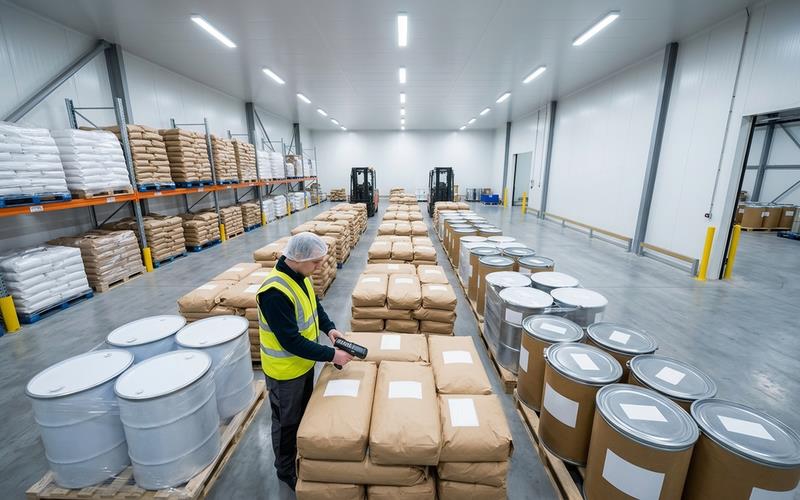
4. Check Whether Records Connect Across the Supply Chain
Traceability is stronger when information remains linked as the ingredient moves between parties.
For example, a purchase order, supplier invoice, packing list, shipping record, and CoA should provide enough consistent information to establish which product and batch were supplied. Not every document must contain every data field, but the records should work together without unexplained discrepancies.
The GS1 Global Traceability Standard describes traceability through critical tracking events and key data elements. These concepts provide a useful framework for evaluating how materials, locations, transactions, and movements are recorded.
For procurement teams, the practical test is straightforward: can the supplier follow a specific batch back to its relevant source records and identify its onward distribution where the available system supports that level of tracking?
5. Evaluate the Quality Documentation
A CoA, product specification, safety data sheet (SDS), and origin document serve different purposes.
A CoA reports specified quality results for a particular batch when appropriately batch-specific. A specification defines the product’s quality requirements. An SDS communicates relevant safety and handling information. None of these documents, by itself, necessarily proves the ingredient’s country of origin or establishes complete supply chain traceability.
Buyers should therefore assess the document package against their actual requirements. Depending on the material and application, this may include identity, assay, microbiological results, relevant contaminant testing, allergen information, manufacturing details, and origin evidence.
The objective is not to collect the largest possible number of documents. It is to obtain the right evidence, verify that it is applicable to the material, and confirm that the records are consistent.
6. Test the Supplier’s Response to a Traceability Request
A supplier’s process is best evaluated through a specific, practical question.
Ask the supplier to identify the origin and relevant records for a named product and batch. Observe whether the response is clear, internally consistent, and supported by documents.
Can the supplier distinguish the manufacturer from the seller? Can it explain the batch identification system? Can it clarify which origin information is documented and which information would require confirmation from an upstream partner?
Response time matters, but accuracy matters more. A quick answer without supporting evidence does not establish traceability.
Where possible, define expectations for document availability, escalation contacts, record retention, and response times during supplier qualification or contracting.
7. Establish a Process for Exceptions and Incidents
Traceability has practical value when something goes wrong.
If a supplier identifies a potential quality issue, the buyer should be able to determine which batches are involved, check inventory and shipment records, notify the appropriate internal teams, and assess whether customers or downstream products may be affected.
The process should also address discrepancies in origin declarations, missing batch references, changes in manufacturing sites, and the use of alternative sources.
Not every issue requires a recall, and not every supplier can provide end-to-end visibility across every upstream tier. However, a defined escalation process helps businesses identify information gaps before those gaps become urgent commercial or quality problems.

Ingredient Traceability Is a Supplier Qualification Issue
Ingredient traceability should be assessed before a purchasing decision, not only after an audit request or quality incident.
A practical supplier review should establish four things: the origin information available, the identity of the actual manufacturer, the connection between the supplied batch and its records, and the supplier’s ability to respond when additional information is needed.
The required level of detail will differ by ingredient, application, market, and risk profile. A routine material with established documentation needs may require a different approach from a botanical extract, a specialized functional ingredient, or a material subject to more demanding customer requirements.
The key is to define expectations clearly and verify them with evidence.
How Esubio Approaches Ingredient Sourcing
At Esubio, our sourcing approach focuses on connecting customer requirements with suitable ingredient sources and the relevant product documentation.
Through our verified supplier approach, we work with supplier information and product records to support sourcing decisions. Depending on the ingredient and supplier, available documentation may include a CoA, product specification, SDS, and batch-related information. Batch traceability is supported for relevant products and markets where the necessary records are available.
For projects with specific origin, documentation, or quality requirements, buyers should communicate those requirements at the inquiry stage so that the relevant information can be checked before an order proceeds.
The goal is straightforward: make sourcing decisions with clearer information, fewer avoidable gaps, and a better understanding of what can actually be verified.
When a customer asks, “Where did this ingredient come from?”, the answer should be based on documented evidence, not assumptions. That is the practical value of ingredient traceability.
Looking for an ingredient sourcing partner? Contact Esubio to discuss your raw material requirements, documentation expectations, and batch traceability needs.
References
- U.S. Food and Drug Administration (FDA). Traceability Lot Code.
https://www.fda.gov/food/food-safety-modernization-act-fsma/traceability-lot-code - GS1. Traceability — GS1 Global Traceability Standard.
https://www.gs1.org/standards/traceability - European Commission. Traceability — Food Safety.
https://food.ec.europa.eu/food-safety/campaign-2026/traceability_en - U.S. Customs and Border Protection / U.S. Customs Law. Country of Origin Marking — 19 U.S.C. § 1304.
https://www.govinfo.gov/content/pkg/USCODE-2023-title19/html/USCODE-2023-title19-chap4.htm