
Steviol Glycoside Components: Why Reb A, Reb D, and Reb M Taste Different
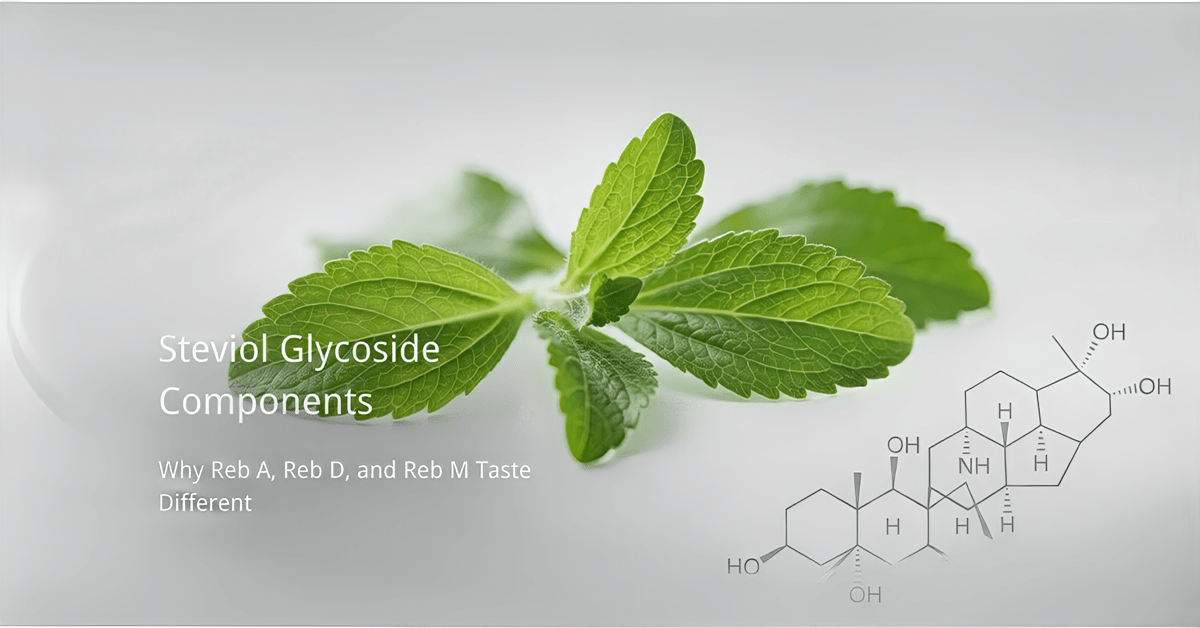
“Stevia” isn’t a single compound — it’s a category name for more than forty related steviol glycoside components found in the leaves of Stevia rebaudiana, each built from the same steviol backbone but with different sugar units attached at different positions. That structural difference is what makes one stevia extract taste noticeably better than another, and it’s the first thing worth understanding before evaluating a supplier.
The main steviol glycoside components, briefly
Stevioside and rebaudioside A (Reb A) are the two most abundant steviol glycoside components in a typical stevia leaf, and together they’ve historically defined “stevia extract” as most of the industry knows it. Rebaudioside D (Reb D) and rebaudioside M (Reb M) occur in much smaller natural concentrations — commercial supply generally depends on selective extraction, bioconversion, or fermentation-based production rather than direct leaf extraction alone, since natural leaf content of Reb D and Reb M is low.
Why the taste differs between components
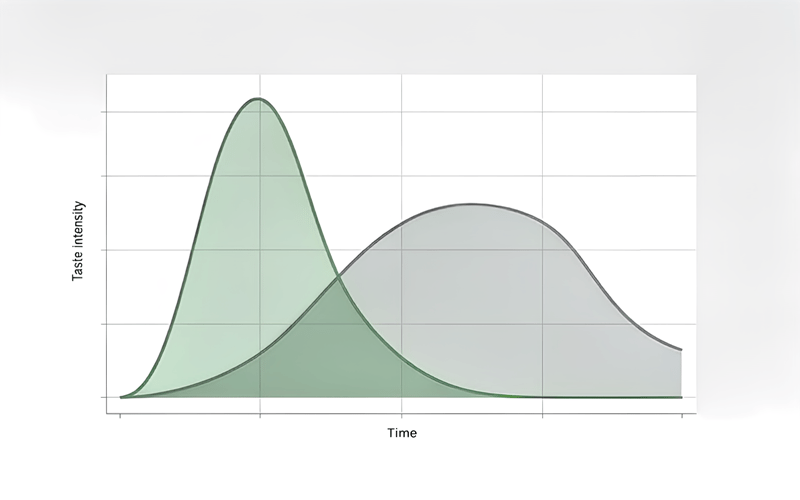
Stevioside and Reb A are both associated with a more noticeable bitter, licorice-like aftertaste at higher use levels — this is the characteristic that gave early-generation stevia products their reputation. Reb D and Reb M generally show a cleaner onset and a taste profile closer to sucrose, with less lingering aftertaste reported at comparable sweetness levels. This isn’t a marginal difference — it’s the primary reason product developers today distinguish between “stevia extract” as a generic term and the specific steviol glycoside components standardized in a given grade.
What this means when you’re comparing suppliers
A CoA that simply states “total steviol glycosides ≥ 95%” doesn’t tell a formulator which components make up that 95% — a product standardized mostly around stevioside and Reb A will taste meaningfully different from one standardized around Reb D or Reb M, even at identical total glycoside purity. Reading the individual component breakdown (not just the total) is the single most useful habit for evaluating steviol glycoside components across different sources.
Enzyme conversion as an alternative path to a cleaner taste
Beyond direct extraction and selective purification, enzymatically converted stevia — sometimes described as glucosylated steviol glycosides — offers another route to a cleaner sensory profile by modifying the glycoside structure through enzymatic transglucosylation. We cover this category in more depth in Glucosylated Steviol Glycosides: What Formulators Need to Know About GSG.
Practical Considerations
Request the individual component breakdown — not just total steviol glycoside percentage — before running a sensory evaluation. Confirm whether Reb D or Reb M content is derived from selective extraction or bioconversion, since the two production routes can carry different documentation and regulatory status depending on your target market. Match the component profile to the use case: a beverage requiring the cleanest possible sweetness onset benefits more from Reb D/M-forward material, while a lower-cost formulation with less taste sensitivity may perform adequately with a standard Reb A grade.

Common Mistakes
Assuming that a higher total steviol glycoside percentage automatically means a better-tasting product — purity and component profile are separate questions. Comparing two suppliers’ stevia only on price per kilogram without normalizing for sweetness potency, since different component profiles have measurably different sweetening power at the same weight.
Key Takeaways
- Steviol glycoside components — stevioside, Reb A, Reb D, Reb M — share a common backbone but differ meaningfully in taste.
- Reb D and Reb M generally offer a cleaner taste profile with less bitter aftertaste than stevioside or Reb A.
- Component breakdown, not just total purity, is the useful comparison point across suppliers.
Conclusion
Evaluating steviol glycoside components at the component level, rather than treating “stevia” as one interchangeable ingredient, is the starting point for any serious sugar-reduction formulation project. The next question most formulators run into — how to actually compare sweetness potency across different components and grades — is covered in What Is SEV? A Practical Guide to Comparing Stevia Sweetness Potency.
References
- Lemus-Mondaca, R., Vega-Gálvez, A., Zura-Bravo, L., & Ah-Hen, K. (2012). Stevia rebaudiana Bertoni, source of a high-potency natural sweetener: A comprehensive review on the biochemical, nutritional and functional aspects. Food Chemistry, 132(3), 1121–1132.
- Prakash, I., Markosyan, A., & Bunders, C. (2014). Development of Next Generation Stevia Sweetener: Rebaudioside M. Foods, 3(1), 162–175.
- DuBois, G. E., & Prakash, I. (2012). Non-caloric sweeteners, sweetness modulators, and sweetener enhancers. Annual Review of Food Science and Technology, 3, 353–380.
- Prakash, I., DuBois, G. E., Clos, J. F., Wilkens, K. L., & Fosdick, L. E. (2008). Rebaudioside A: A New Sweetener. Journal of the American Dietetic Association, 108(7), 1155–1163.
- U.S. Food and Drug Administration (FDA). Additional Information about High-Intensity Sweeteners Permitted for Use in Food in the United States.
- European Food Safety Authority (EFSA). (2010). Scientific Opinion on the safety of steviol glycosides for the proposed uses as a food additive. EFSA Journal, 8(4), 1537.