esubio

fermentable fiber satiety ingredients inulin chicory root

Fermentable Fiber Satiety Ingredients: The Colon’s Role in Long-Duration Fullness

Fermentable Fiber Satiety Ingredients: The Colon’s Role in Long-Duration Fullness By four to six hours after a meal, digestion in the small intestine is essentially finished. What arrives in the colon at this point is whatever wasn’t digested upstream — and fermentable fiber satiety ingredients are specifically chosen to still have material available at this […]

Fermentable Fiber Satiety Ingredients: The Colon’s Role in Long-Duration Fullness Read More »
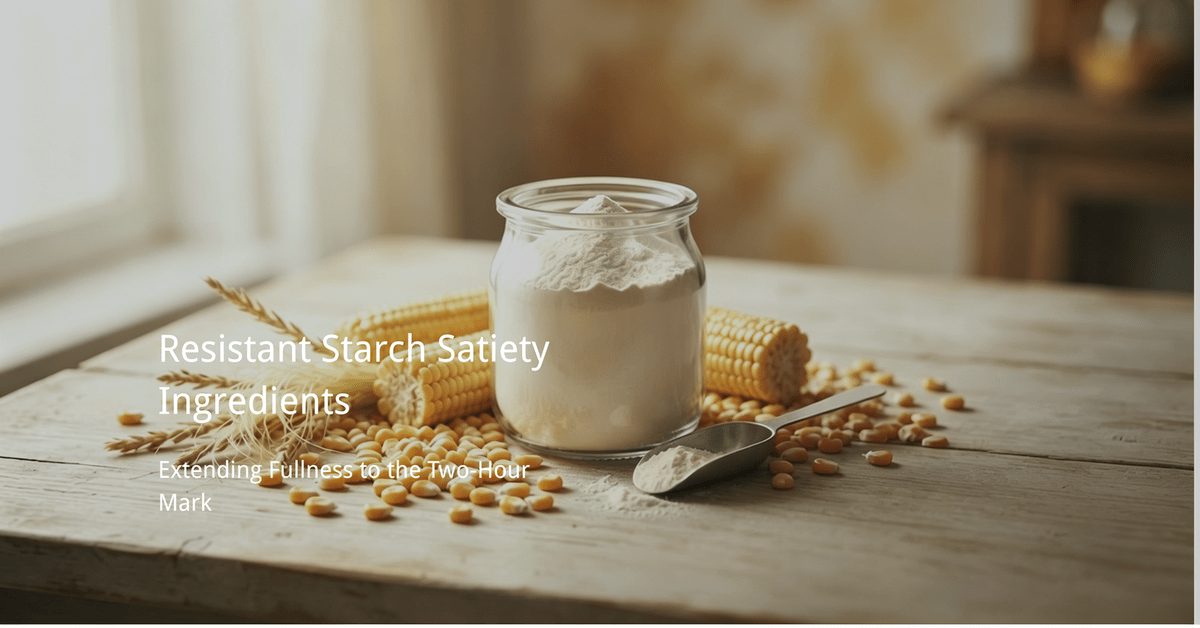
resistant starch satiety ingredients high amylose corn powder

Resistant Starch Satiety Ingredients: Extending Fullness to the Two-Hour Mark

Resistant Starch Satiety Ingredients: Extending Fullness to the Two-Hour Mark Two hours after a meal, most of what’s going to be digested and absorbed in the small intestine already has been. What’s left is moving toward the ileum — and resistant starch satiety ingredients are specifically formulated to still be delivering material at this point,

Resistant Starch Satiety Ingredients: Extending Fullness to the Two-Hour Mark Read More »

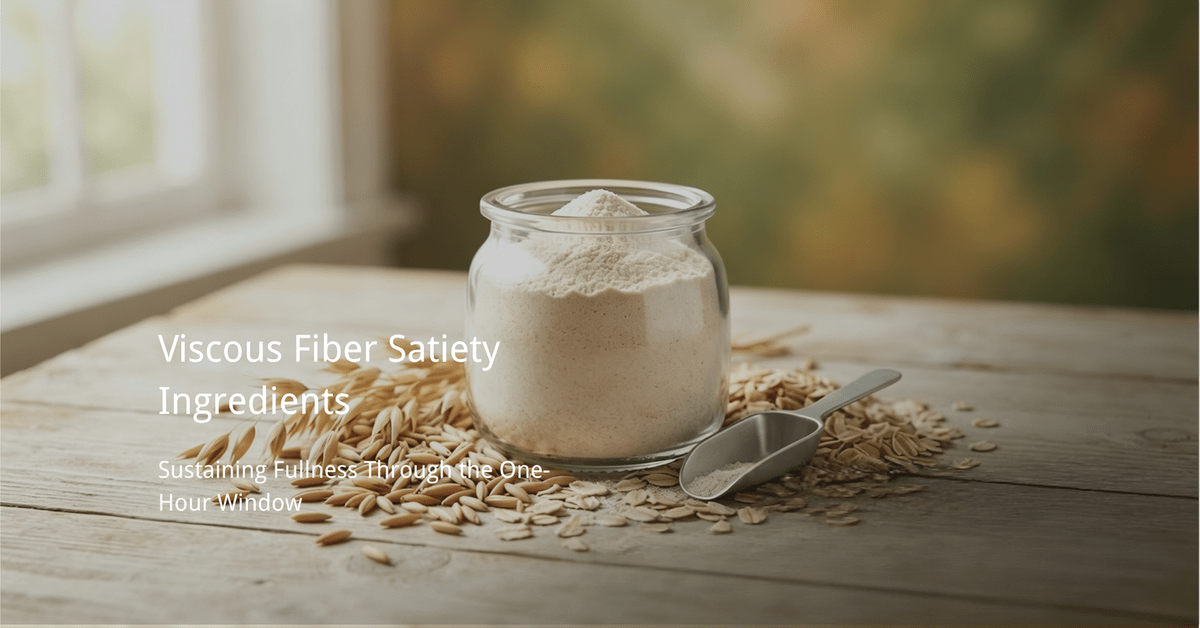
viscous fiber satiety ingredients beta-glucan oat powder

Viscous Fiber Satiety Ingredients: Sustaining Fullness Through the One-Hour Window

Viscous Fiber Satiety Ingredients: Sustaining Fullness Through the One-Hour Window By the one-hour mark, a meal has moved into the jejunum, and this is generally where gut hormone signaling reaches its highest point for a typical meal. Viscous fiber satiety ingredients are formulated specifically to extend this window — not by triggering a new signal,

Viscous Fiber Satiety Ingredients: Sustaining Fullness Through the One-Hour Window Read More »

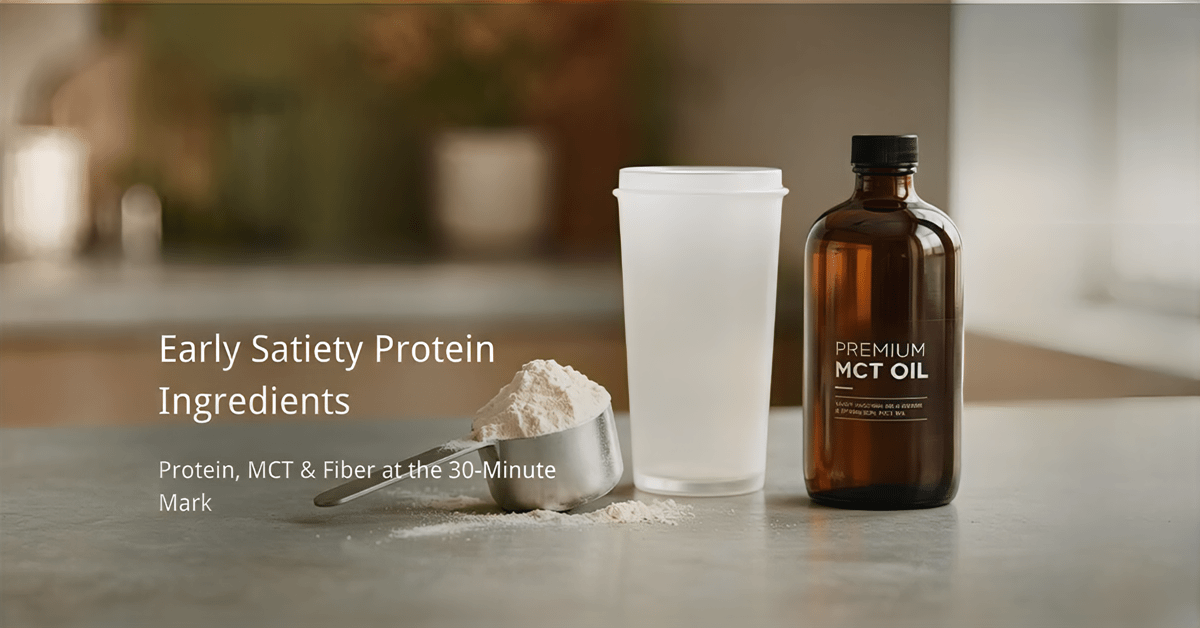
early satiety protein ingredients whey powder and MCT oil

 Early Satiety Protein Ingredients: Protein, MCT & Fiber at the 30-Minute Mark

Early Satiety Protein Ingredients: Protein, MCT & Fiber at the 30-Minute Mark Roughly thirty minutes into digestion, food reaches the duodenum, and a different set of signals starts. Where the stomach’s satiety mechanism is mechanical, the duodenum’s is chemical — protein and fat exposure trigger hormone secretion directly. Early satiety protein ingredients are built around

 Early Satiety Protein Ingredients: Protein, MCT & Fiber at the 30-Minute Mark Read More »

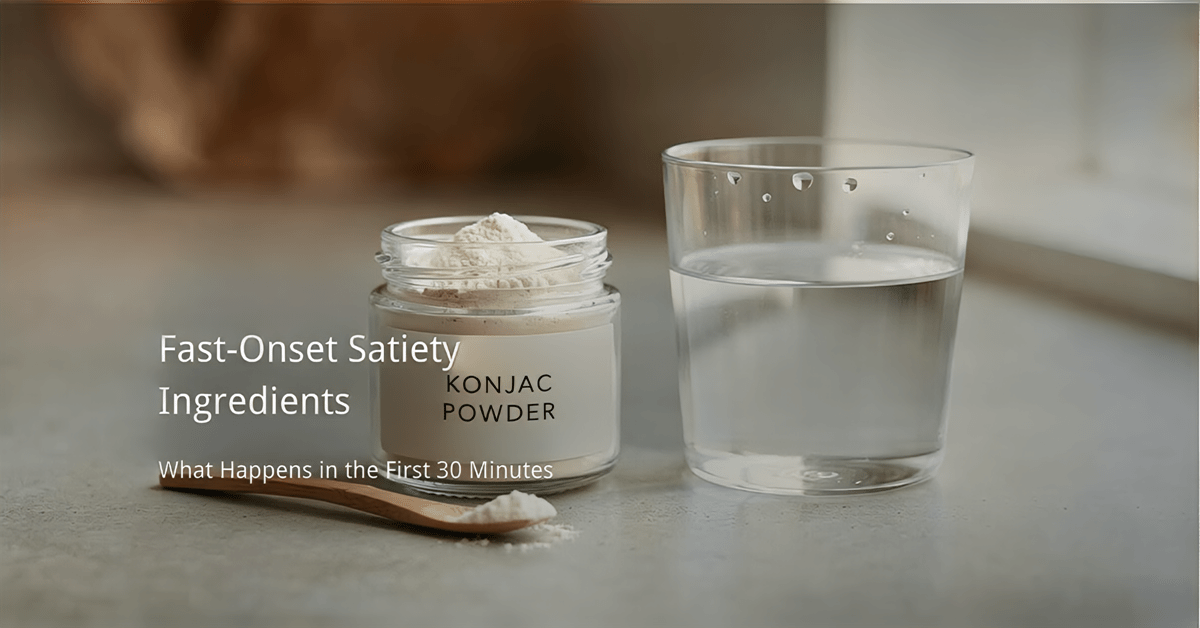
fast-onset satiety ingredients glucomannan powder sample

Fast-Onset Satiety Ingredients: What Happens in the First 30 Minutes

Fast-Onset Satiety Ingredients: What Happens in the First 30 Minutes Before any hormone signal reaches the brain, the stomach itself is already sending a message. Fast-onset satiety ingredients work on this first, purely mechanical mechanism — physical volume and stretch — which is why they act faster than anything that depends on digestion or absorption.

Fast-Onset Satiety Ingredients: What Happens in the First 30 Minutes Read More »

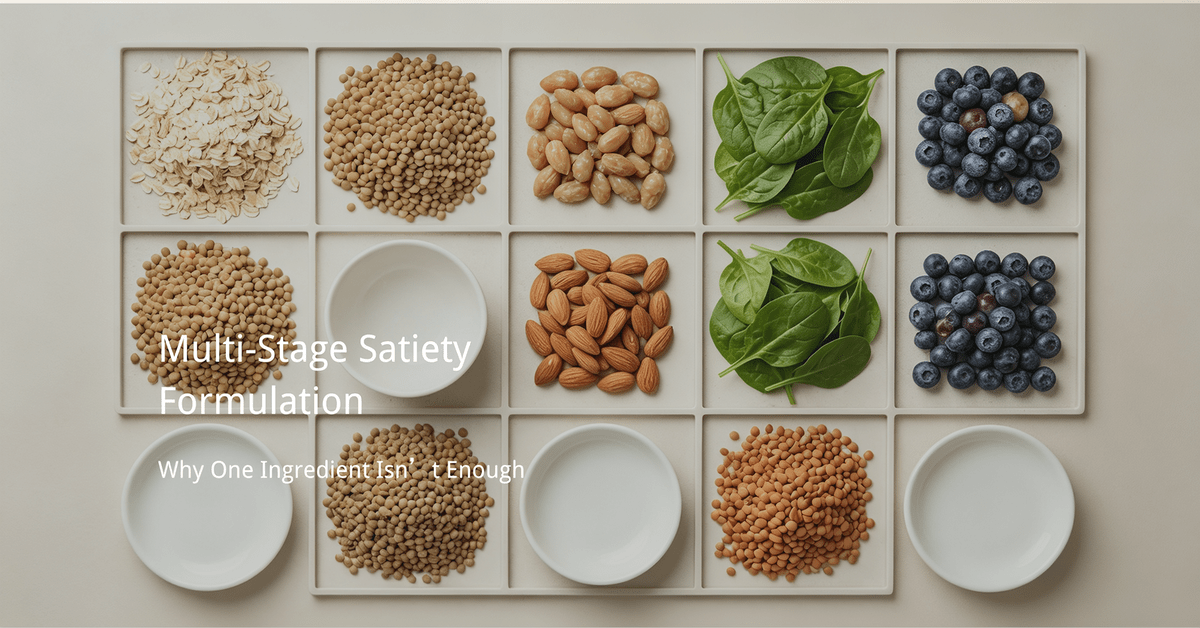
multi-stage satiety formulation ingredients flat lay

Multi-Stage Satiety Formulation: Why One Ingredient Isn’t Enough

Multi-Stage Satiety Formulation: Why One Ingredient Isn’t Enough The body doesn’t produce one signal that says “full.” It produces a sequence of them, released from different parts of the digestive tract over several hours, each triggered by a different physical or chemical event. Multi-stage satiety formulation starts from that fact — instead of asking “which

Multi-Stage Satiety Formulation: Why One Ingredient Isn’t Enough Read More »

USP EP ChP excipients compendial compliance documentation

USP EP ChP Excipients: A Practical Compendial Comparison for Global Sourcing

USP EP ChP Excipients: A Practical Compendial Comparison for Global Sourcing Formulators sourcing USP EP ChP excipients across US, EU, and Asia-Pacific markets routinely need material that satisfies more than one pharmacopoeia simultaneously. Here’s a practical framing for buyers working with Chinese manufacturers specifically, where compendial compliance is rarely as uniform across a catalog as

USP EP ChP Excipients: A Practical Compendial Comparison for Global Sourcing Read More »

anhydrous excipients crystalline powder without water of crystallization

 Anhydrous Excipients Explained: Solving Moisture Migration at the Source

Anhydrous Excipients Explained: Solving Moisture Migration at the Source Low-Aw fillers solve most moisture-sensitivity problems. But for a subset of formulations — typically APIs with ester or acetal functional groups, where even trace water of crystallization can drive degradation over a long shelf life — anhydrous excipients solve a different problem entirely: they remove water

 Anhydrous Excipients Explained: Solving Moisture Migration at the Source Read More »

low Aw sugar alcohols mannitol erythritol isomalt comparison samples

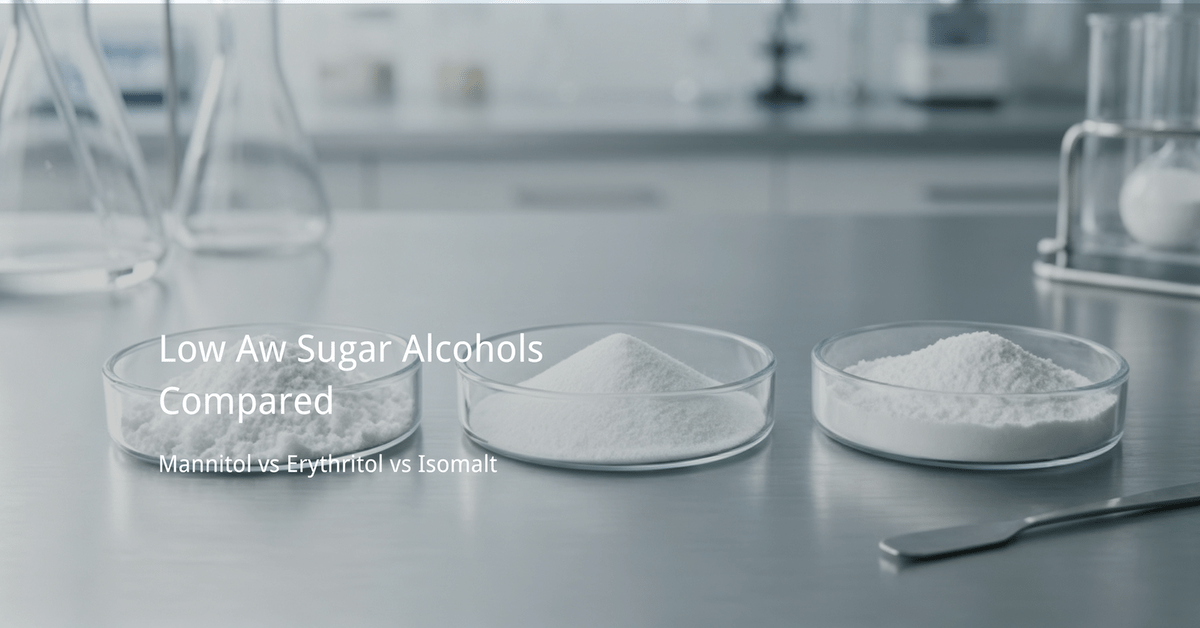
Low Aw Sugar Alcohols Compared: Mannitol vs Erythritol vs Isomalt

Low Aw Sugar Alcohols Compared: Mannitol vs Erythritol vs Isomalt These three low Aw sugar alcohols show up repeatedly in low water activity formulation work — probiotic carriers, direct-compression tablets, functional gummies — but they aren’t interchangeable. Here’s how they typically compare, and what tends to drive the choice between them. Mannitol  Among the most

Low Aw Sugar Alcohols Compared: Mannitol vs Erythritol vs Isomalt Read More »

sourcing excipients from China export shipping and manufacturing

Sourcing Excipients from China: 10 Things to Verify Before You Qualify a Supplier

Sourcing Excipients from China: 10 Things to Verify Before You Qualify a Supplier China holds a dominant share of global production capacity for erythritol, xylitol, maltitol, and maltodextrin. Most of that capacity, however, is listed on B2B platforms as generic chemical commodity, without the water activity, CRH, or compendial data a formulation team actually needs

Sourcing Excipients from China: 10 Things to Verify Before You Qualify a Supplier Read More »