esubio

pet nutrition excipients in premium supplement product

Pet Nutrition Excipients: Why Low Water Activity Is the Fastest-Growing Spec

Pet Nutrition Excipients: Why Low Water Activity Is the Fastest-Growing Spec Pet nutrition and supplement brands are increasingly formulating with the same rigor human nutraceutical brands apply. Probiotic strains, active enzymes, and moisture-sensitive actives are all common in premium pet supplement lines today, and pet nutrition excipients are catching up to meet the same water […]

Pet Nutrition Excipients: Why Low Water Activity Is the Fastest-Growing Spec Read More »
low water activity tablets effervescent dissolving in water

Low Water Activity Tablets: Why Effervescent and ODT Formulas Need Tighter Control

Low Water Activity Tablets: Why Effervescent and ODT Formulas Need Tighter Control Effervescent tablets and orally disintegrating tablets (ODTs) are two of the least forgiving dosage forms when it comes to excipient moisture. Getting low water activity tablets right in these formats isn’t optional polish — it’s often the difference between a stable shelf life

Low Water Activity Tablets: Why Effervescent and ODT Formulas Need Tighter Control Read More »

moisture sensitive API excipients tablet stability testing

Moisture Sensitive API Excipients: A Practical Guide to Protecting Unstable Actives

Moisture Sensitive API Excipients: A Practical Guide to Protecting Unstable Actives Some active ingredients degrade primarily through hydrolysis — ester- and acetal-containing molecules being the clearest examples. For these compounds, moisture sensitive API excipients aren’t a passive filler choice; they either protect the active from ambient moisture or actively contribute to its degradation pathway. This

Moisture Sensitive API Excipients: A Practical Guide to Protecting Unstable Actives Read More »

probiotic carrier water activity powder formulation sample

Probiotic Carrier Water Activity: 5 Rules for Choosing the Right Filler

Probiotic Carrier Water Activity: 5 Rules for Choosing the Right Filler Probiotic formulators rarely debate whether water activity matters. They debate exactly where to draw the line. For many strains, carriers and fillers are specified at a low Aw threshold — often below roughly 0.2 to 0.3 — because residual free water is one of

Probiotic Carrier Water Activity: 5 Rules for Choosing the Right Filler Read More »

critical relative humidity excipients storage warehouse humidity gauge critical relative humidity excipients storage warehouse humidity gauge

 Critical Relative Humidity Excipients: The One Number That Predicts Moisture Failure

Critical Relative Humidity Excipients: The One Number That Predicts Moisture Failure Every hygroscopic powder has a tipping point. Below a certain ambient relative humidity, it barely absorbs water. Cross that threshold, and absorption accelerates sharply. Understanding critical relative humidity excipients — and where that threshold sits for the specific materials in your formulation — is

 Critical Relative Humidity Excipients: The One Number That Predicts Moisture Failure Read More »

water activity excipients powder sample in laboratory setting

Water Activity Excipients: 7 Facts Formulators Get Wrong About Moisture

Water Activity Excipients: 7 Facts Formulators Get Wrong About Moisture Most Certificates of Analysis for water activity excipients still report only one moisture number: LOD, loss on drying. It’s easy to measure and easy to put on a spec sheet. On its own, though, it’s a surprisingly poor predictor of whether an excipient will destabilize

Water Activity Excipients: 7 Facts Formulators Get Wrong About Moisture Read More »

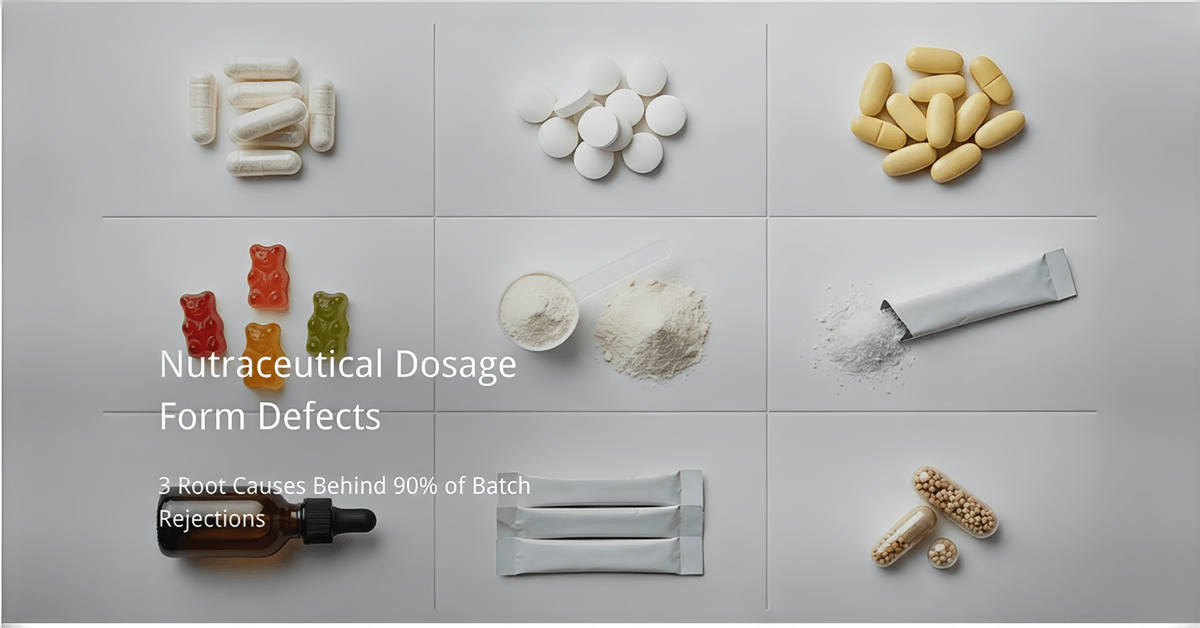
Nutraceutical dosage form defects cover image showing nine product formats

Nutraceutical Dosage Form Defects: 3 Root Causes Explained

Nutraceutical Dosage Form Defects: 3 Root Causes Explained Nutraceutical dosage form defects are almost never bad luck, and they are rarely confined to a single batch. A recent industry-wide technical review covering nine dosage forms — powder drink mixes, hard capsules, soft gels, tablets, gummies, oil drops, stick-pack liquids, glass-bottled liquids, and granulation — found

Nutraceutical Dosage Form Defects: 3 Root Causes Explained Read More »

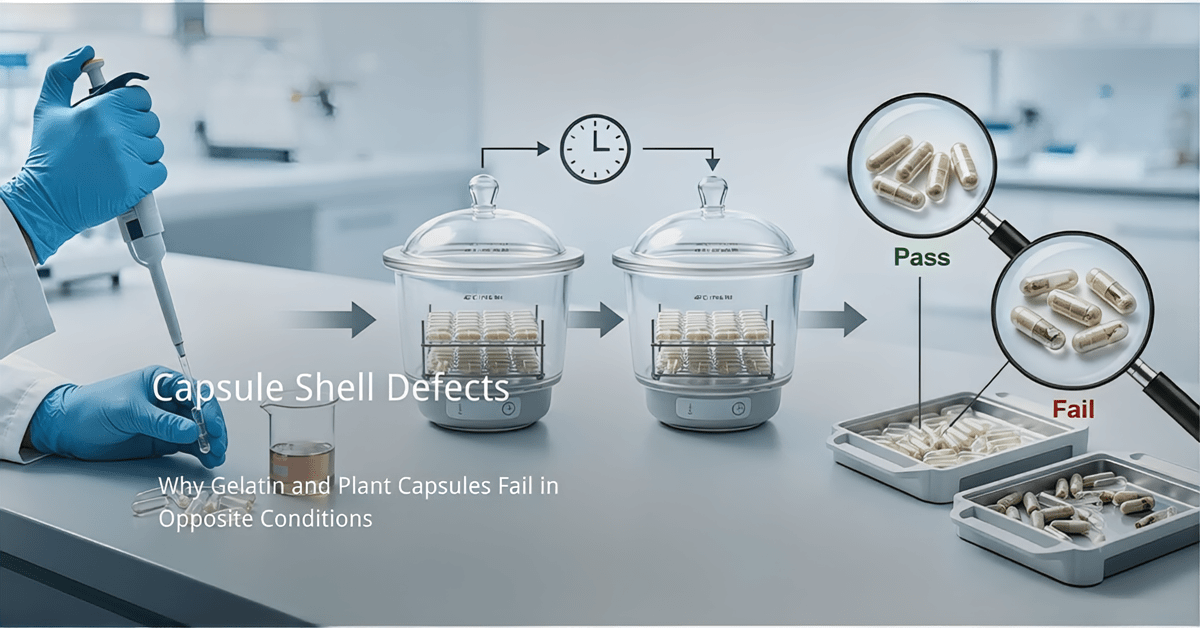
Capsule shell defects cover image showing cracked and intact capsules

Capsule Shell Defects: What’s Really Causing Them

Ashwagandha Extract Sourcing Guide: What Supplement Brands Need To Know Capsule shell defects rarely start with the shell itself — they start with the environment the shell sits in, and how that environment interacts with what is inside it. Shell brittleness and cracking, cap and body separation, powder leakage, and shells that soften and stick

Capsule Shell Defects: What’s Really Causing Them Read More »

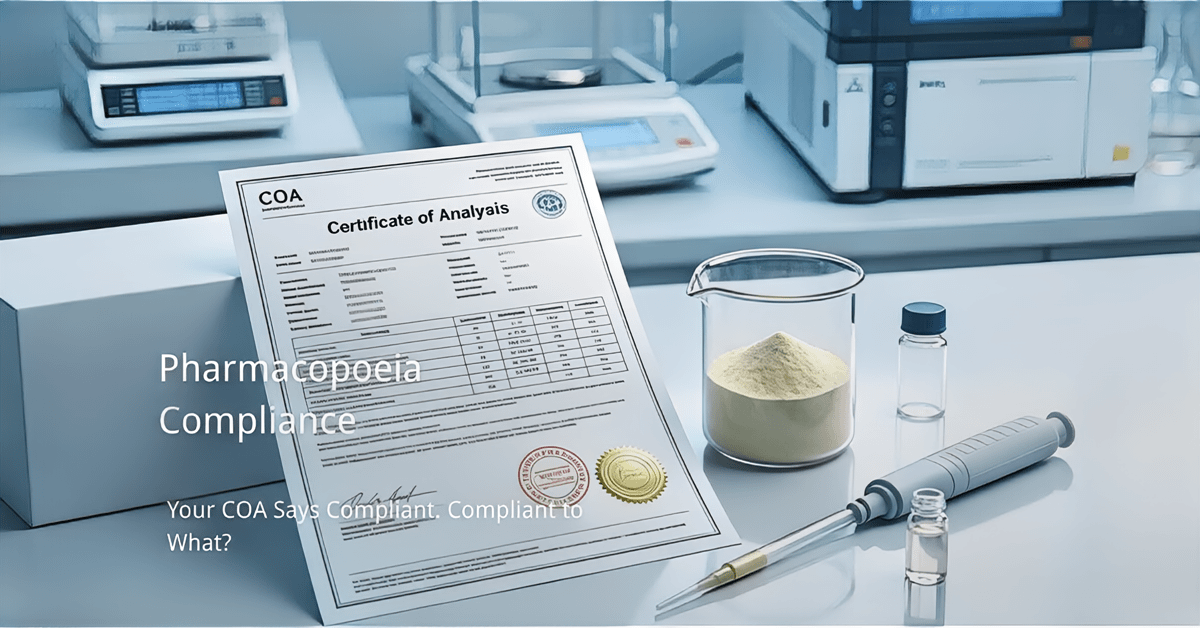
Pharmacopoeia compliance COA cover image showing USP and Ph Eur comparison

Pharmacopoeia Compliance: 5 Costly Gaps Hiding in Your COA

Pharmacopoeia Compliance: 5 Costly Gaps Hiding in Your COA Your COA says compliant. But compliant to which pharmacopoeia, for which target market, and did the test method actually match your finished product’s registration requirements? In nutraceutical ingredient procurement, pharmacopoeia compliance has quietly become the gap that surfaces at the worst possible moment — during a

Pharmacopoeia Compliance: 5 Costly Gaps Hiding in Your COA Read More »