
7 Powerful Ingredient Transparency Checks for Better Sourcing
Ingredient transparency is becoming an important part of raw material sourcing, especially for brands that want clear ingredient information, traceable supply chains, and documented sourcing decisions.
For many brands, buying an ingredient is no longer simply a matter of finding the right product name at the right price. The sourcing team may also need to answer practical questions about where the ingredient comes from, what it contains, which documents support it, whether a Non-GMO or organic status can be documented, and whether the material can be traced back to a specific supplier and batch.
This does not mean every product needs the same certification or every supplier needs to provide the same set of documents.
It means the transparency requirements should be defined before the ingredient is approved.
A brand may want to communicate a particular sourcing attribute on its finished-product label or marketing materials. Whether that claim is permitted, however, depends on the target market, product composition, applicable regulations, and the specific certification or verification program involved. For example, USDA organic labeling has defined categories and certification requirements, while the Non-GMO Project operates its own verification standard.
The practical sourcing question is therefore not simply, “Can the supplier provide a document?”
It is: “Can the supplier provide the evidence needed for this ingredient, this market, and this intended claim?”

1. Ingredient Transparency Starts With Knowing Exactly What You Are Buying
A product name alone rarely tells the complete sourcing story.
“Grape Seed Extract,” “Vitamin C,” or “Plant Protein” can describe a material category, but procurement and quality teams may need considerably more information before approving the ingredient.
Depending on the material, this can include:
- Botanical or raw material source
- Plant part or source material
- Country of origin
- Extraction or processing method
- Standardization or active marker
- Carrier or processing aids
- Physical form
- Grade or specification
- Allergen information
- GMO status
- Organic status, where applicable
The reason is simple: two products with the same commercial name may not be equivalent for a particular formulation or labeling requirement.
For example, two botanical extracts may use the same plant species but differ in extraction ratio, carrier, standardization, or country of origin.
The more specific the finished product positioning, the more important this information becomes.
In the U.S., FDA food labeling rules require ingredients to be declared by their common or usual names, with specific requirements for major food allergens. This is one example of why ingredient identity and source information can matter beyond procurement.
2. Do Not Treat a Product Name as Proof of a Label Claim
One of the most common sourcing mistakes is assuming that an ingredient description automatically supports a finished-product claim.
For example:
“Non-GMO ingredient” does not automatically mean every finished product containing that ingredient can use any desired Non-GMO claim.
“Organic ingredient” does not automatically mean the finished product can be labeled “organic.”
The requirements depend on the applicable market and claim.
USDA organic labeling provides a useful example. Products using organic claims in the U.S. must follow specific USDA organic regulations, and different labeling categories have different requirements. USDA also states that organic product labels must be reviewed and approved by a USDA-accredited certifying agent before being used in the marketplace.
This means procurement should distinguish between:
Ingredient status
and
Finished-product claim eligibility.
The first is a sourcing question.
The second may involve the finished product, formulation, certification status, label wording, and target market.
Keeping these two questions separate helps prevent overclaiming.
3. Ask What Evidence Supports the Ingredient Status
If a brand needs transparency around a specific sourcing attribute, the supplier should be able to provide appropriate supporting documentation where available.
Depending on the project, this may include:
- Product specification
- Certificate of Analysis (CoA)
- Safety Data Sheet (SDS/MSDS)
- Country-of-origin information
- Manufacturer or supplier information
- Allergen statement
- Non-GMO statement or verification
- Organic certificate
- Halal or Kosher documentation
- Batch or lot information
- Other market-specific declarations
The important point is not to collect documents simply for the sake of having a larger file.
Each document should answer a specific sourcing or quality question.
For example, a CoA helps demonstrate batch-specific test results against defined specifications.
An organic certificate addresses certification status within the relevant organic system.
A Non-GMO verification may demonstrate compliance with a particular verification program.
A country-of-origin statement addresses origin.
These documents serve different purposes and should not be treated as interchangeable.
The Non-GMO Project, for example, operates a specific Product Verification Program based on its Standard, and its verification system considers ingredients and traceability rather than simply relying on a generic supplier statement.
4. Supplier Transparency Matters as Much as Ingredient Transparency
A transparent ingredient specification is useful, but the supplier behind the material also matters.
Consider two suppliers offering the same ingredient.
Supplier A provides a product name, price, and generic specification.
Supplier B can provide the product specification, batch CoA, source information, relevant declarations, and clear batch identification.
The second supplier gives the buyer more information to evaluate the material.
This does not automatically make Supplier B the right supplier. Price, capacity, lead time, quality systems, certifications, regulatory requirements, and commercial terms still matter.
But documentation quality is part of supplier qualification.
FDA’s supplier-verification framework for food imports requires risk-based evaluation of foreign suppliers and allows activities such as reviewing supplier records, sampling and testing, and other verification activities depending on the circumstances.
For brands sourcing internationally, this reinforces a practical point: supplier selection should not be based only on the product name and quotation.
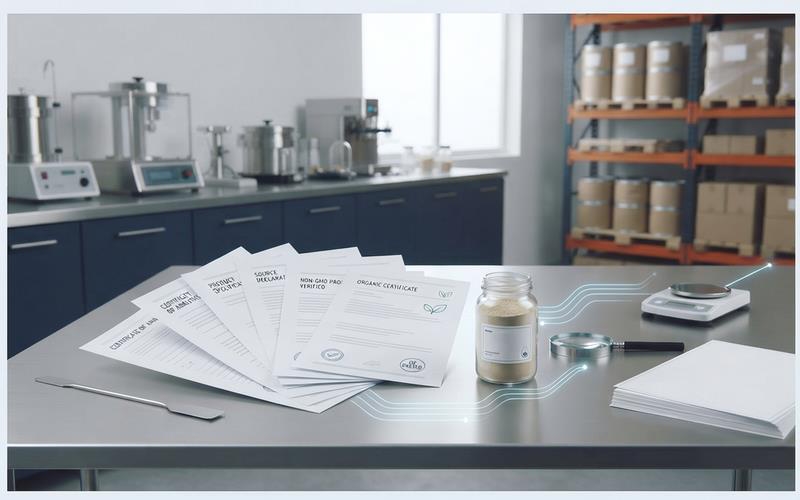
5. Batch Traceability Turns Transparency Into Evidence
Transparency becomes much more useful when it can be connected to a specific batch.
Imagine a brand has approved an ingredient based on certain documentation.
Six months later, the brand receives a new shipment.
Is it the same supplier?
Is it the same specification?
Which batch does the CoA refer to?
Can the physical shipment be connected to the documents?
This is where batch traceability becomes important.
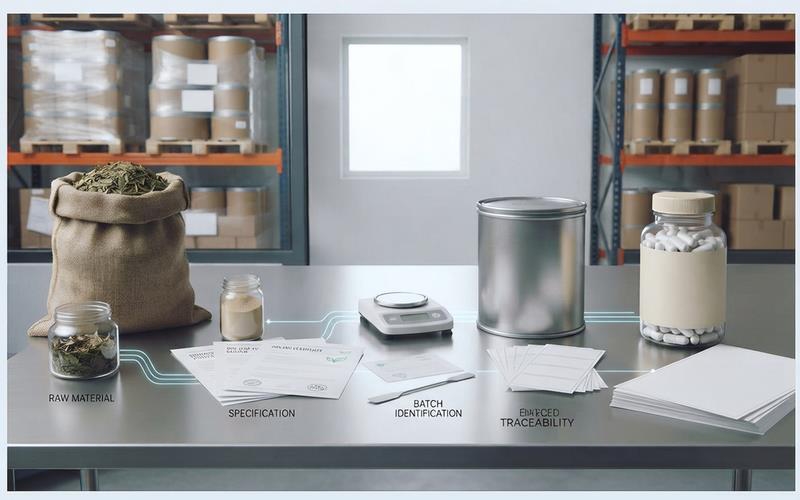
A useful traceability chain may look like:
Supplier → Ingredient → Specification → Batch/Lot → CoA → Shipment → Customer
The exact documentation will vary by ingredient and supply chain, but the principle is straightforward: the information should be connected to the material being supplied.
USDA organic requirements provide a particularly clear example of this principle. For certain non-retail organic products, the lot number or other unique information must link the container to audit-trail documentation and the last certified operation that handled the product.
Traceability therefore is not just a quality-control concept. It can also support the documentation behind a sourcing story.
6. Clean Label Requirements Should Be Converted Into Sourcing Requirements
“Clean label” can mean different things to different brands.
One brand may want a short ingredient list.
Another may avoid artificial colors.
Another may require Non-GMO ingredients.
Another may want organic certification.
Another may focus on recognizable ingredient names and transparent sources.
This is why simply telling a supplier, “We need clean label,” is usually not enough.
The requirement should be translated into specific sourcing questions.
For example:
Instead of:
“We need a clean-label botanical extract.”
Ask:
“Can you provide a botanical extract with the specified active content, no added carrier if possible, clear source information, allergen status, and supporting Non-GMO documentation?”
The second request gives the supplier something that can actually be evaluated.
It also allows procurement to compare suppliers on the same basis.
The goal is not to create an unnecessarily restrictive specification. It is to convert a marketing concept into measurable or documentable sourcing requirements.
7. Documentation Should Be Checked Before the Ingredient Is Approved
A common procurement sequence is:
Find supplier → negotiate price → order sample → approve sample → purchase.
A more robust sequence for transparency-sensitive projects can be:
Define product requirements → define documentation requirements → screen suppliers → review documents → sample → evaluate → approve supplier and material.
This small change can prevent problems later.
Imagine a brand has already completed formulation trials with an ingredient. The formulation works, the cost works, and the product is ready for scale-up.
Then someone asks for the organic certificate or Non-GMO documentation.
The supplier cannot provide the required evidence.
The brand now has to choose between changing the raw material, changing the intended claim, finding another supplier, or delaying the launch.
The technical formulation may have been successful, but the sourcing process was incomplete.
This is why documentation should be part of the initial supplier screening process rather than an afterthought.
What Should Buyers Ask Before Approving a Transparent Ingredient?
For transparency-sensitive projects, a practical sourcing checklist can include:
1. What exactly is the ingredient?
Confirm identity, form, source, specification, and intended application.
2. Where does it come from?
Clarify country of origin and, where relevant, the raw material source or manufacturing source.
3. What is included in the material?
Review carriers, processing aids, allergens, additives, and other relevant components.
4. What documents are available?
Ask for the specification, CoA, SDS/MSDS, source information, and applicable declarations or certificates.
5. Can the documentation be linked to the batch?
Confirm batch or lot identification and the corresponding CoA.
6. Does the document actually support the intended claim?
Check whether the documentation relates to the relevant standard, certification or verification program.
7. Does the requirement apply to the finished product?
Do not assume that an ingredient-level document automatically authorizes a finished-product label claim.
That last question is particularly important.
Ingredient Transparency Is a Supply-Chain Capability
For brands, transparency is not created by adding one certificate to a supplier file.
It is built through a combination of clear ingredient identity, appropriate specifications, reliable supplier information, supporting documentation, and batch-level traceability.
The same principle applies to Non-GMO, organic, allergen, source, and other ingredient-related requirements: define what is actually needed, identify what evidence supports it, and verify that the evidence matches the relevant market and intended use.
At Esubio, we support ingredient sourcing projects where documentation and sourcing transparency are part of the requirement. Depending on the ingredient, supplier, and target market, available documentation may include CoA, SDS/MSDS, product specifications, source information, Non-GMO statements or verification, organic documentation, and batch-level information.
We work with verified supplier sources and communicate key documentation requirements before sourcing and ordering. Availability of specific certifications or declarations depends on the actual ingredient, supplier, certification status, and market requirements.
The goal is not to collect the most documents.
It is to make sure the right documents are behind the right ingredient.
When a brand wants to communicate a transparent sourcing story, the strongest foundation is not simply a marketing statement.
It is an ingredient that can be identified, documented, and traced back through the supply chain.
Transparency should start at sourcing—not at the label.
References
- USDA AMS — Labeling Requirements for the U.S. Organic Market
USDA AMS — Labeling Requirements for the U.S. Organic Market - USDA AMS — Labeling Organic Products
USDA AMS — Labeling Organic Products - FDA — Guidance for Industry: Questions and Answers Regarding Food Allergen Labeling, Edition 5
FDA — Food Allergen Labeling Guidance - FDA — Foreign Supplier Verification Programs (FSVP)
FDA — Foreign Supplier Verification Programs - The Non-GMO Project — The Non-GMO Project Standard
The Non-GMO Project — The Standard - The Non-GMO Project — Verification FAQ
The Non-GMO Project — Verification FAQ