esubio

glucosylated steviol glycosides enzyme modification process - Placement: Top of article, featured image

Glucosylated Steviol Glycosides: What Formulators Need to Know About GSG

Glucosylated Steviol Glycosides: What Formulators Need to Know About GSG Glucosylated steviol glycosides (GSG), sometimes referred to as enzyme-modified stevia, are often discussed alongside standard steviol glycosides. However, they are not simply another form of stevia extract. GSG is produced through an additional enzymatic modification step, which can change its sensory profile, technical characteristics, and […]

Glucosylated Steviol Glycosides: What Formulators Need to Know About GSG Read More »
stevia sweetness potency SEV comparison - Placement: Top of article, featured image

What Is SEV? A Practical Guide to Comparing Stevia Sweetness Potency

What Is SEV? A Practical Guide to Comparing Stevia Sweetness Potency Two stevia spec sheets can both say “300 times sweeter than sugar” and still not be directly comparable — because stevia sweetness potency isn’t a fixed number. It changes depending on the concentration being measured, the reference sucrose solution used, and the specific glycoside

What Is SEV? A Practical Guide to Comparing Stevia Sweetness Potency Read More »

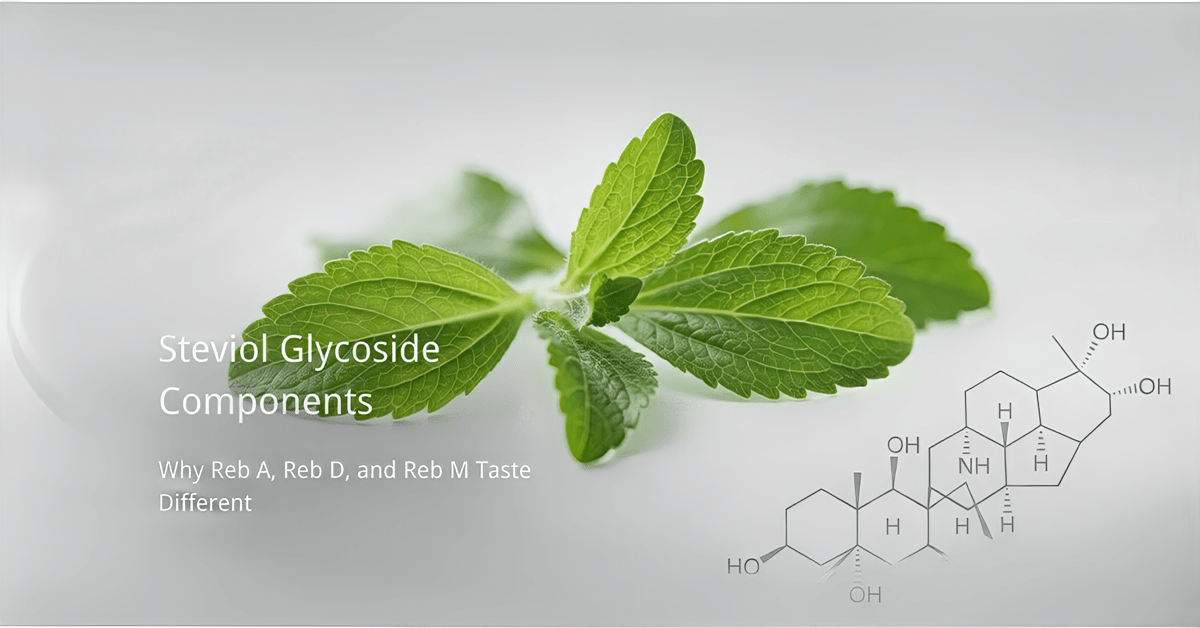
steviol glycoside components in stevia leaf extract

Steviol Glycoside Components: Why Reb A, Reb D, and Reb M Taste Different

Steviol Glycoside Components: Why Reb A, Reb D, and Reb M Taste Different “Stevia” isn’t a single compound — it’s a category name for more than forty related steviol glycoside components found in the leaves of Stevia rebaudiana, each built from the same steviol backbone but with different sugar units attached at different positions. That

Steviol Glycoside Components: Why Reb A, Reb D, and Reb M Taste Different Read More »

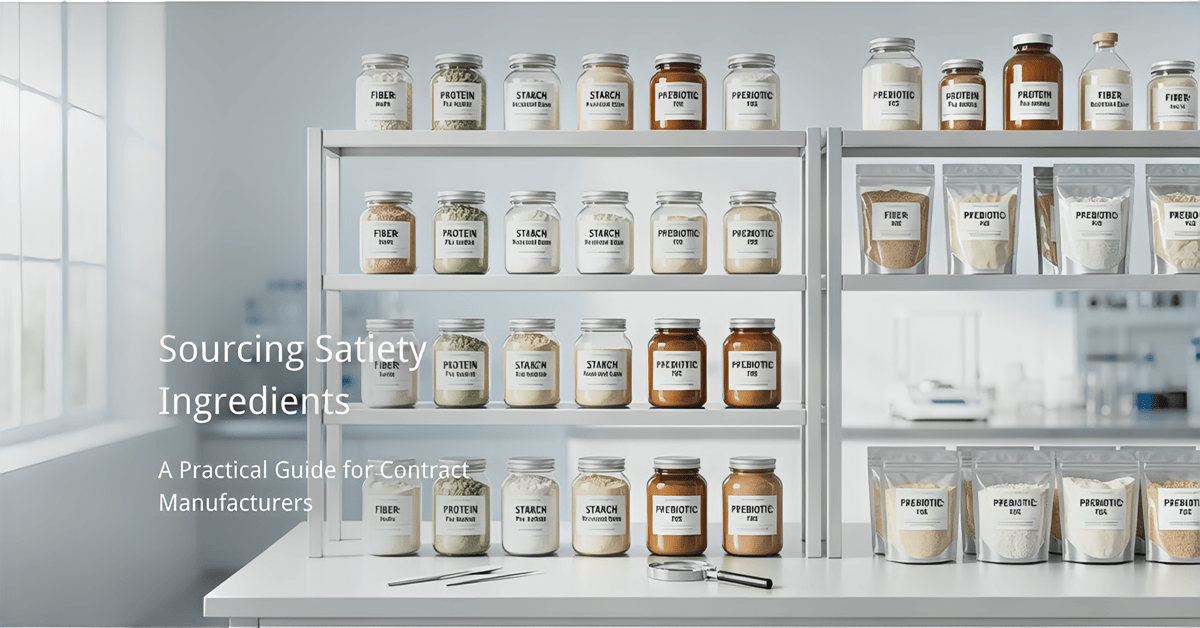
sourcing satiety ingredients for contract manufacturing

 Sourcing Satiety Ingredients for Contract Manufacturing: A Practical Guide

Sourcing Satiety Ingredients for Contract Manufacturing: A Practical Guide Formulating across five digestive phases, as covered throughout this series, means sourcing across a correspondingly wide ingredient range — bulking fibers, proteins, viscous fibers, resistant starches, and fermentable prebiotics rarely all come from the same manufacturer. For contract manufacturers building out a satiety-focused product line, that

 Sourcing Satiety Ingredients for Contract Manufacturing: A Practical Guide Read More »

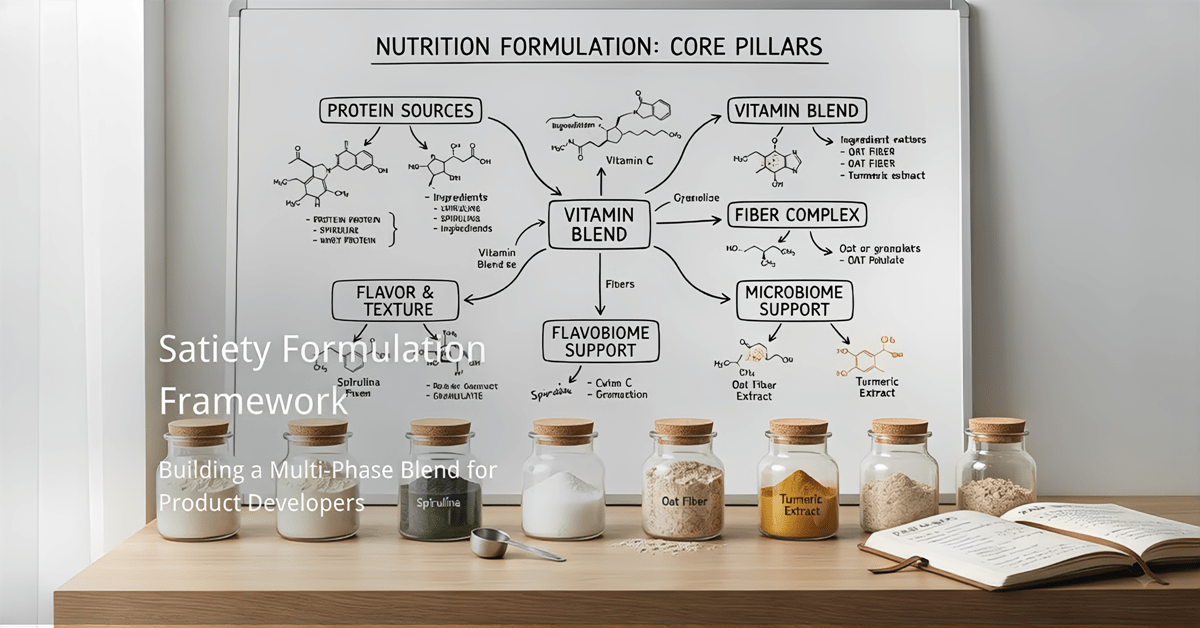
satiety formulation framework planning ingredients

Satiety Formulation Framework: Building a Multi-Phase Blend for Product Developers

Satiety Formulation Framework: Building a Multi-Phase Blend for Product Developers Understanding each individual phase is one thing — combining them into a single, coherent product is a different exercise. This piece pulls together the previous five posts in this series into a practical satiety formulation framework: what to prioritize, what tends to conflict, and how

Satiety Formulation Framework: Building a Multi-Phase Blend for Product Developers Read More »

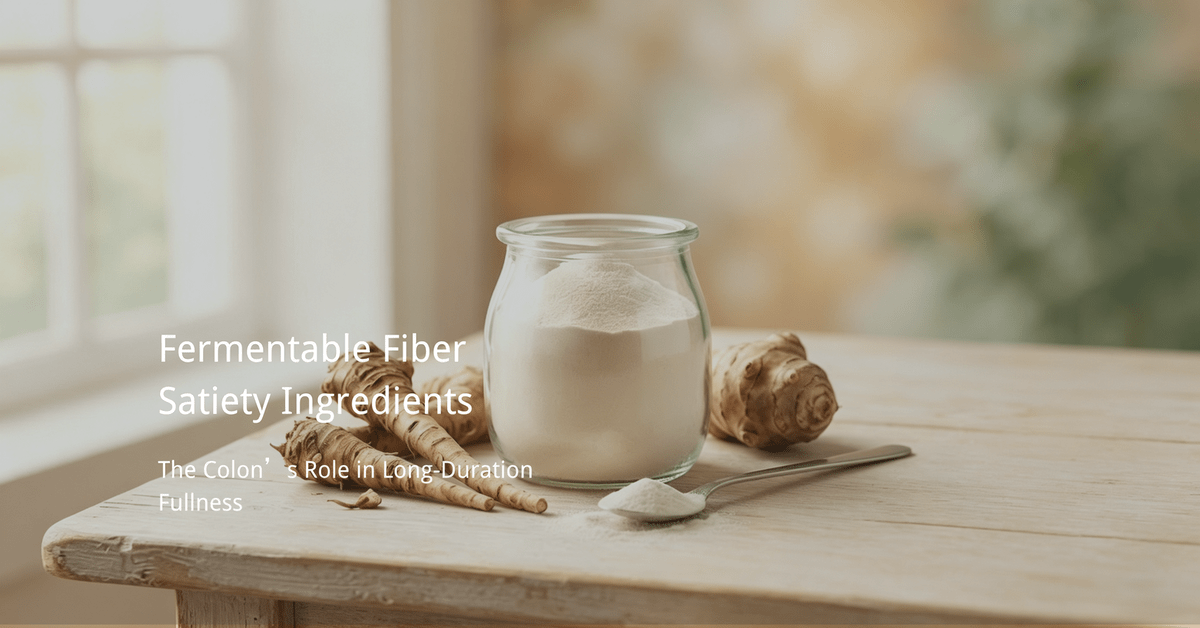
fermentable fiber satiety ingredients inulin chicory root

Fermentable Fiber Satiety Ingredients: The Colon’s Role in Long-Duration Fullness

Fermentable Fiber Satiety Ingredients: The Colon’s Role in Long-Duration Fullness By four to six hours after a meal, digestion in the small intestine is essentially finished. What arrives in the colon at this point is whatever wasn’t digested upstream — and fermentable fiber satiety ingredients are specifically chosen to still have material available at this

Fermentable Fiber Satiety Ingredients: The Colon’s Role in Long-Duration Fullness Read More »

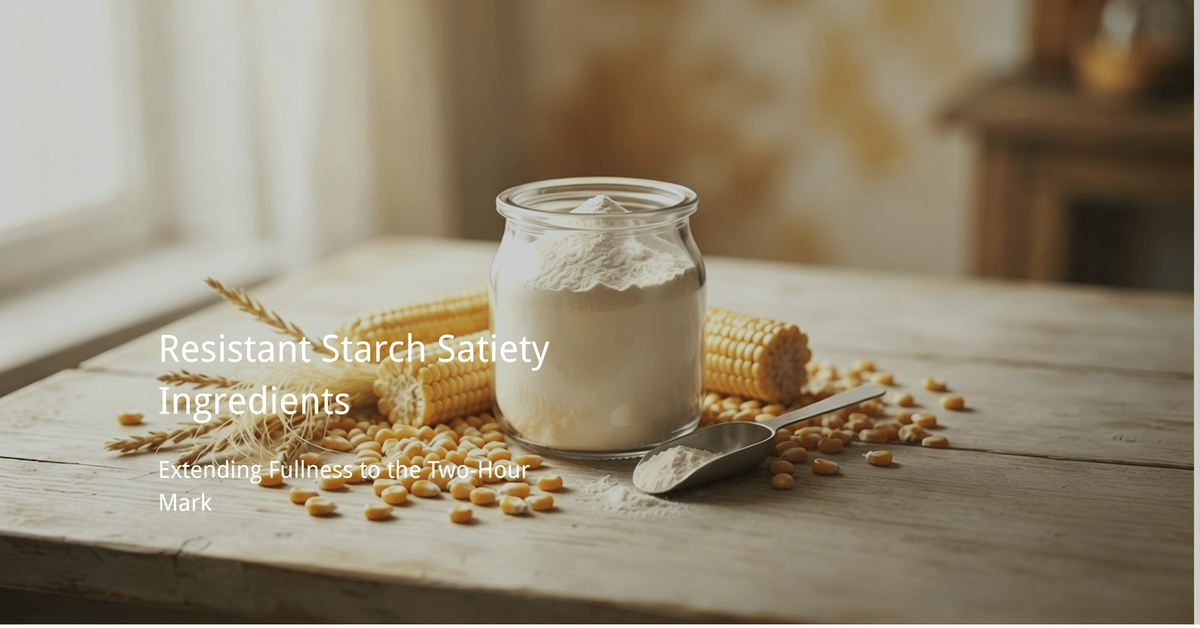
resistant starch satiety ingredients high amylose corn powder

Resistant Starch Satiety Ingredients: Extending Fullness to the Two-Hour Mark

Resistant Starch Satiety Ingredients: Extending Fullness to the Two-Hour Mark Two hours after a meal, most of what’s going to be digested and absorbed in the small intestine already has been. What’s left is moving toward the ileum — and resistant starch satiety ingredients are specifically formulated to still be delivering material at this point,

Resistant Starch Satiety Ingredients: Extending Fullness to the Two-Hour Mark Read More »

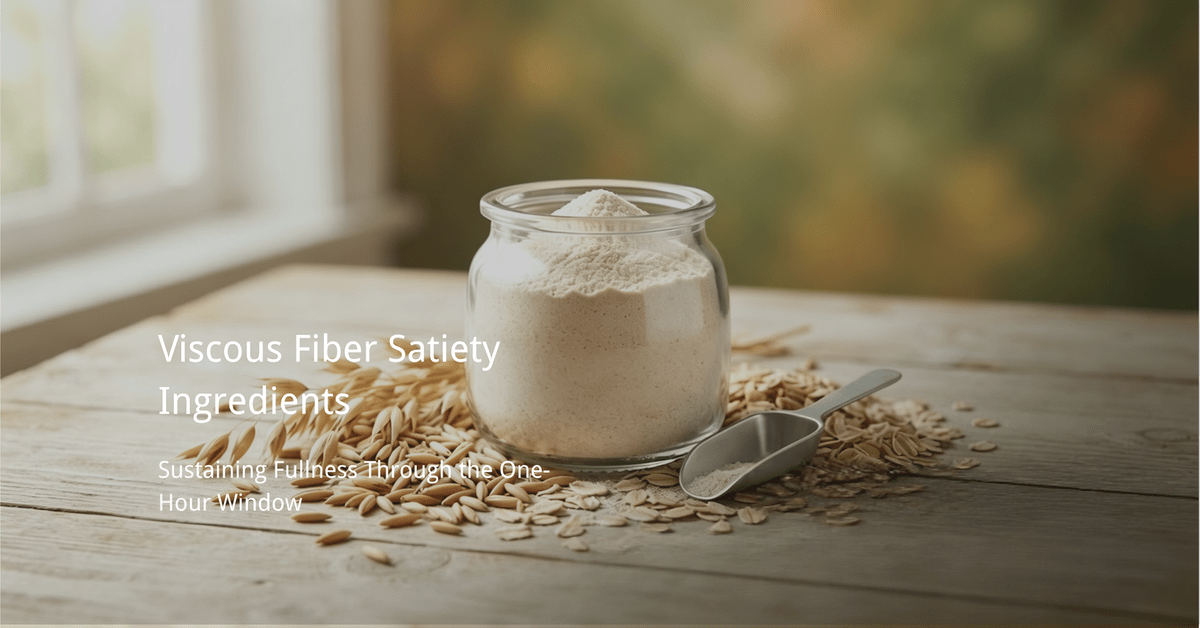
viscous fiber satiety ingredients beta-glucan oat powder

Viscous Fiber Satiety Ingredients: Sustaining Fullness Through the One-Hour Window

Viscous Fiber Satiety Ingredients: Sustaining Fullness Through the One-Hour Window By the one-hour mark, a meal has moved into the jejunum, and this is generally where gut hormone signaling reaches its highest point for a typical meal. Viscous fiber satiety ingredients are formulated specifically to extend this window — not by triggering a new signal,

Viscous Fiber Satiety Ingredients: Sustaining Fullness Through the One-Hour Window Read More »

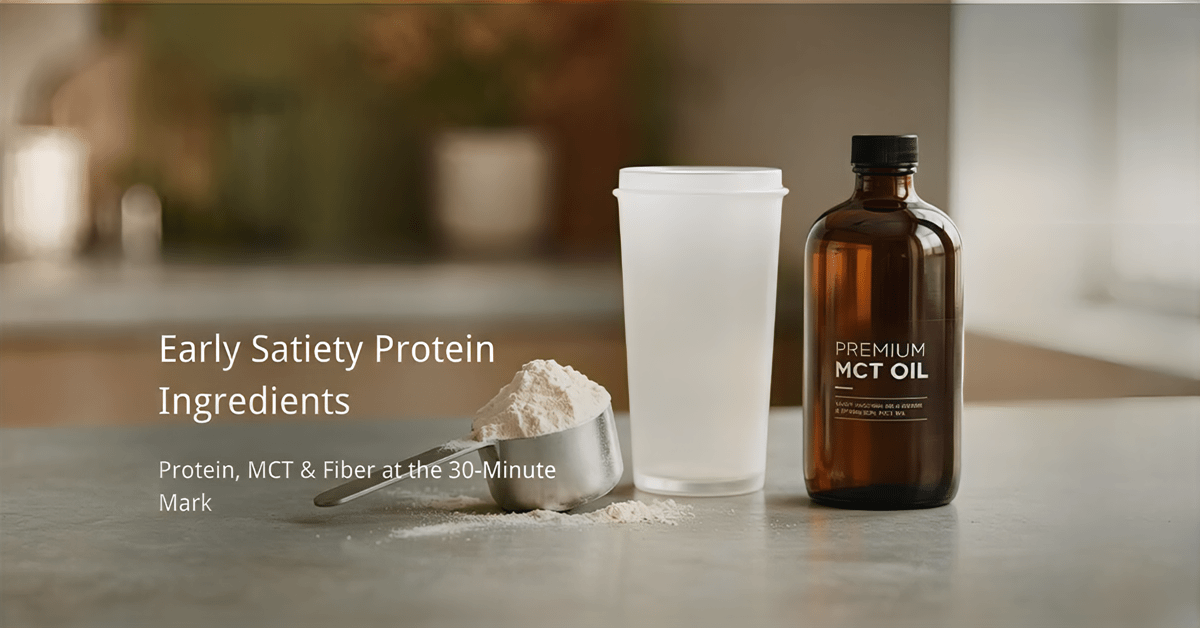
early satiety protein ingredients whey powder and MCT oil

 Early Satiety Protein Ingredients: Protein, MCT & Fiber at the 30-Minute Mark

Early Satiety Protein Ingredients: Protein, MCT & Fiber at the 30-Minute Mark Roughly thirty minutes into digestion, food reaches the duodenum, and a different set of signals starts. Where the stomach’s satiety mechanism is mechanical, the duodenum’s is chemical — protein and fat exposure trigger hormone secretion directly. Early satiety protein ingredients are built around

 Early Satiety Protein Ingredients: Protein, MCT & Fiber at the 30-Minute Mark Read More »

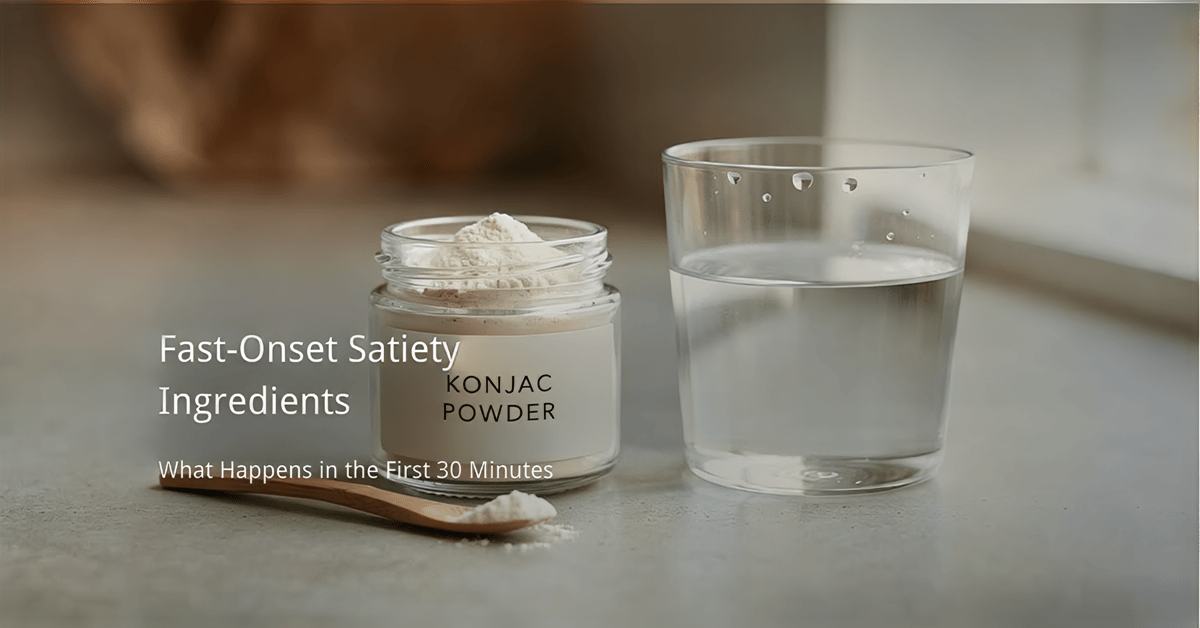
fast-onset satiety ingredients glucomannan powder sample

Fast-Onset Satiety Ingredients: What Happens in the First 30 Minutes

Fast-Onset Satiety Ingredients: What Happens in the First 30 Minutes Before any hormone signal reaches the brain, the stomach itself is already sending a message. Fast-onset satiety ingredients work on this first, purely mechanical mechanism — physical volume and stretch — which is why they act faster than anything that depends on digestion or absorption.

Fast-Onset Satiety Ingredients: What Happens in the First 30 Minutes Read More »